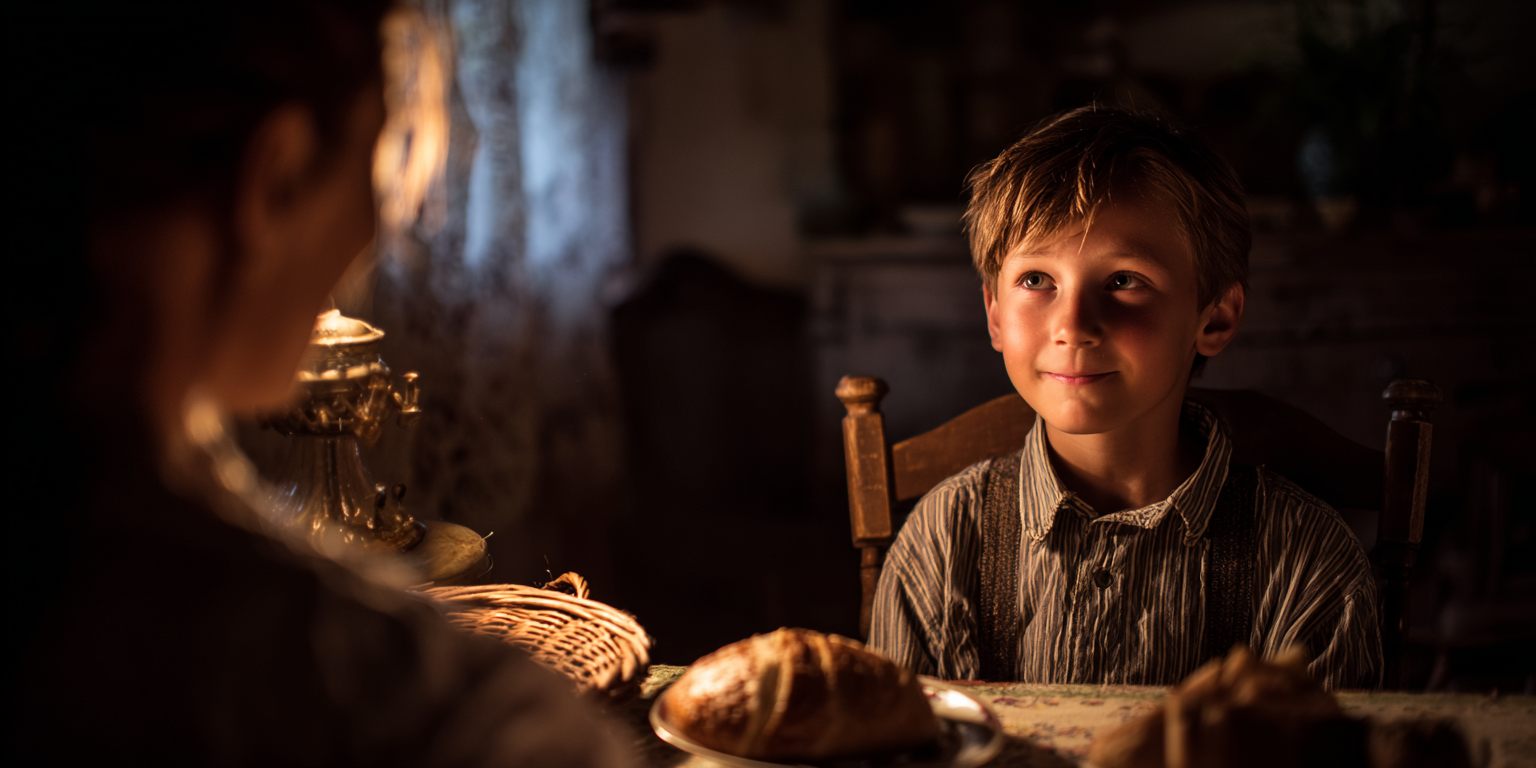
FARMER BOY
Reading Plan
Chapter 1: School Days
January settles hard over northern New York…
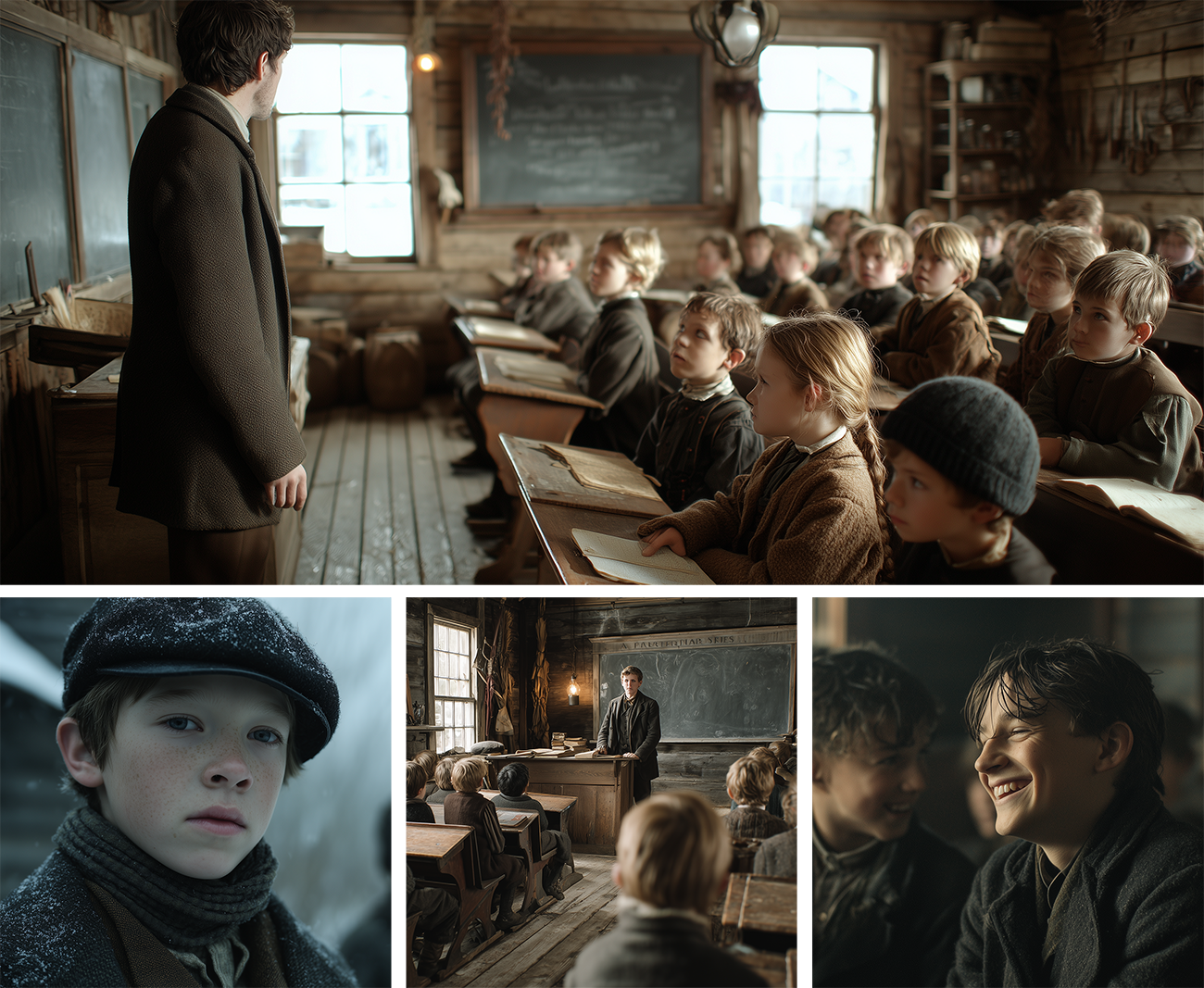
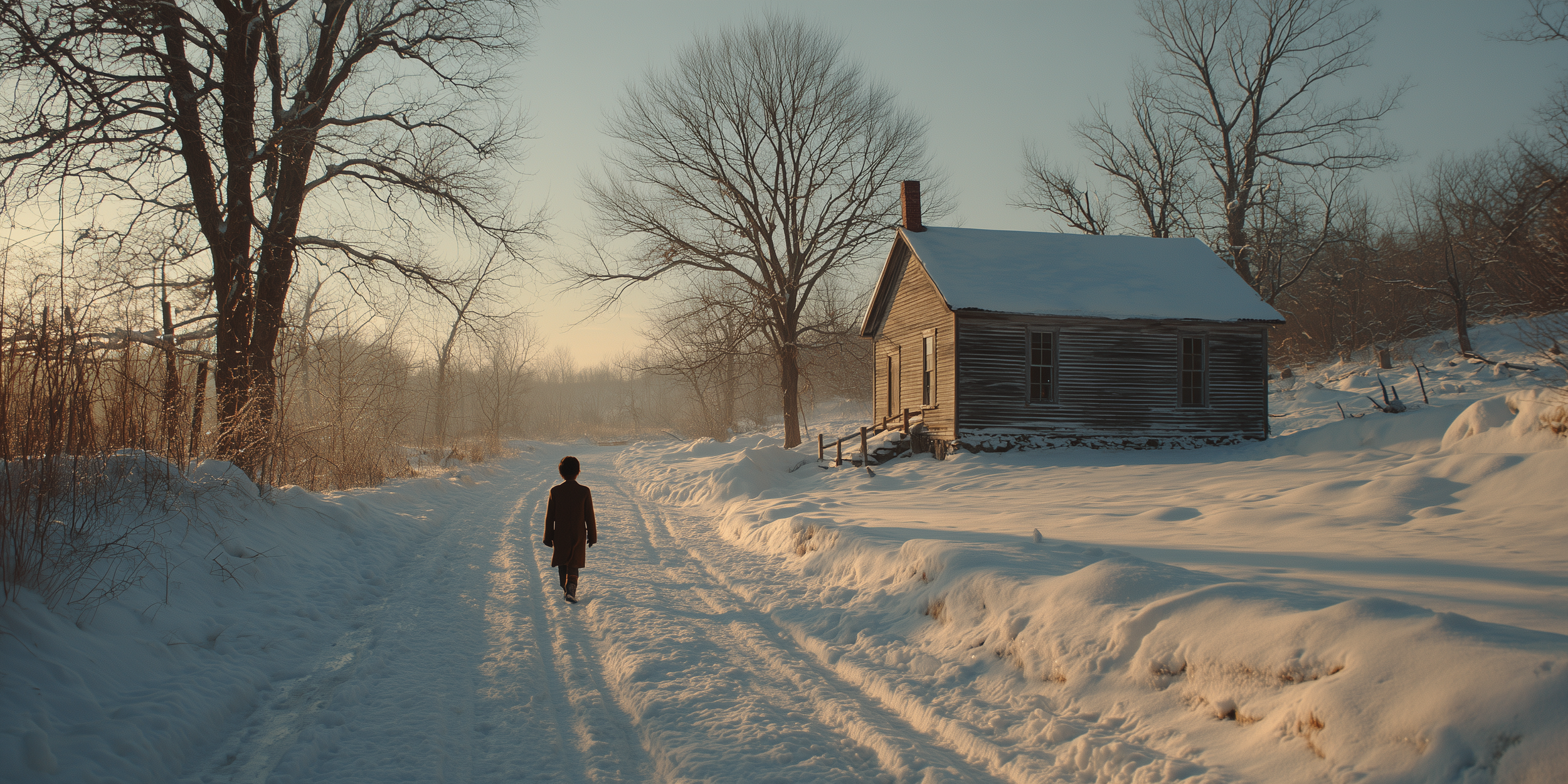
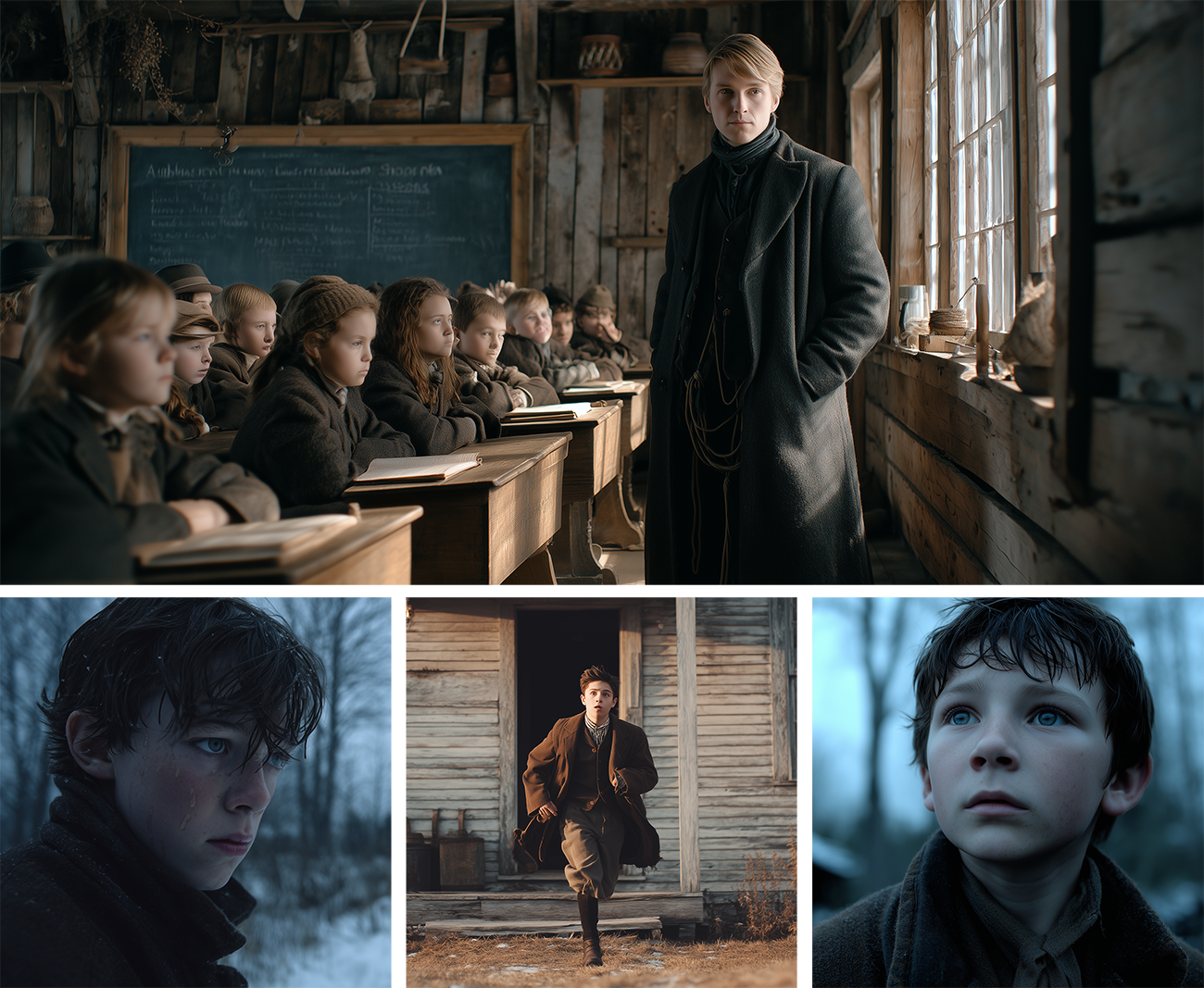
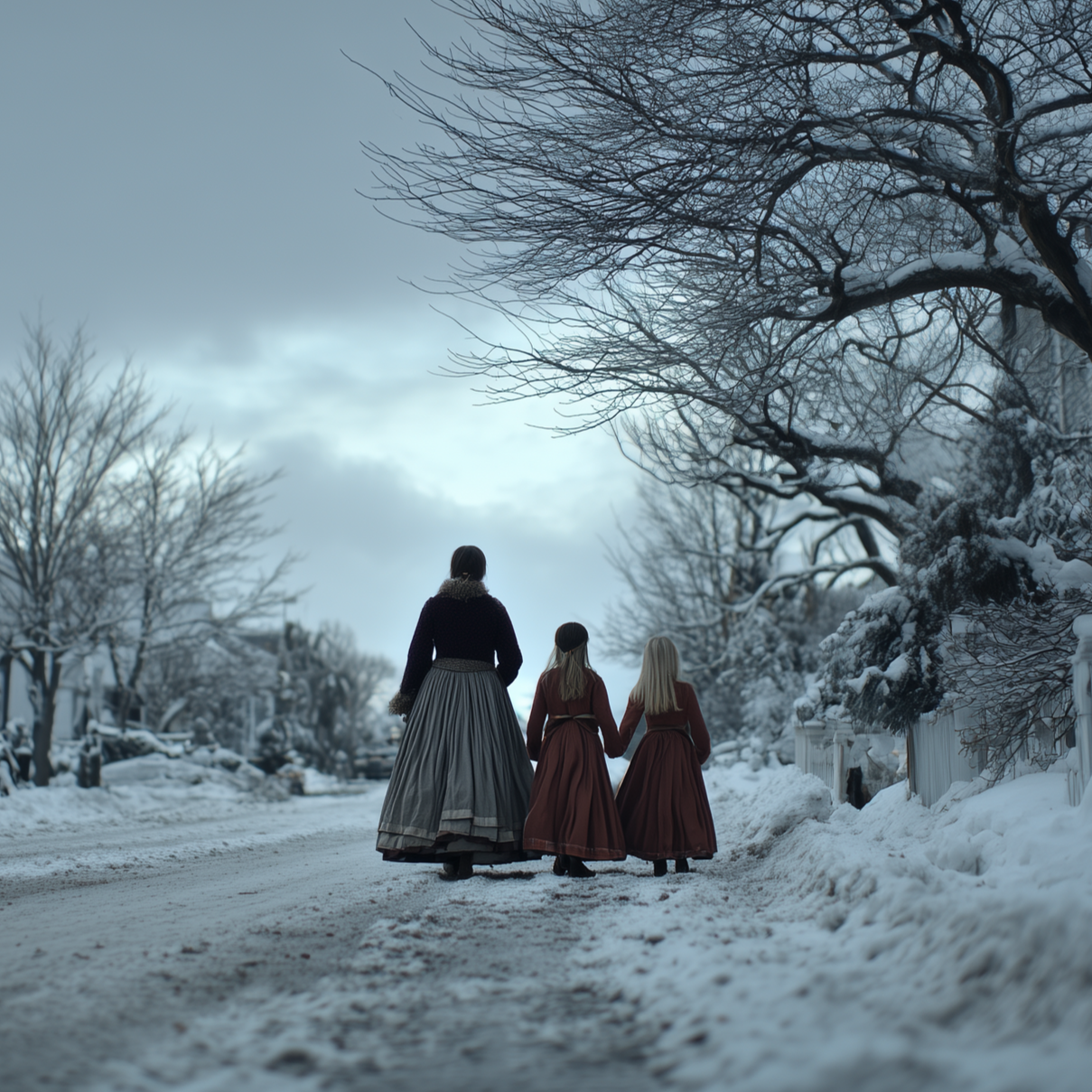
The snow lies deep against fences, barns, and the narrow road through the woods. Almanzo Wilder, almost nine, trudges toward the lonely schoolhouse at the foot of Hardscrabble Hill, while his older brother Royal strides ahead and his sisters, Eliza Jane and Alice, follow close behind.
Almanzo is wrapped tight against the cold in wool from his father’s sheep. Ahead waits the small schoolhouse,. But outside, five big boys from Hardscrabble Settlement scuffle in the snow, their laughter rough and dangerous. They have a habit of smashing sleds, swinging little boys into drifts, and driving teachers away before winter’s end.
Inside, the gentle young teacher, Mr. Corse, tries to keep order. He is pale and patient and far too slight to fight the older boys. After lunch, the boys race to catch rides on the wood-haulers’ sleds barreling down Hardscrabble Hill. Mr. Corse lets their tardiness pass—for now. But everyone knows the winter term has only begun, and the true test will not be spelling words or arithmetic sums. It will be whether this mild young teacher can stand against Hardscrabble Hill and finish what no teacher yet has finished.
To keep up with other readers, you can join the Facebook group discussion here.
Chapter 2: Winter Evening
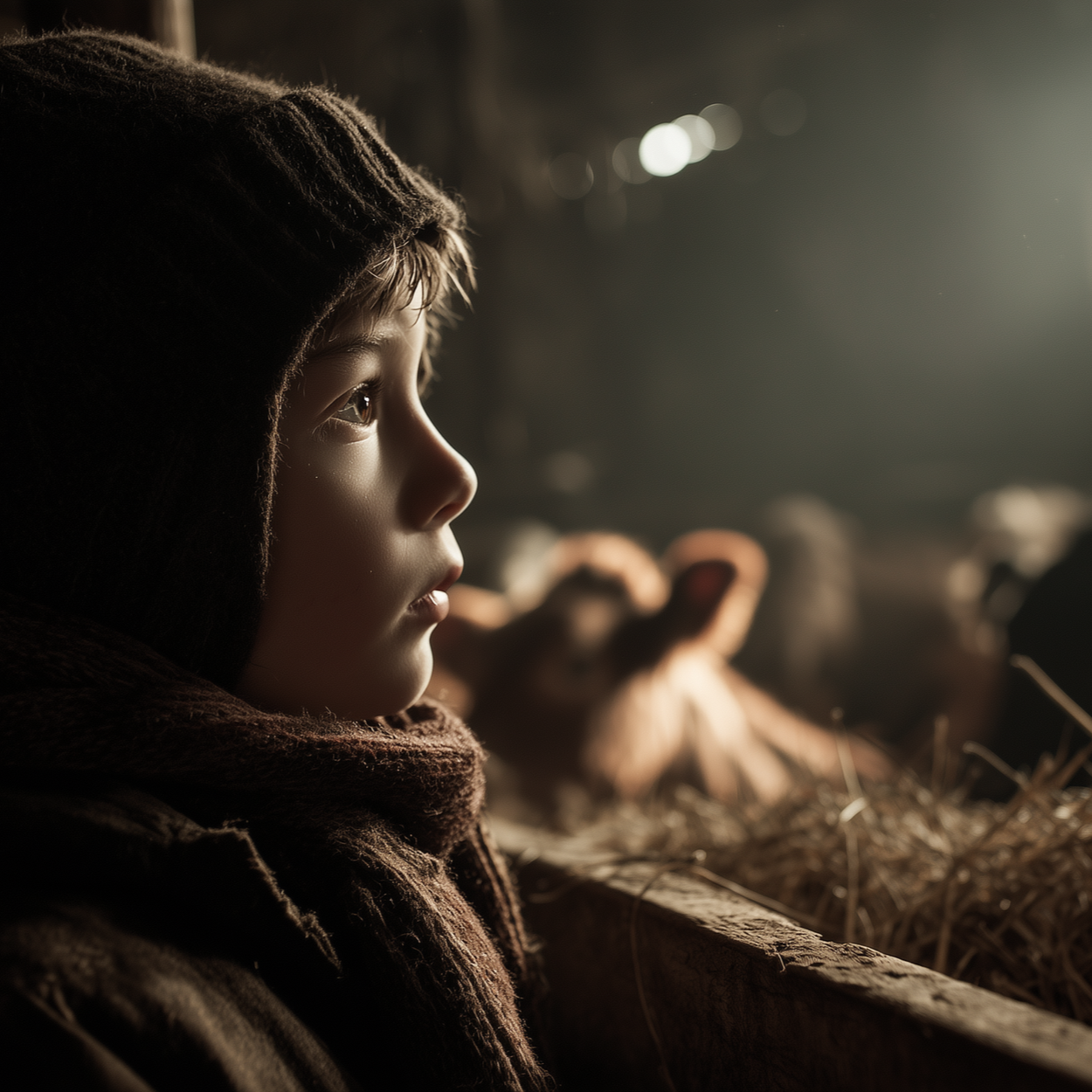
To keep up with other readers, you can join the Facebook group discussion here.
Winter closes in on the Wilder farm…
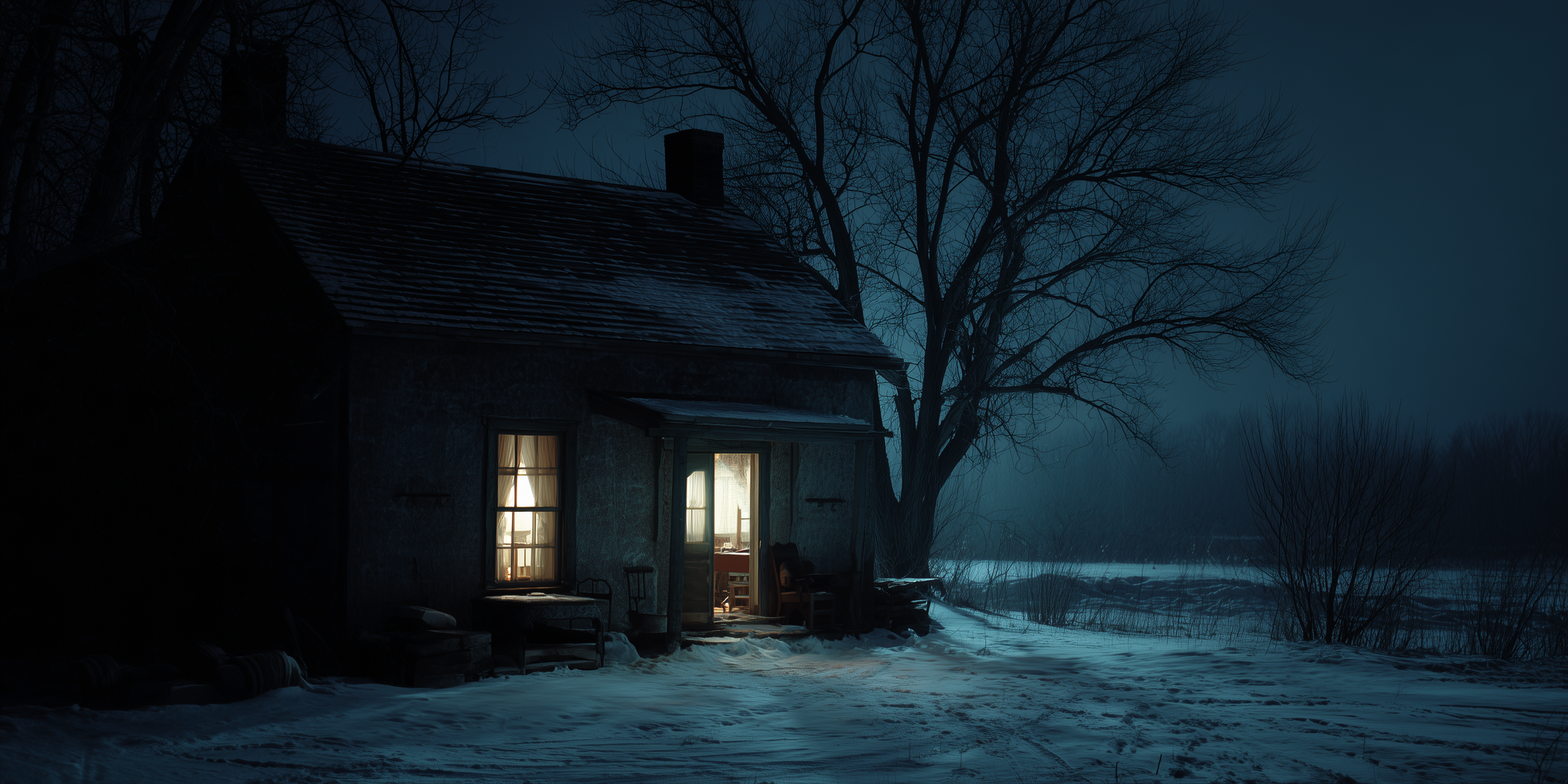
… as Almanzo and the others trudge home from school, Mr. Corse walking beside them, scarves pulled high against the cold. At the crest of the long slope stands the tall red farmhouse, icicles glittering along the eaves and warm candlelight glowing from the windows. Around it stretches the great square of barns—the finest in the country—built solid and tight against wind and snow.
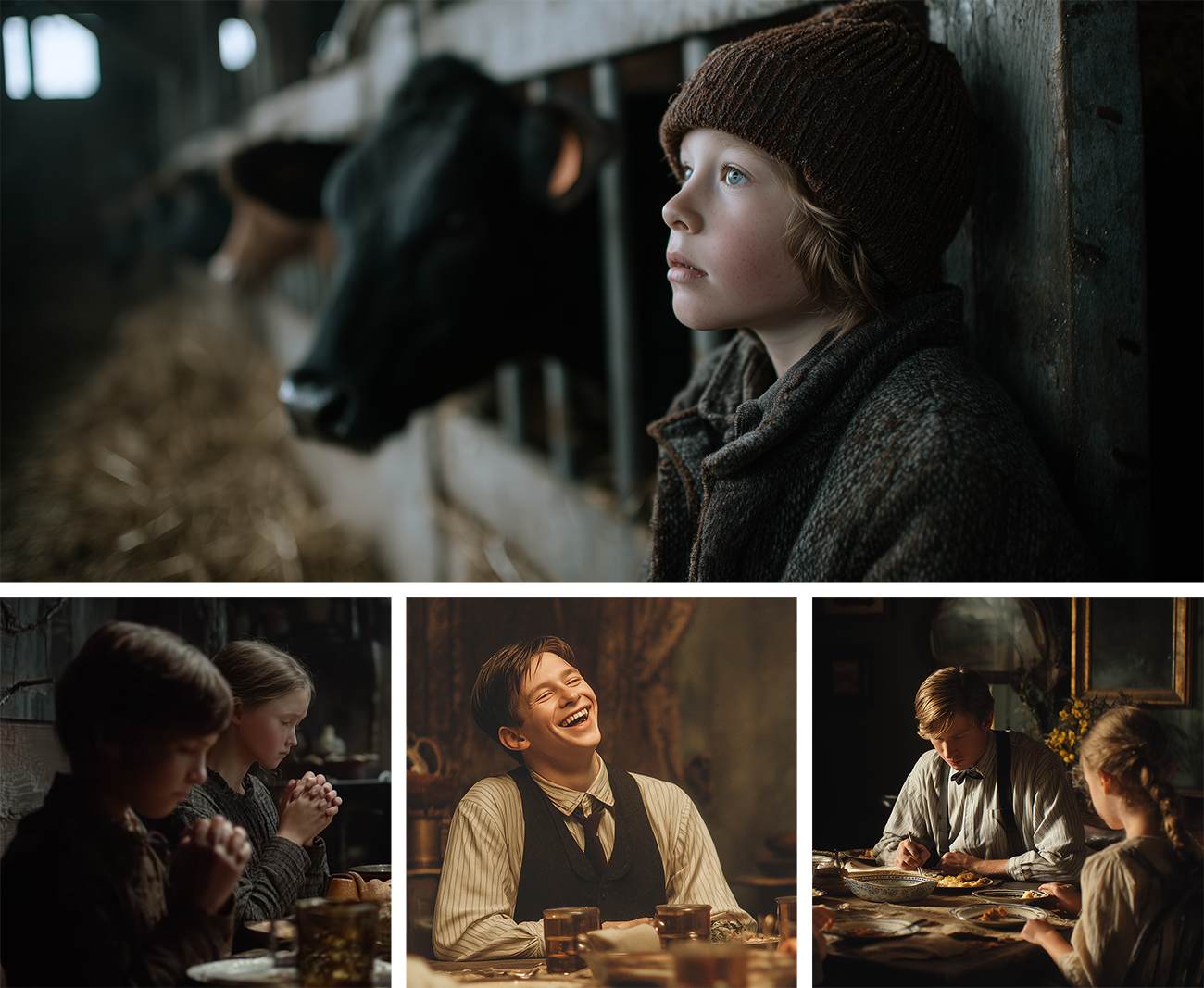
Almanzo heads to the horse barn he loves best. The three-year-olds lift their heads and nuzzle for him, though he must not touch them. Father says a careless boy can spoil a young horse for life. Royal and Almanzo fork down fresh hay, milk Blossom and Bossy, and feed Almanzo’s own calves, Star and Bright, sweet carrots in the south barn.
Inside, the kitchen is filled with the smell of frying ham. Father and Mr. Corse speak of politics, and everyone fills their plates high with beans, pork, potatoes, preserves, and pumpkin pie. But talk turns sober when Royal mentions the Hardscrabble boys and the fate of Jonas Lane. The house is warm, the supper plentiful, yet beyond the tall board fence the wind howls—and winter, like the boys at school, has only begun.
Chapter 3: Winter Night
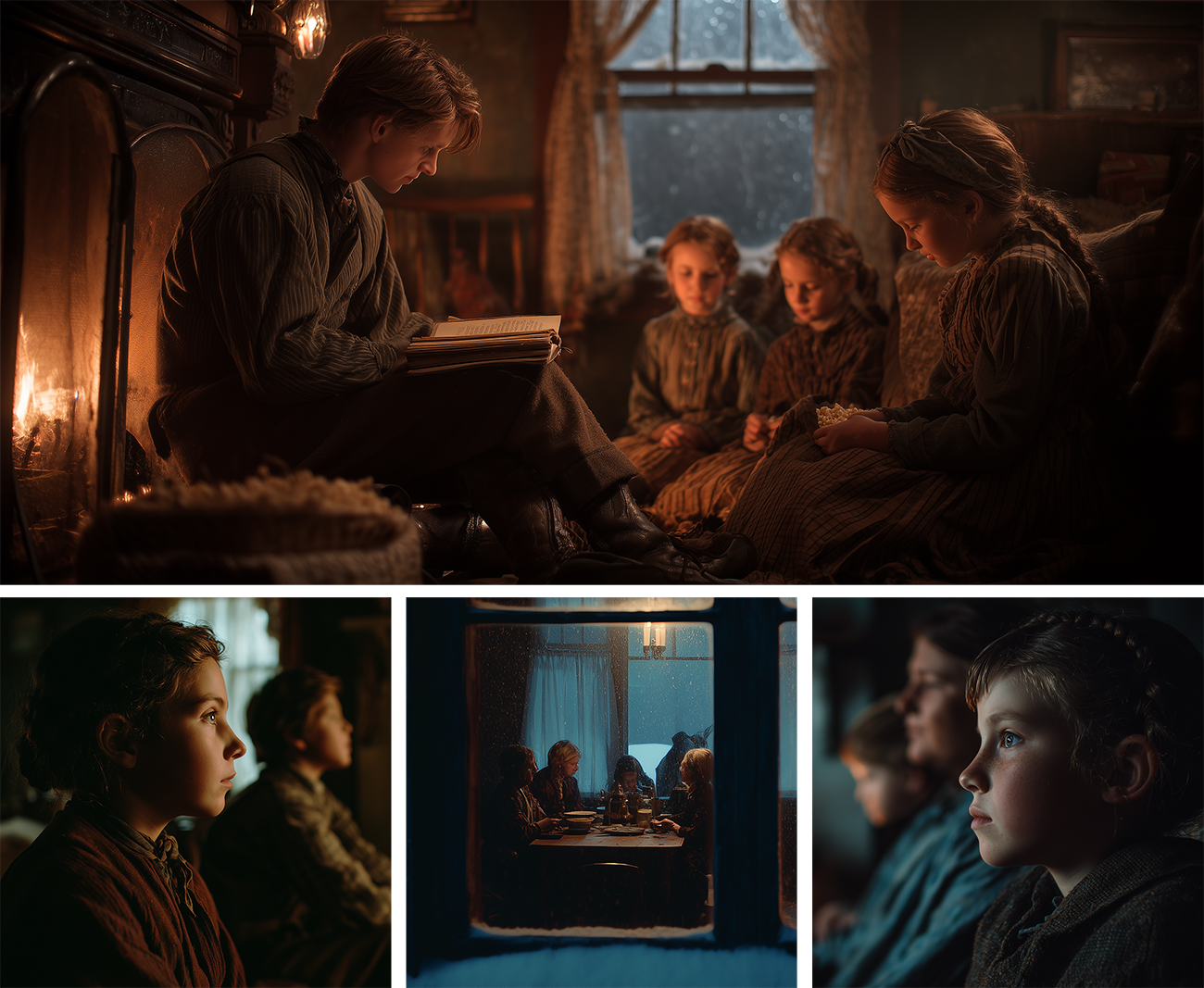
After supper…
… the room fills with the sharp scent of cider, hot iron, and popcorn. Mother rocks and knits, her needles flashing in the lamplight. Father sits nearby, scraping a new ax-handle smooth with a shard of broken glass. Royal carefully carves a chain of wooden links from a single piece of pine. Alice bends over her woolwork embroidery, while Eliza Jane reads aloud from the weekly New York paper.
Almanzo, perched on a low footstool by the stove, eats apples and popcorn and drinks sweet cider, listening to the steady murmur of family and fire. Beyond the frosted windows, the cold deepens. When bedtime comes, Royal and Almanzo race upstairs into the unheated rooms, their teeth chattering and noses aching. They hear the kitchen door open and shut — Father heading back out into the frozen night. If he does not crack his whip and drive the horses and cows into the barnyard, they could freeze.
At five o’clock, the boys rise and follow him into the stinging cold. By the time they return, Mother has prepared a breakfast of oatmeal, fried potatoes, golden buckwheat cakes, sausages and gravy, preserves, doughnuts, and spicy apple pie. Outside, winter still rules the land. But school waits, and the day has begun.
To keep up with other readers, you can join the Facebook group discussion here.
Chapter 4: Surprise
To keep up with other readers, you can join the Facebook group discussion here.
At noon each day…
… the big boys cause trouble by hitching up their sleds behind the wood-cutters. Mr. Corse’s warnings seem small beside their swagger. “If this occurs again, I shall punish you,” he says quietly. But Royal and Almanzo know the truth — Big Bill Ritchie and his friends fear no teacher. At supper Father calmly reminds him that the responsibility belongs to the man whose job it is, and hints that the outcome may surprise him.
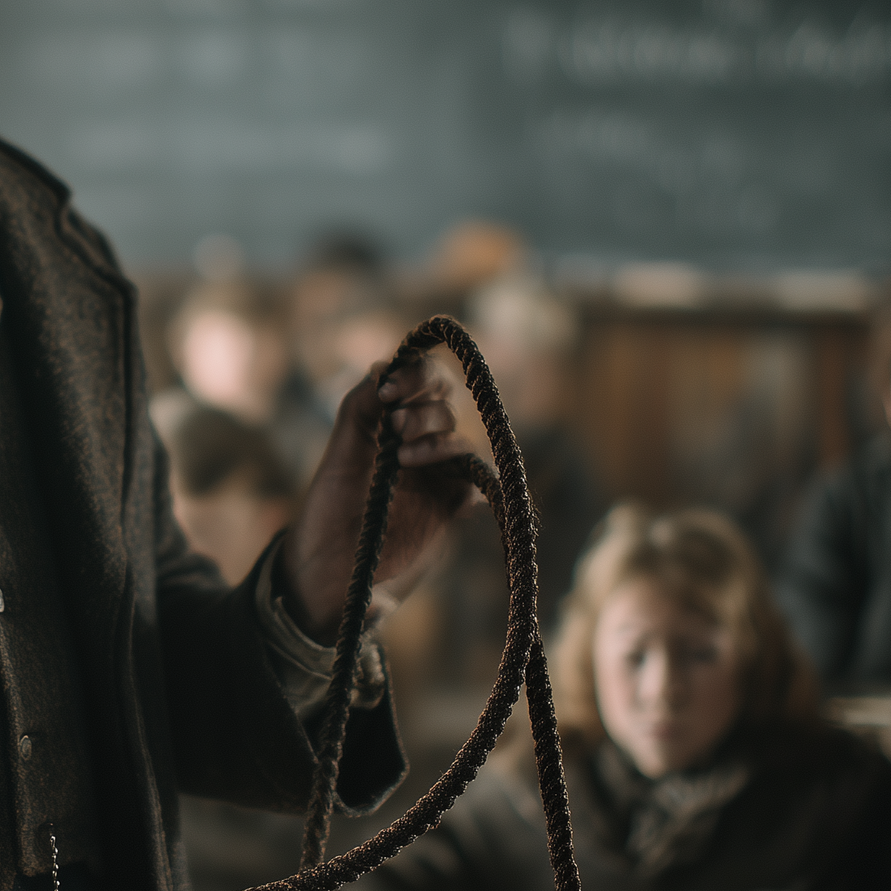
The next day, the teacher calls up the troublemakers to the front of the class. Bill charges down the aisle with his friends at his heels — but from behind the desk Mr. Corse draws a long blacksnake ox-whip. It snaps to life with a hiss and crack, coiling and striking, tripping Bill and sending him bawling like a calf. Windows fly open; boys leap into the snow and scatter. At last the whip lies quiet on the desk.
That evening Father asks mildly whether the boys threw Mr. Corse out. “No,” says the teacher, smiling, “thanks to your blacksnake whip.” Almanzo realizes then that Father had known all along. And he understands something new: a quiet man may hold a greater strength than anyone expects.
Chapter 5: Birthday
On a bitter winter morning…
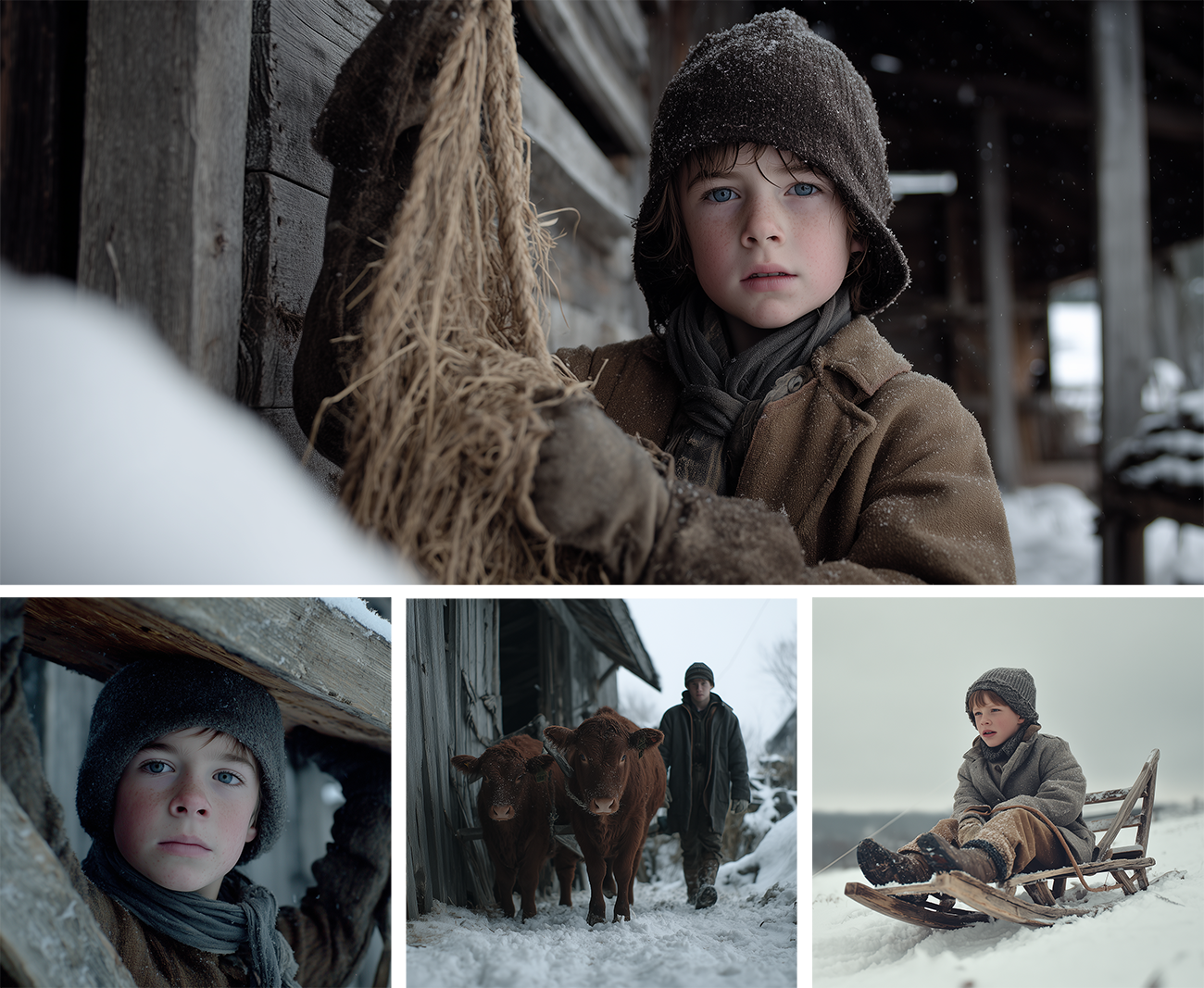
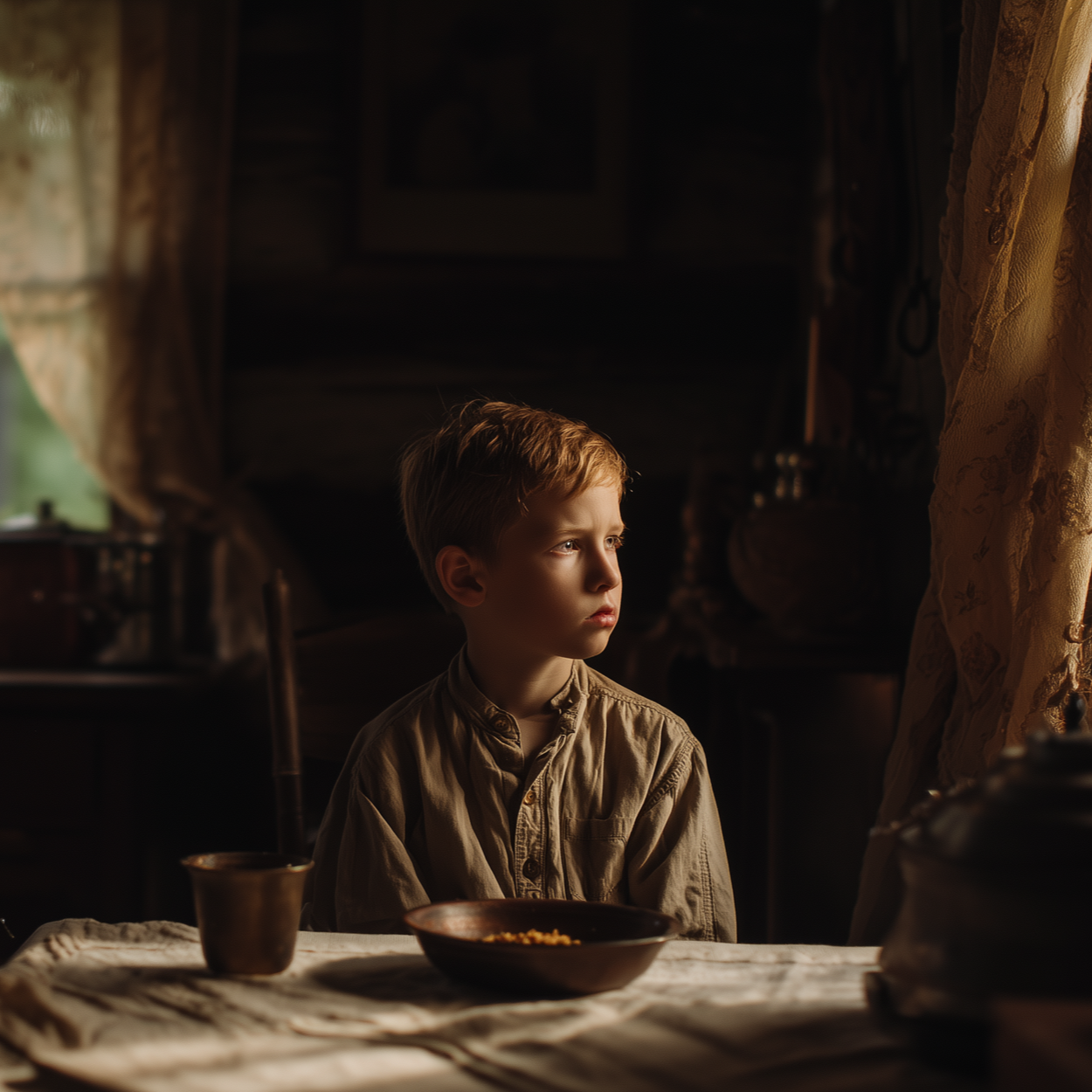
… Almanzo sits down to his bowl of oatmeal when Father reminds him that he is nine years old today. There is a present waiting in the woodshed — a small calf yoke, smooth and strong. “You are old enough to break the calves,” Father tells him.
In the barn, Star and Bright stand sleek from all the careful currying Almanzo has given them. Father shows him how to fit the yoke across their necks, how to slip the wooden bow beneath the throat and pin it fast. The calves toss their heads, but Almanzo steadies them. Almanzo stuffs his pockets with grain, and the calves come eagerly toward him. By the time Father returns, the lesson has begun to take hold.
Yet when he asks about breaking a colt, Father answers gently, “That’s a man’s job, son.” After dinner Mother sends him for wood, and in the shed he finds another surprise — a shining new hand-sled Father has made of hickory.
Outside, under the bright winter sun, Almanzo flies over the snow, darting inside for apples, doughnuts, and cookies. Almanzo understands now that growing up does not come all at once. It comes piece by piece — with work, patience, and the steady trust his father places in him.
To keep up with other readers, you can join the Facebook group discussion here.
Chapter 6: Filling the Ice-House
To keep up with other readers, you can join the Facebook group discussion here.
Almanzo rides with Father and Royal to Trout River…
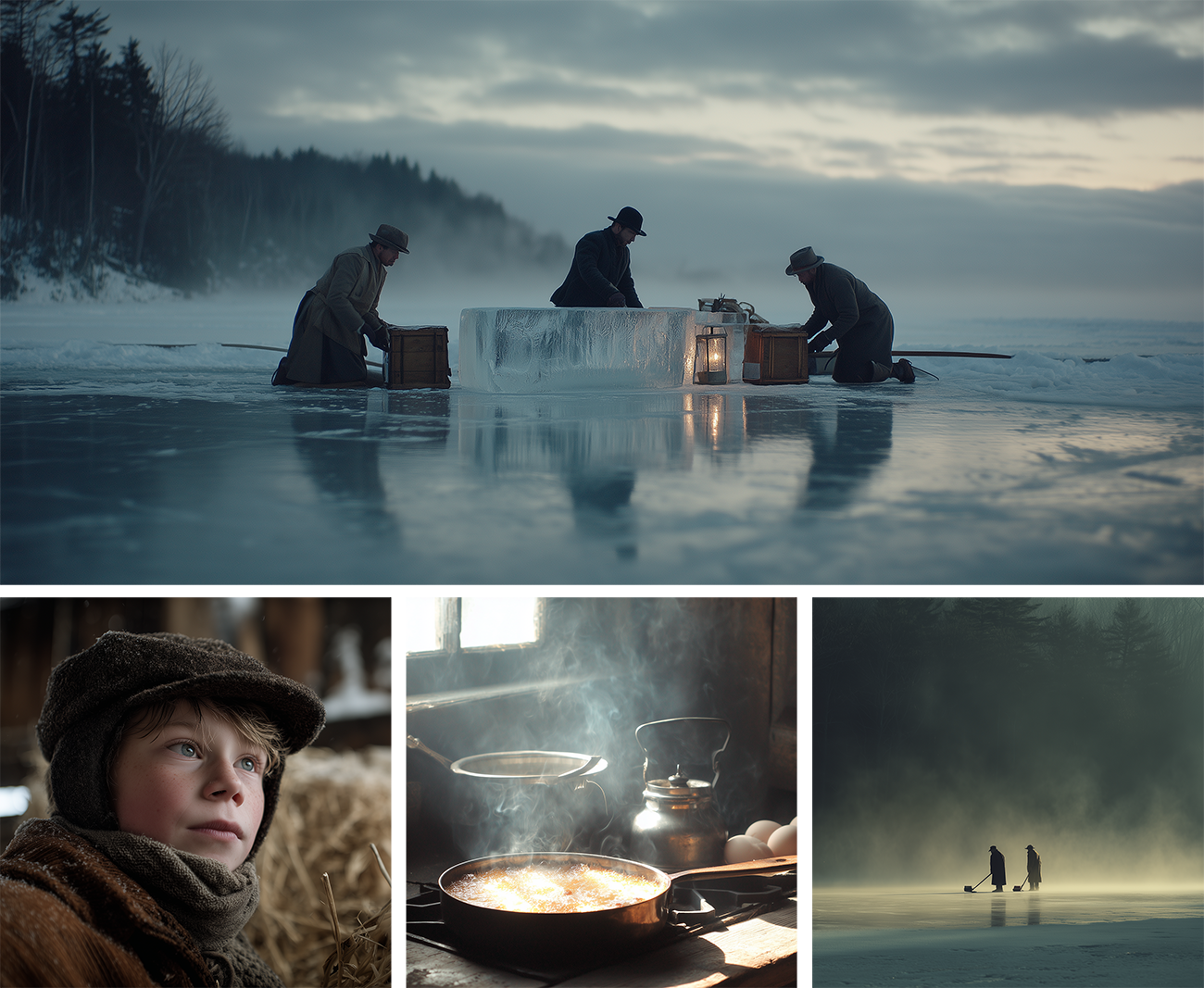
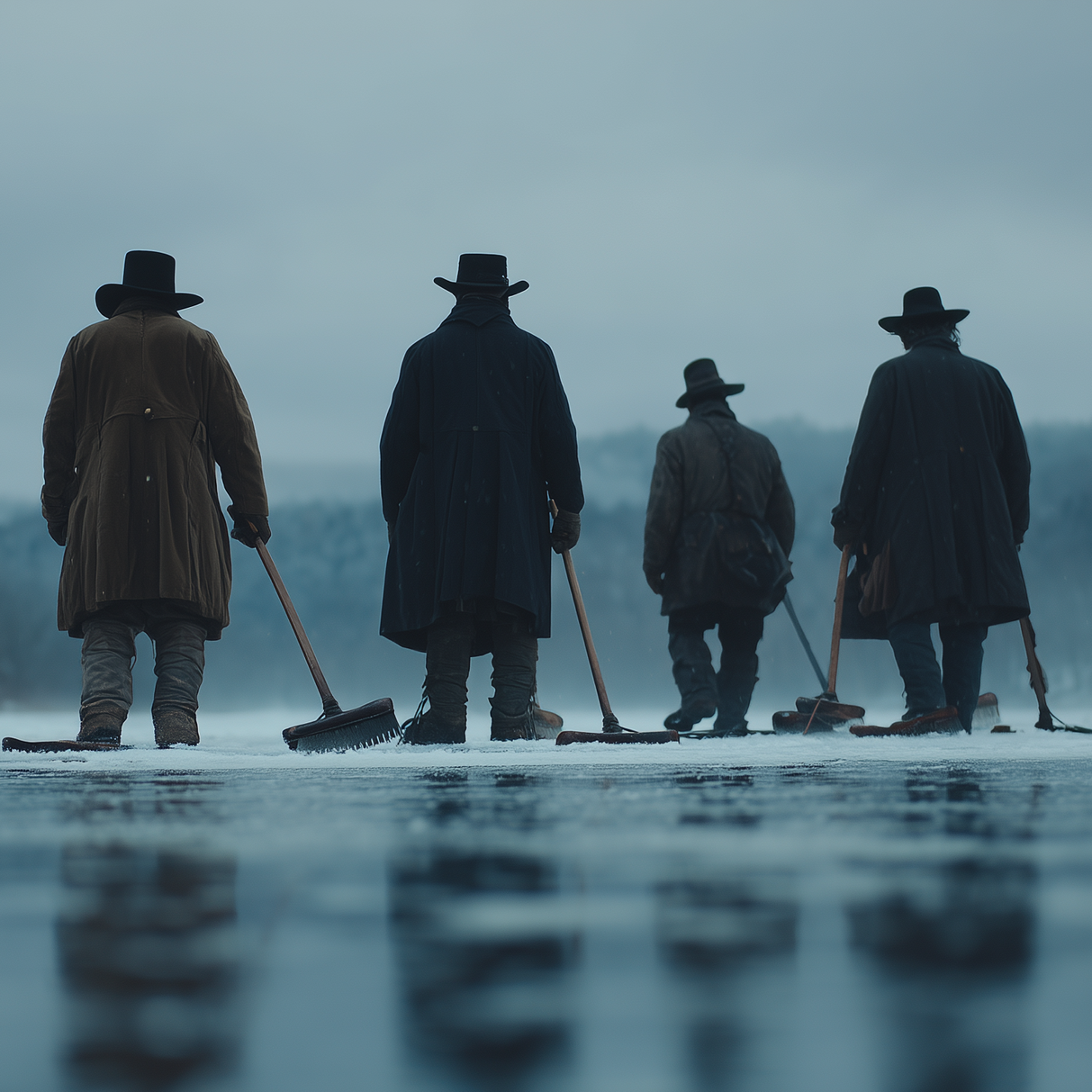
They’re going to cut ice. The air burns their lungs, and even the horses’ noses freeze white. Waiting on the pond are French Joe and Lazy John, the cheerful woodsmen Father has hired to help. With axes and crosscut saws, they chop an opening in the ice and begin sawing long, shining blocks free from the frozen river.
The ice is nearly two feet thick, rising from the dark water like crystal. Father shows Almanzo how to handle the heavy ice tongs, lifting the blocks onto the sled. As Almanzo leans too far over the hole, he suddenly slips and nearly falls in, but French Joe grabs him just in time.
Father’s voice is sharp with fear as he threatens a thrashing, though Almanzo knows it comes from relief. Load after load, they haul the ice home, stacking the blocks in the icehouse with layers of sawdust packed between them so they will last through summer.
By the time chores are done, Almanzo and Royal are ravenous, and Mother’s hot dinner - fried apples and onions, roast beef, mashed potatoes, and birds' nest pudding - tastes better than anything in the world.
Chapter 7: Saturday Night
On Saturday afternoons…
… the Wilder house hums with warmth — Mother frying twisted doughnuts in a great kettle while bread bakes in the stove. She doesn’t bother with neat round shapes. There is too much to do, and her crisp, fragrant doughnuts are better than any Almanzo knows.
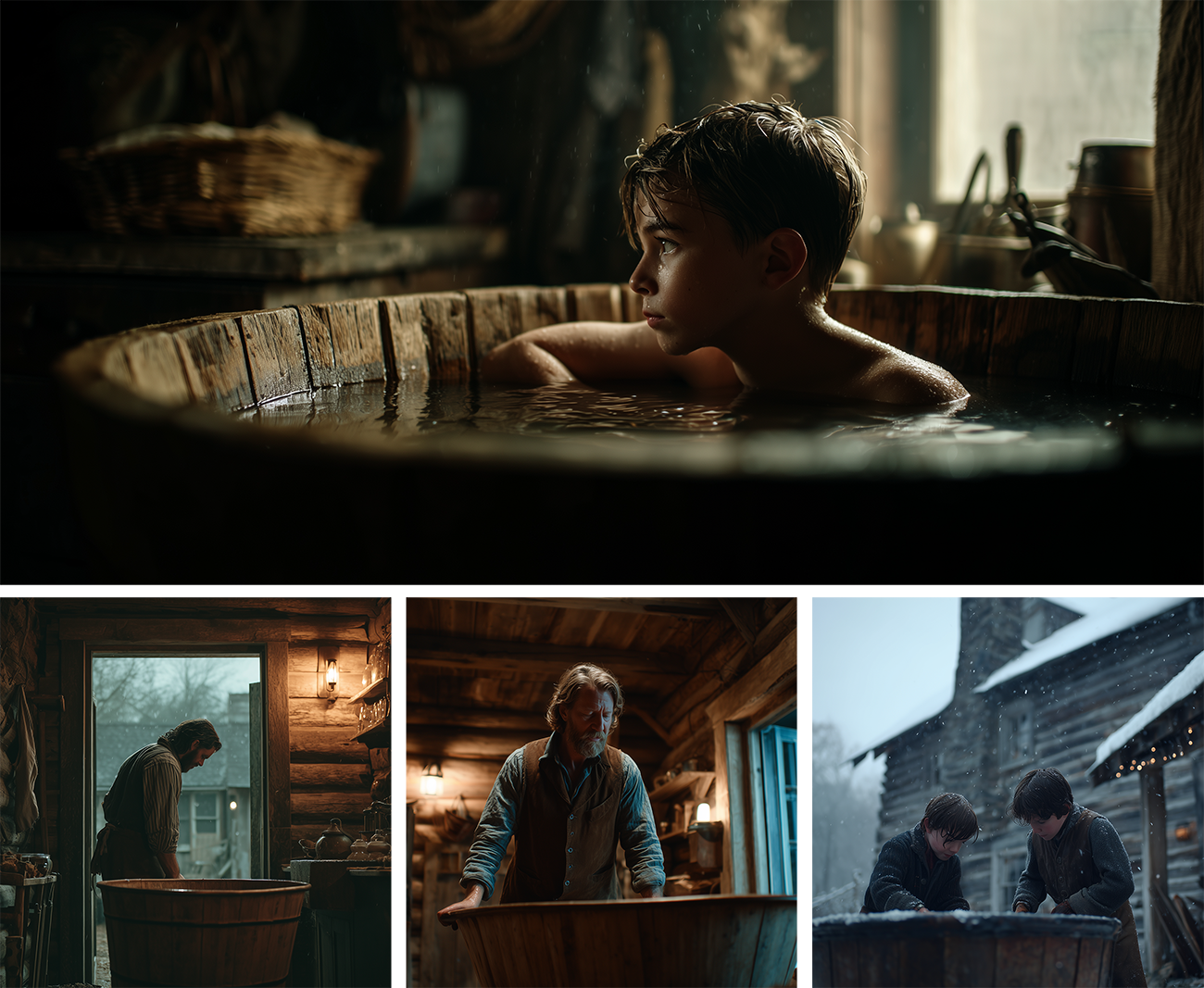
But Saturday night brings what he dreads most: bath night. The rain barrel is frozen solid, and he must hack through the ice and haul water inside while Mother worries he’ll be hurt. Father helps lift the tub onto the stove, steam filling the kitchen before everyone leaves Almanzo alone with the dreaded task.
The brown, slimy soft-soap feels worse than the cold air, and he scrubs quickly, knowing Mother will inspect him. At last declared clean, he climbs upstairs by candlelight, blows out the flame, and sinks into his feather bed — relieved the worst of Saturday is over and Sunday is near.
To keep up with other readers, you can join the Facebook group discussion here.
Chapter 8: Sunday
To keep up with other readers, you can join the Facebook group discussion here.
On Sunday morning…
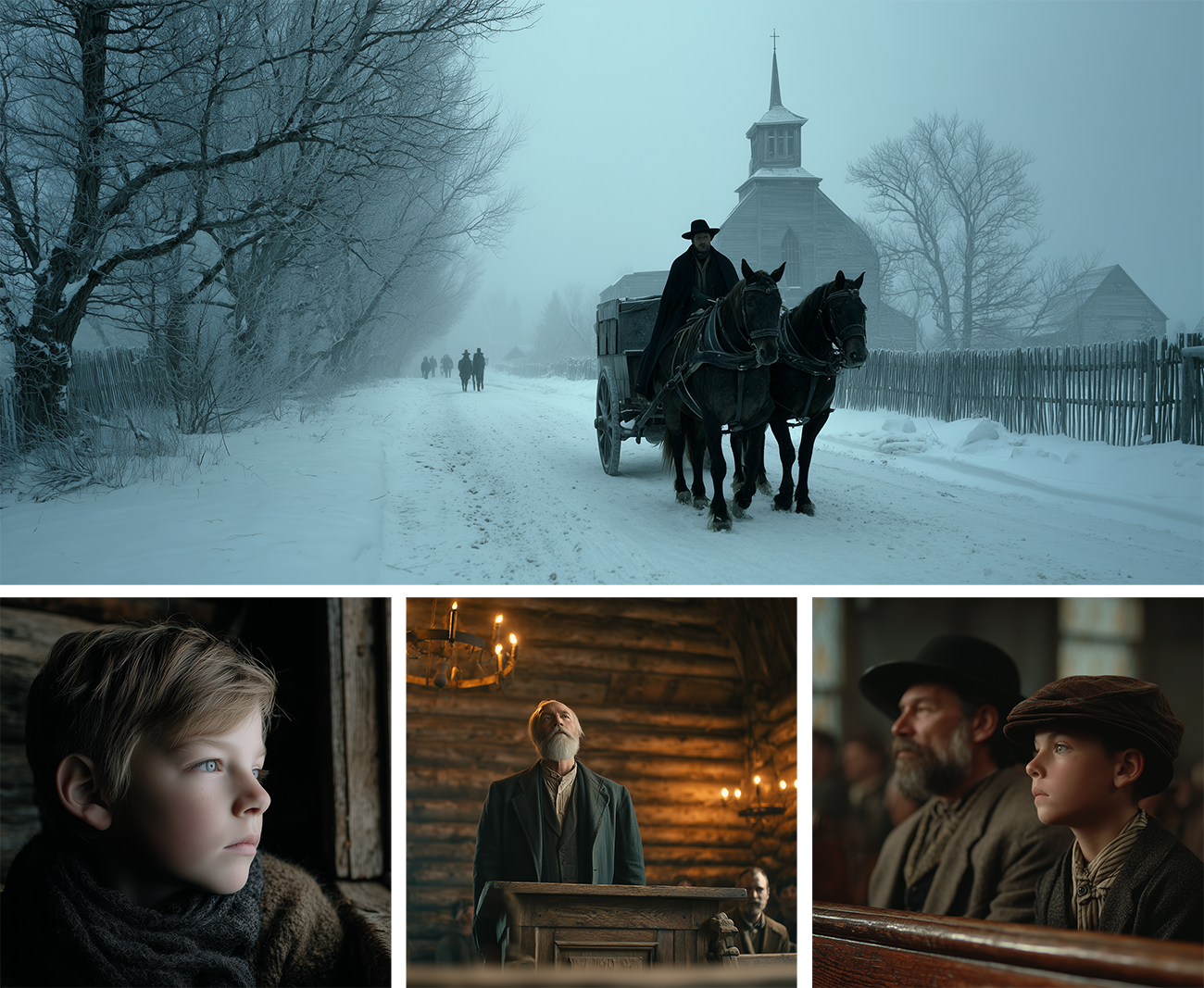
… the Wilder house awakens in a whirl of motion - Mother flying between stove and table, sausage cakes sizzling, apple pies baking, and pancakes rising in tall golden stacks. Father tends the fire and brushes the sleek driving horses until they gleam, while Royal polishes the silver-mounted harness.
Soon the family steps out dressed in their finest - velvet collars, lace frills, calfskin shoes - and the sleigh glides toward town beneath buffalo robes and winter sky.
Almanzo watches the reins in Father’s steady hands, longing for the day they might be his. But Sunday is not a day for longing. It is a day for stillness. Two long hours in church, eyes fixed forward. A cousin’s fine store-bought cap stirring envy. A dinner rich with chicken pie and pumpkin dessert. And then the hardest part of all - the endless afternoon of sitting quietly while the warm house hums with silence. To Almanzo, Sunday feels like waiting… until at last the chores return and life begins to move again.
Chapter 9: Breaking the Calves
Almanzo knows exactly where he belongs…
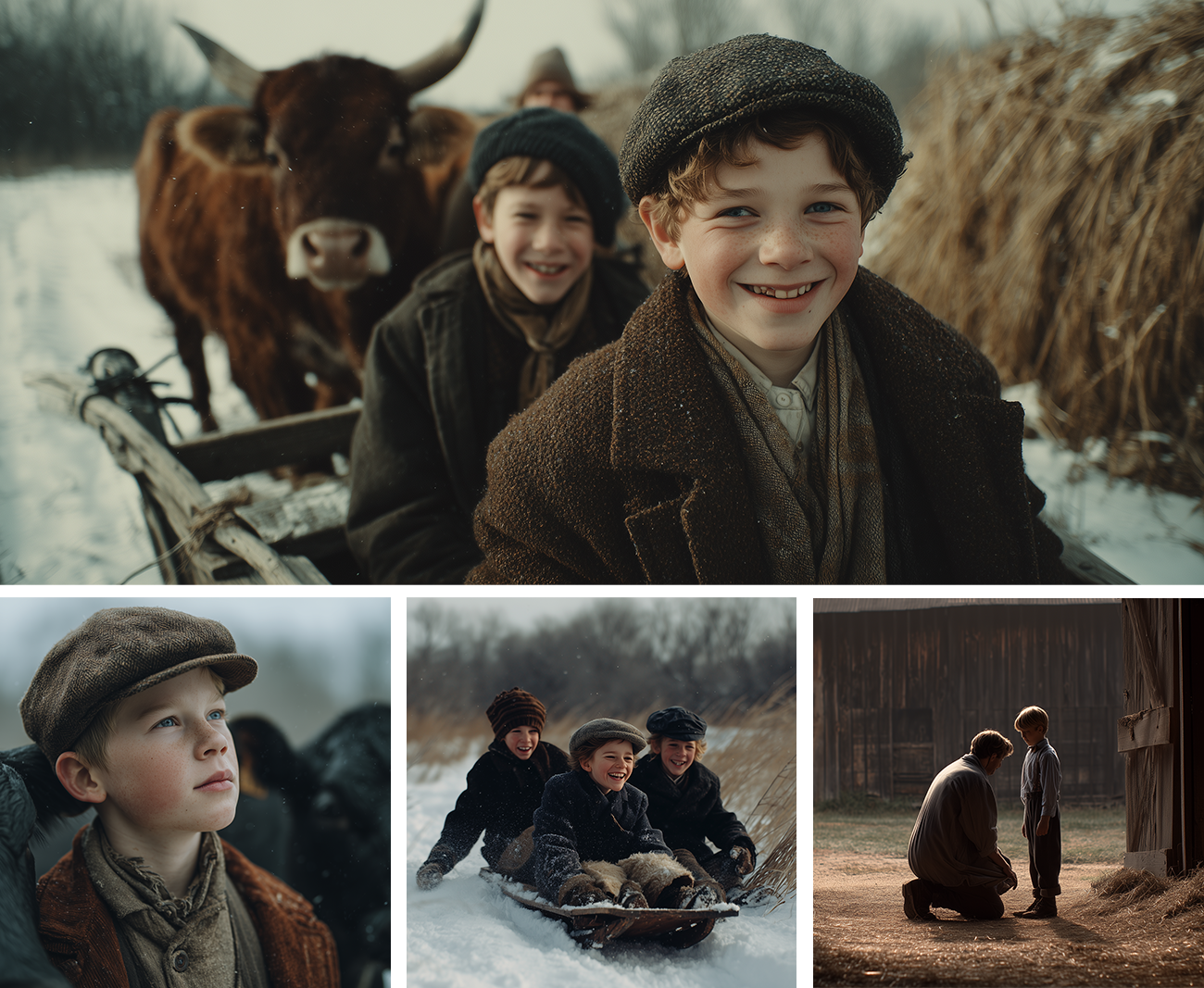
… not in his school seat, but in the barn. The ice house must be filled, and Star and Bright must not forget their lessons. With Mother’s quiet support, he fits the yoke over the calves and leads them into the frosty barnyard, calling “Haw” and “Gee,” cracking his newly braided whip in the cold air - never to strike, only to guide. "Slow and patient," Father reminds him. That is how good oxen are made.
By the next Saturday, the calves are minding him well enough to pull a bobsled. But when the French boys climb aboard, the quiet lesson turns wild. Downhill they race, sled rattling, boys shouting, until snow flies and calves disappear into a drift. By evening, Star and Bright are safe in their stall, and Almanzo understands something new: breaking calves to lead is one thing - breaking them to drive is another. And he is determined to master both.
To keep up with other readers, you can join the Facebook group discussion here.
Chapter 10: The Turn of the Year
To keep up with other readers, you can join the Facebook group discussion here.
“When the days begin to lengthen…
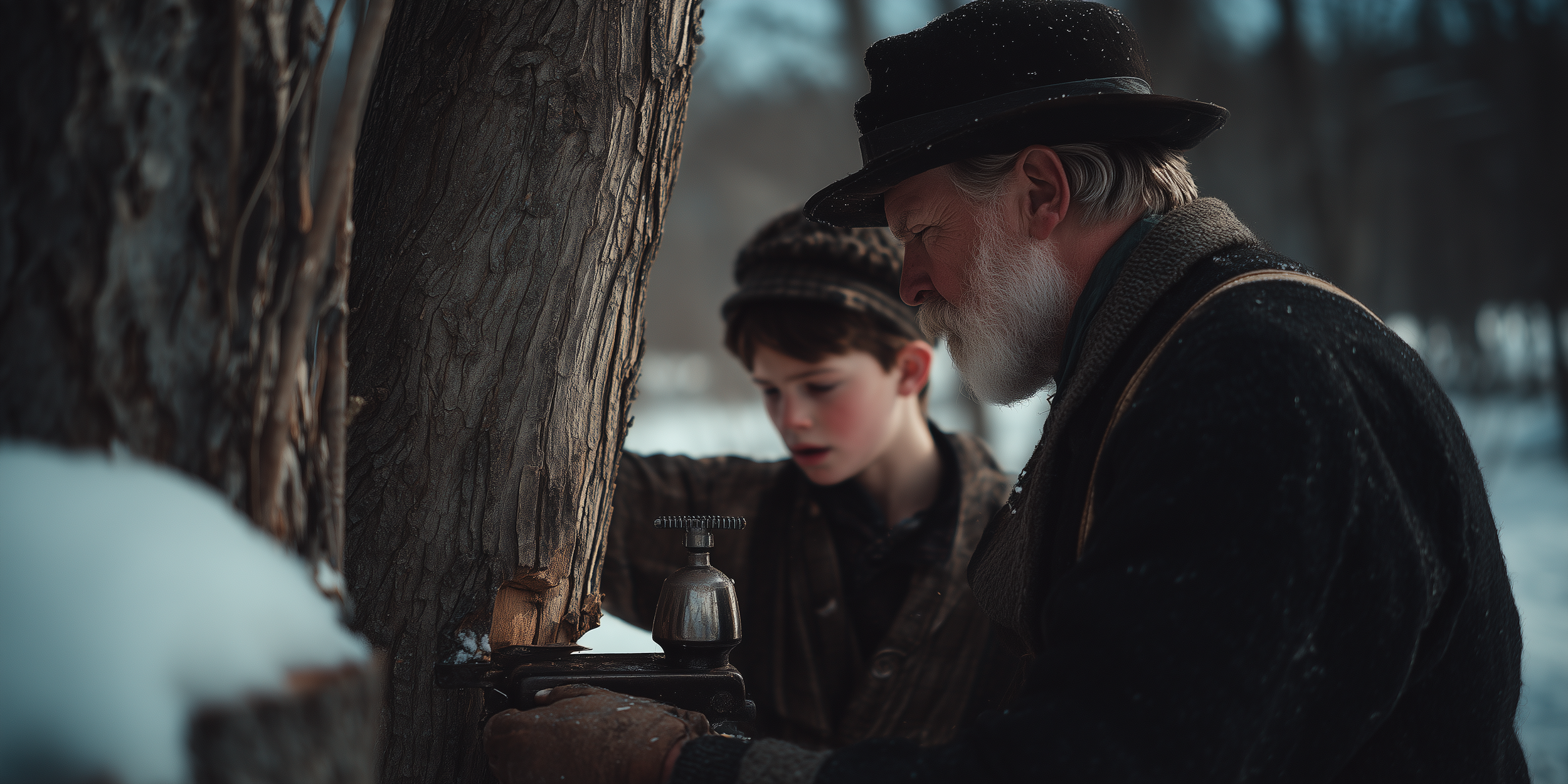
“… the cold begins to strengthen,” Father says as he shoulders his great wooden yoke and leads Almanzo deep into the silent maple woods. The days are growing longer, the cold sharper.
There, beneath bare branches and unbroken snow, the trees begin to whisper their secret. Drop by drop, clear sap runs from wooden spouts into waiting pails. Almanzo trudges from tree to tree with his little yoke and bucket, tasting the icy sweetness and leaving the only tracks in the white wilderness.
All day the great kettle steams over Father’s roaring fire until the thin sap turns to golden syrup. By nightfall it is carried home, where Mother works her own magic at the stove. But as the cakes of maple sugar harden in the pantry, the year suddenly turns.
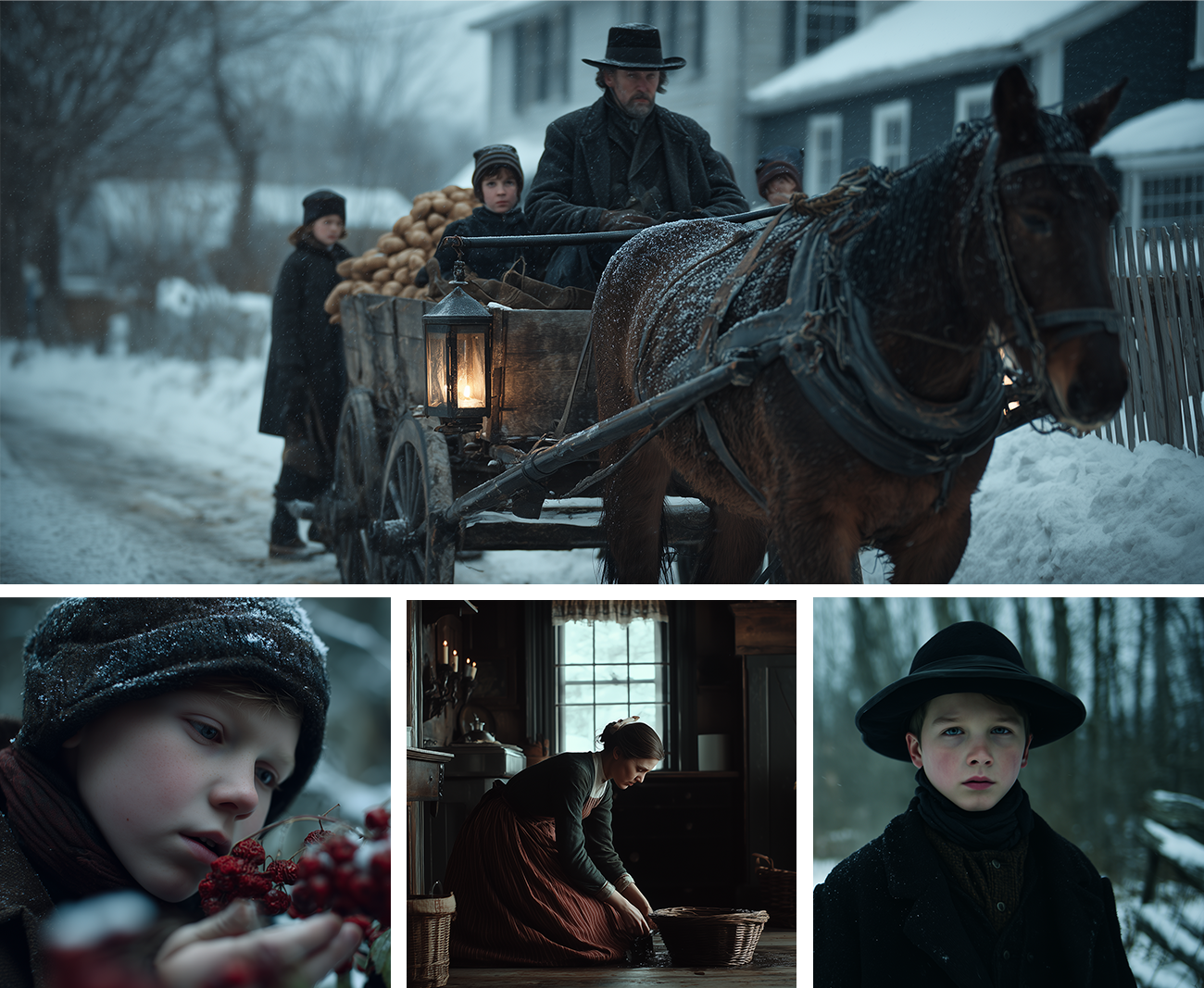
Snow begins to melt, icicles crash from the eaves, and Father races to town with wagonloads of potatoes for the buyers in Malone. By the time the long day ends, five hundred dollars have changed hands - and Mother has already begun the dreaded spring house-cleaning. Outside, violets and birds promise the fields will soon be calling.
Chapter 11: Springtime
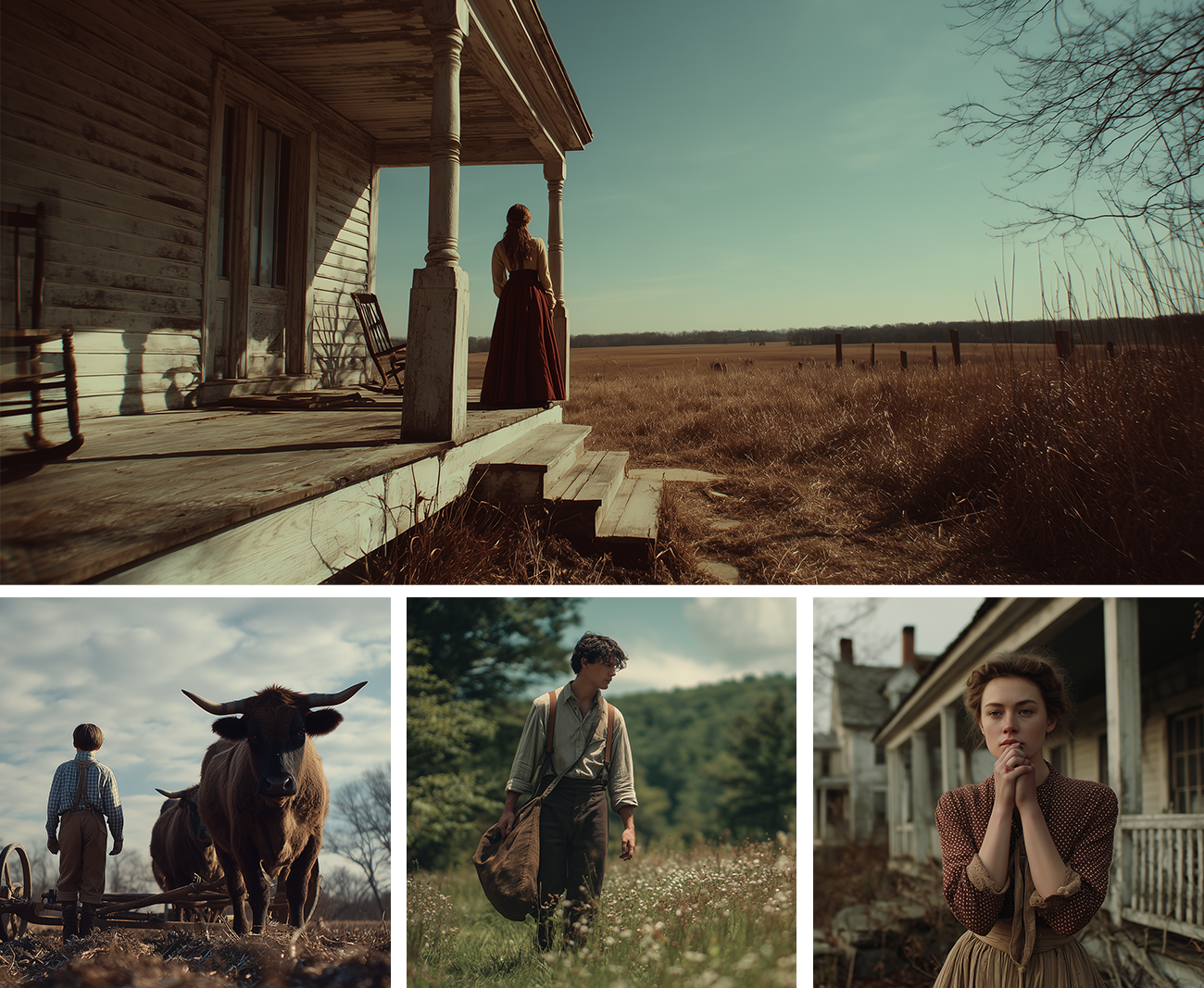
Breakfast is eaten in the gray before dawn now
… and the sun is only just rising when Almanzo drives Bess and Beauty out of the barnyard and into the wide spring fields. At nearly ten years old he is trusted with the team, though the old horses are so wise and steady they hardly need him.
Almanzo walks mile after mile behind the harrow, growing hungrier with every step, waiting for the sound he knows must come. At last Mother’s great tin dinner-horn echoes across the valley, and every horse on the Wilder farm pricks its ears.
By nightfall, he falls asleep almost before his head touches the pillow, for spring has begun the great work of the farm. “The life of the earth comes up with a rush in the springtime,” Father says, and Almanzo becomes a little soldier in that yearly battle.
From dawn to dark the fields are filled with work and the rich smell of fresh earth - yet Almanzo never doubts that someday, when his legs are longer and his arms stronger, he will keep pace with any man who walks those fields.
To keep up with other readers, you can join the Facebook group discussion here.
Chapter 12: Tin-Peddler
To keep up with other readers, you can join the Facebook group discussion here.
A flash of bright red appears on the road…
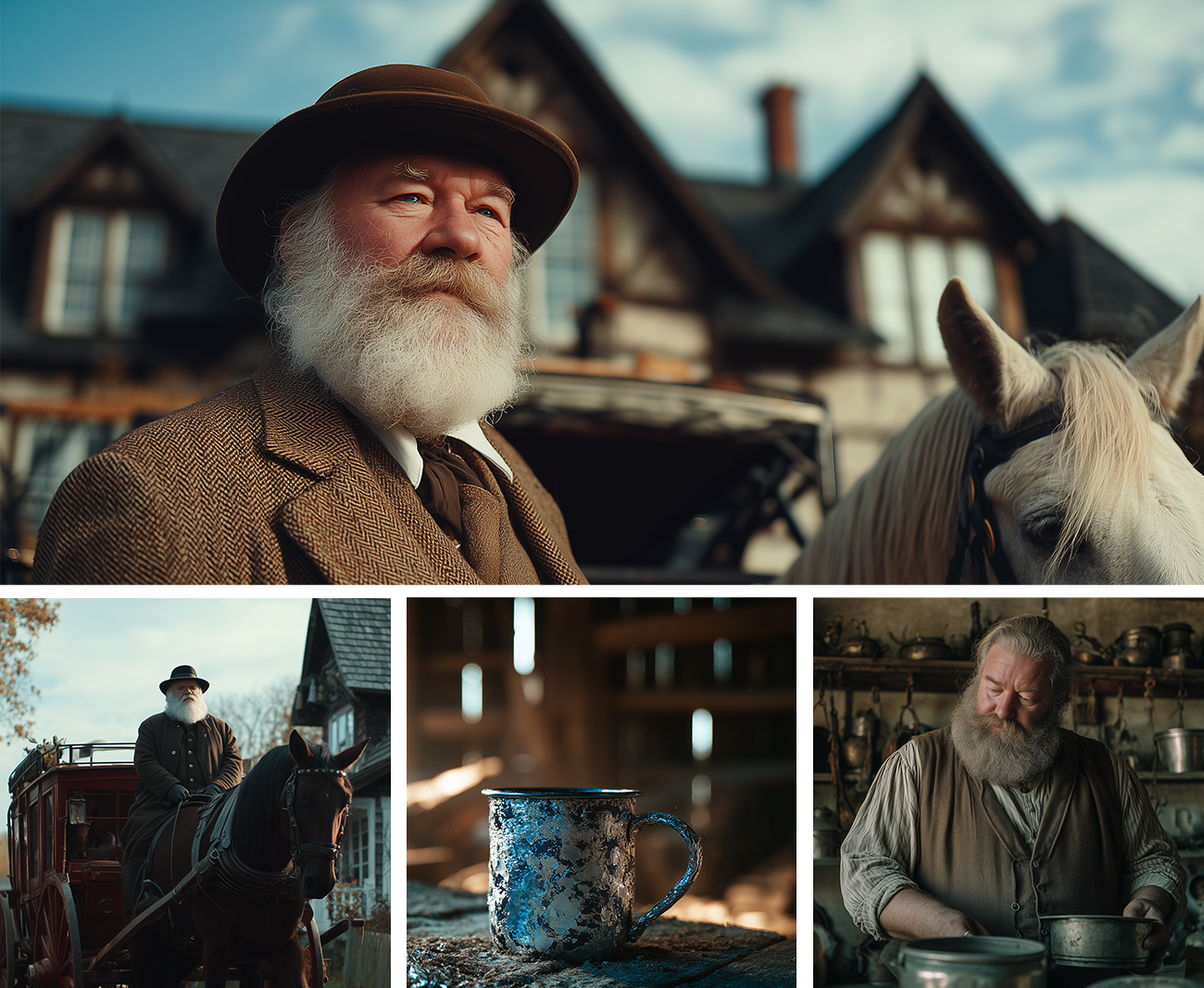
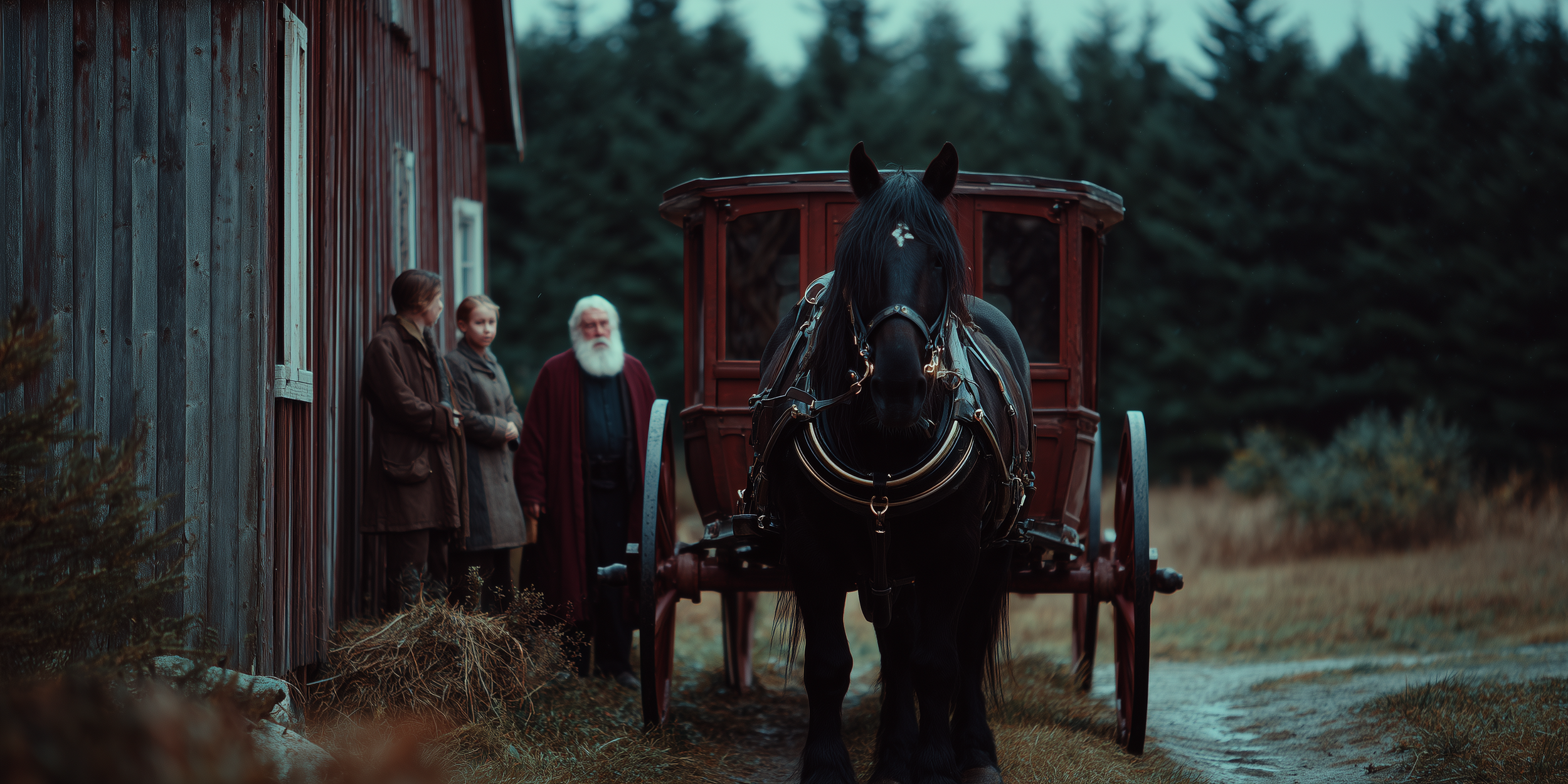
… and Almanzo shouts the news before the wagon even reaches the yard - the tin-peddler is coming! Nick Brown’s cart rolls in behind a great white horse, painted red and packed with shining wonders: pails, pans, cups, whistles, and tiny tin toys that glitter in the afternoon light. Nick is full of songs and stories gathered from every home in the countryside.
After supper comes the real business. Mother negotiates with the peddler, trading scraps of wool and linen for shining new pans. Almanzo must sit quietly while the grown-ups talk, though his eyes keep drifting to the treasures hanging inside the cart. At last the trading is done and the children receive their gifts.
(Find out what treasure Almanzo receives at the end of this chapter!)
When the cart rattles away down the road, Nick Brown whistling as he goes, Almanzo keeps the tune in his head, waiting for the day the bright red wagon comes again.
Chapter 13: The Strange Dog
A quiet uneasiness settles over the Wilder farm…
After the horse-buyer leaves and Father brings home a pocket full of money, mother cannot rest, hiding it from place to place, while the shadows outside seem deeper than usual.
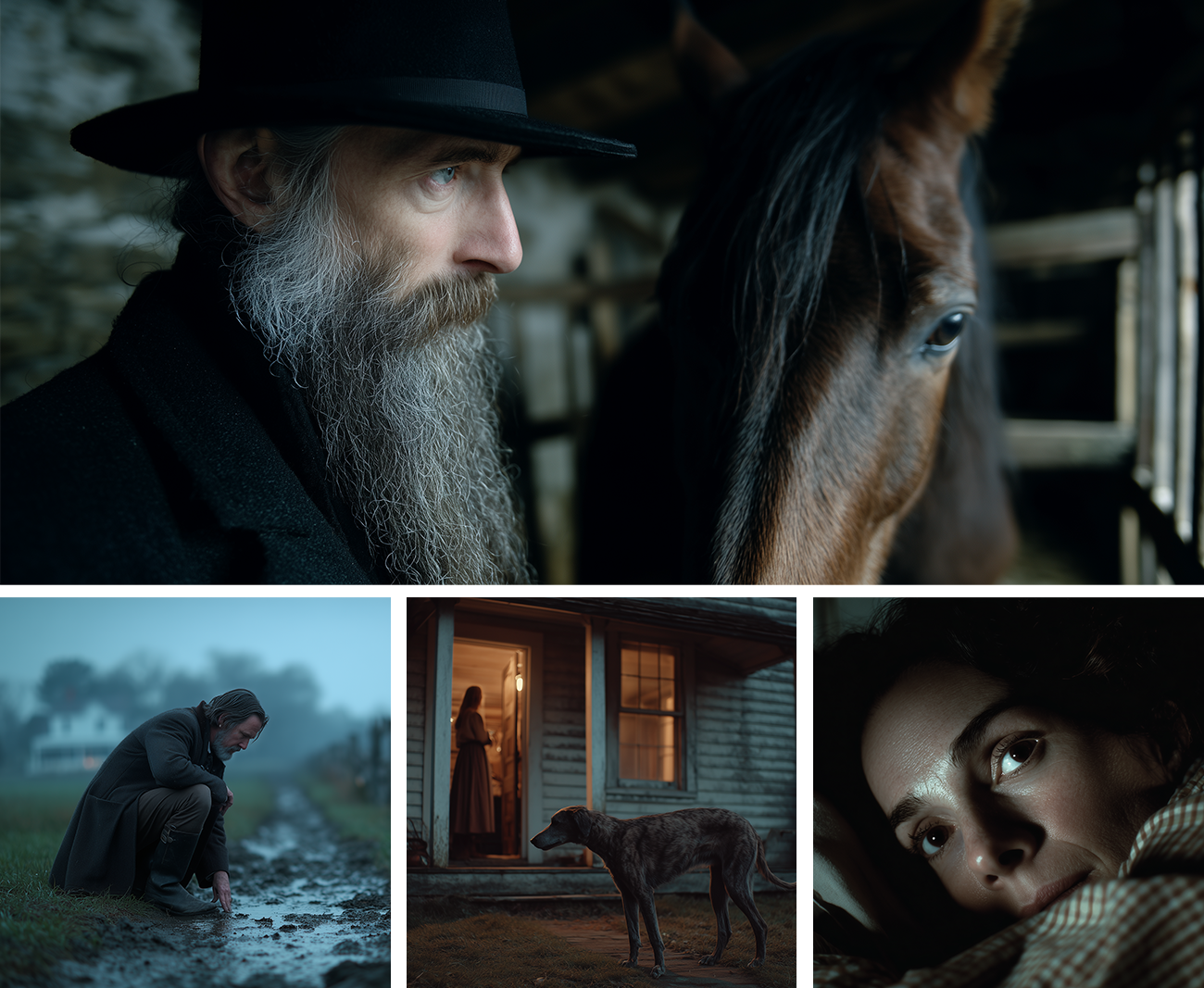
That night, a thin, trembling stray dog appears at the edge of the yard. The children feed it, and it lingers near the house. But in the darkness, it suddenly growls at something no one else can see. By morning, Father finds tracks in the woodlot.
Danger had come close.
Find out what threatened the Wilder home in this chapter - and why the strange dog may have come at just the right time. And just as quietly as it came, the dog is gone.
To keep up with other readers, you can join the Facebook group discussion here.
Chapter 14: Sheep-Shearing
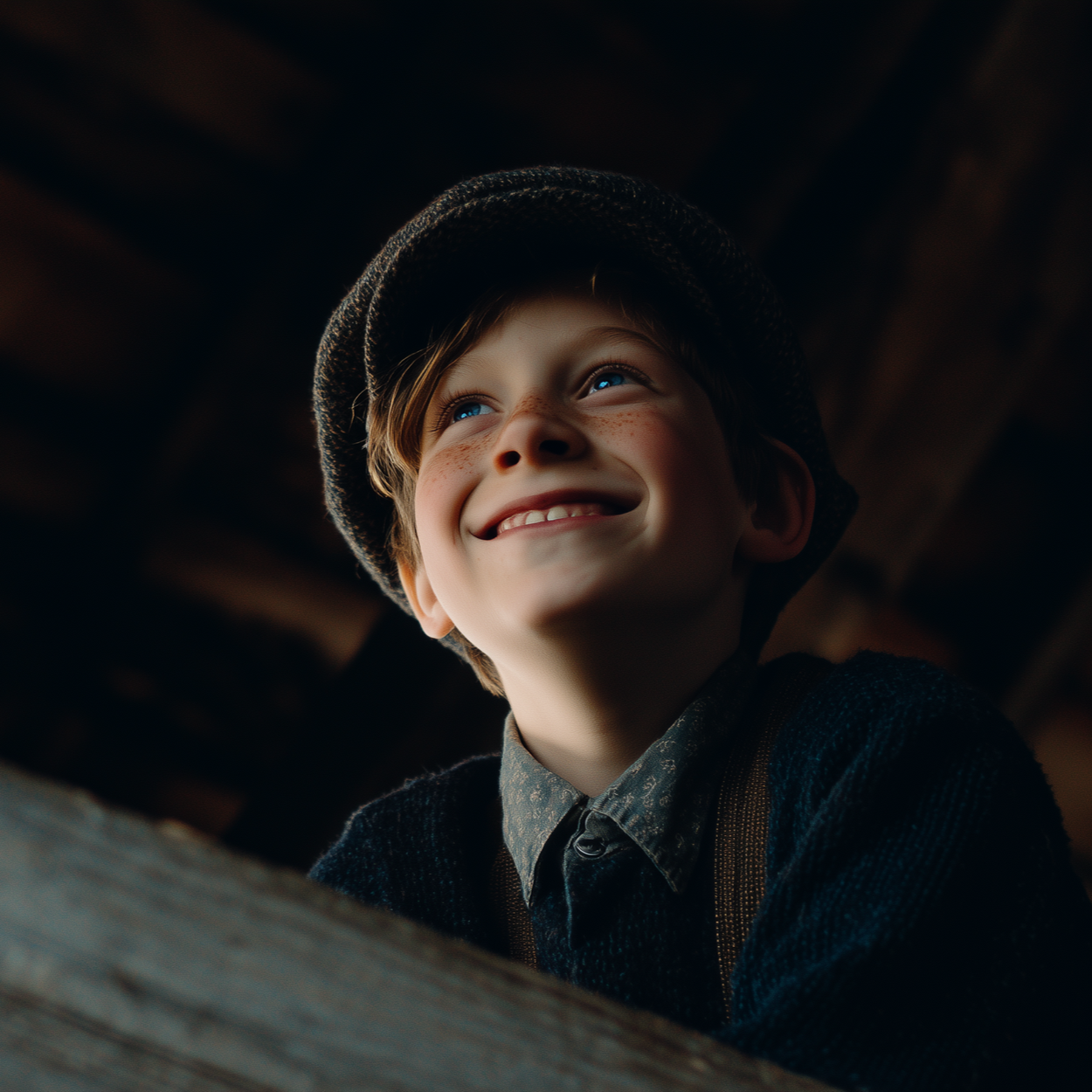
On the Wilder farm…
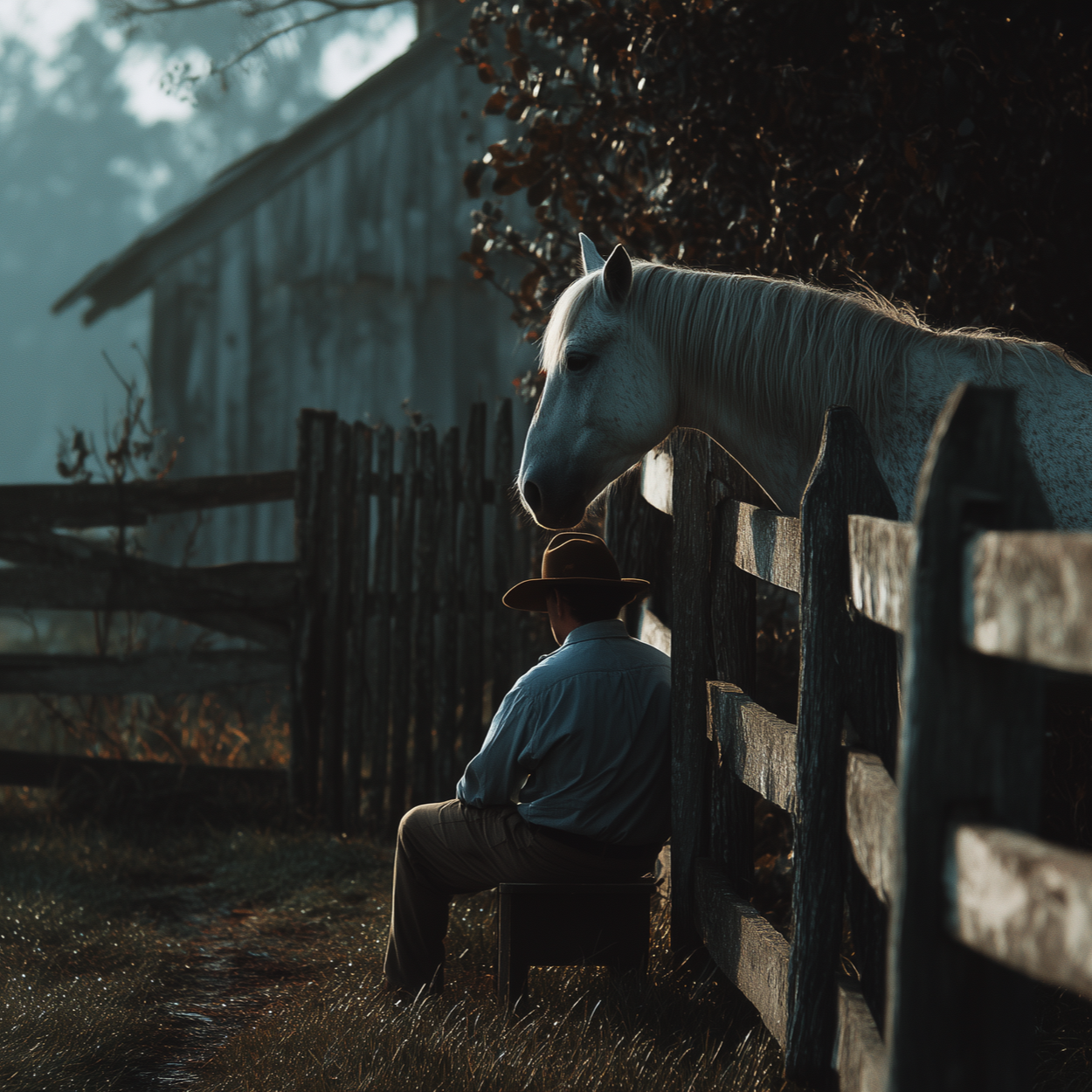
… warm sunshine and thick green pastures mean one thing - it is time for sheep-shearing!
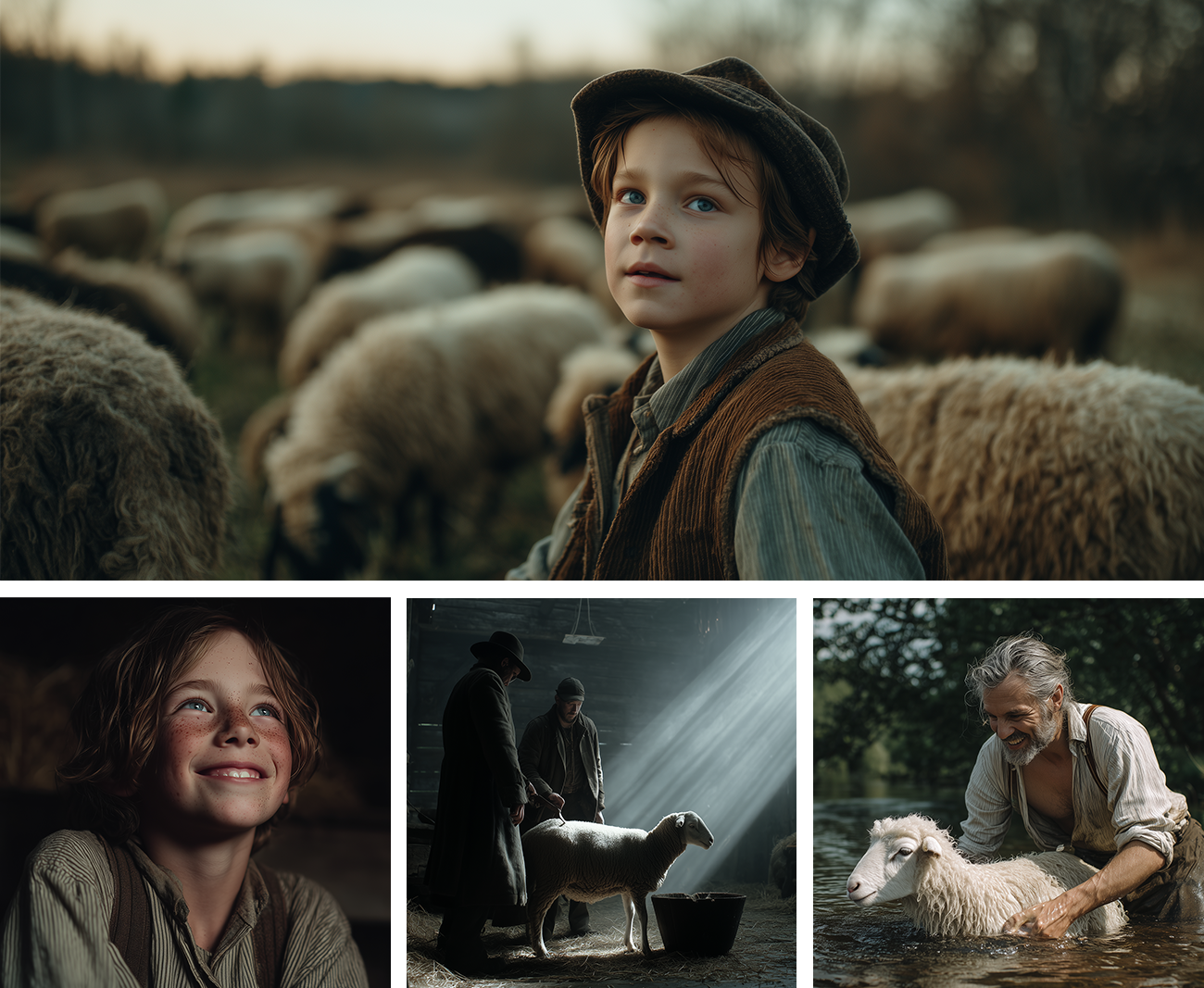
The flock is driven down to the river, where the quiet fields suddenly burst into splashing water, flying suds, and a chorus of bleats as the sheep are scrubbed clean. What seems like great fun to the boys is far less pleasant for the woolly flock.
The next morning, the real work begins. Long shears flash, heavy fleeces fall away, and the barn fills with the smell of wool and fresh hay. Almanzo races to keep up, hauling the thick bundles to the loft, determined to prove himself among the men.
But a clever idea - and a bit of mischief - turns the whole contest on its head. Find out how Almanzo tries to outwit the grown-ups - and who truly “wins” the day of sheep-shearing.
To keep up with other readers, you can join the Facebook group discussion here.
Chapter 15: Cold Snap
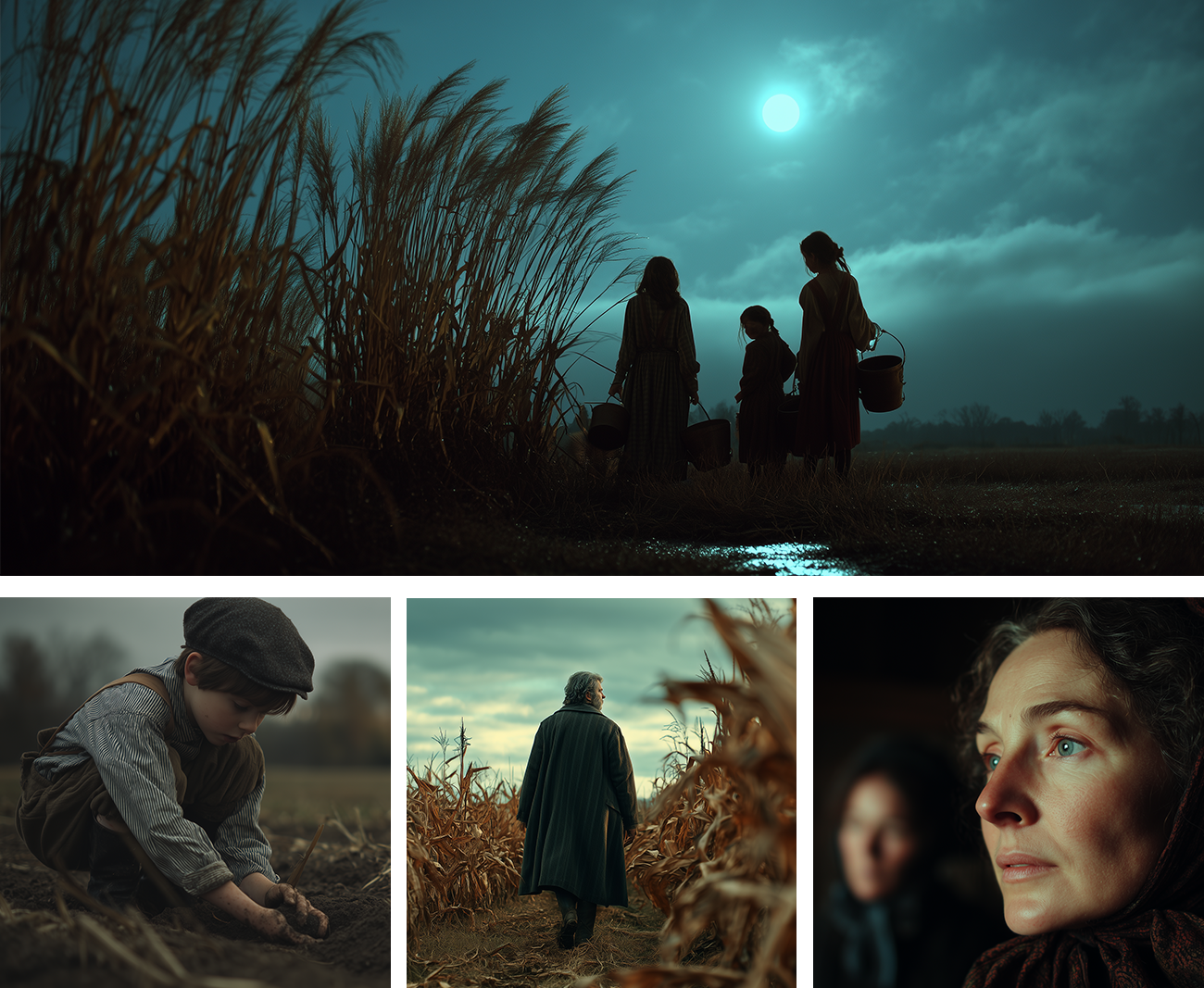
Spring refuses to warm on the Wilder farm…
The mornings are cold, the sun feels weak, and the corn barely grows. Day after day, Father watches the fields and says he has never seen a crop come up so slowly.
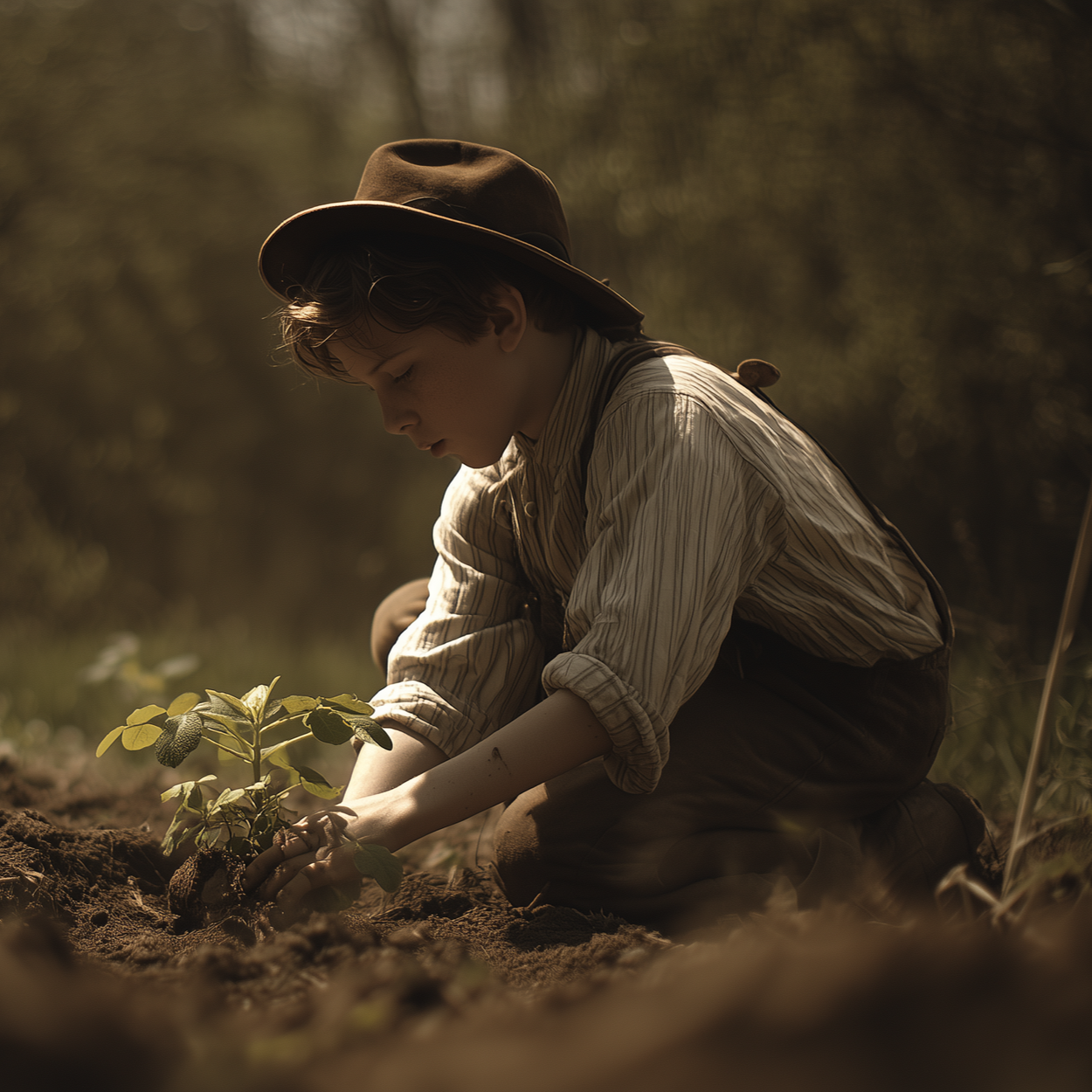
Almanzo has gone back to school, but he would rather be anywhere else. He stretches out his chores in the fields, hoeing carefully and slowly, waiting for the right time to plant his pumpkin seeds. At last, he slips into the cornfield with his pouch of seeds and pushes each one into the ground by hand.
Then, Father gives a warning - he thinks it will freeze. And in the middle of the night, it happens. The corn is white with frost. Buckets are filled, and the family hurries through the dark, pouring water over the corn before the sun rises. But the light is coming quickly.
Can they reach every row in time - or will the frost ruin the crop?
To keep up with other readers, you can join the Facebook group discussion here.
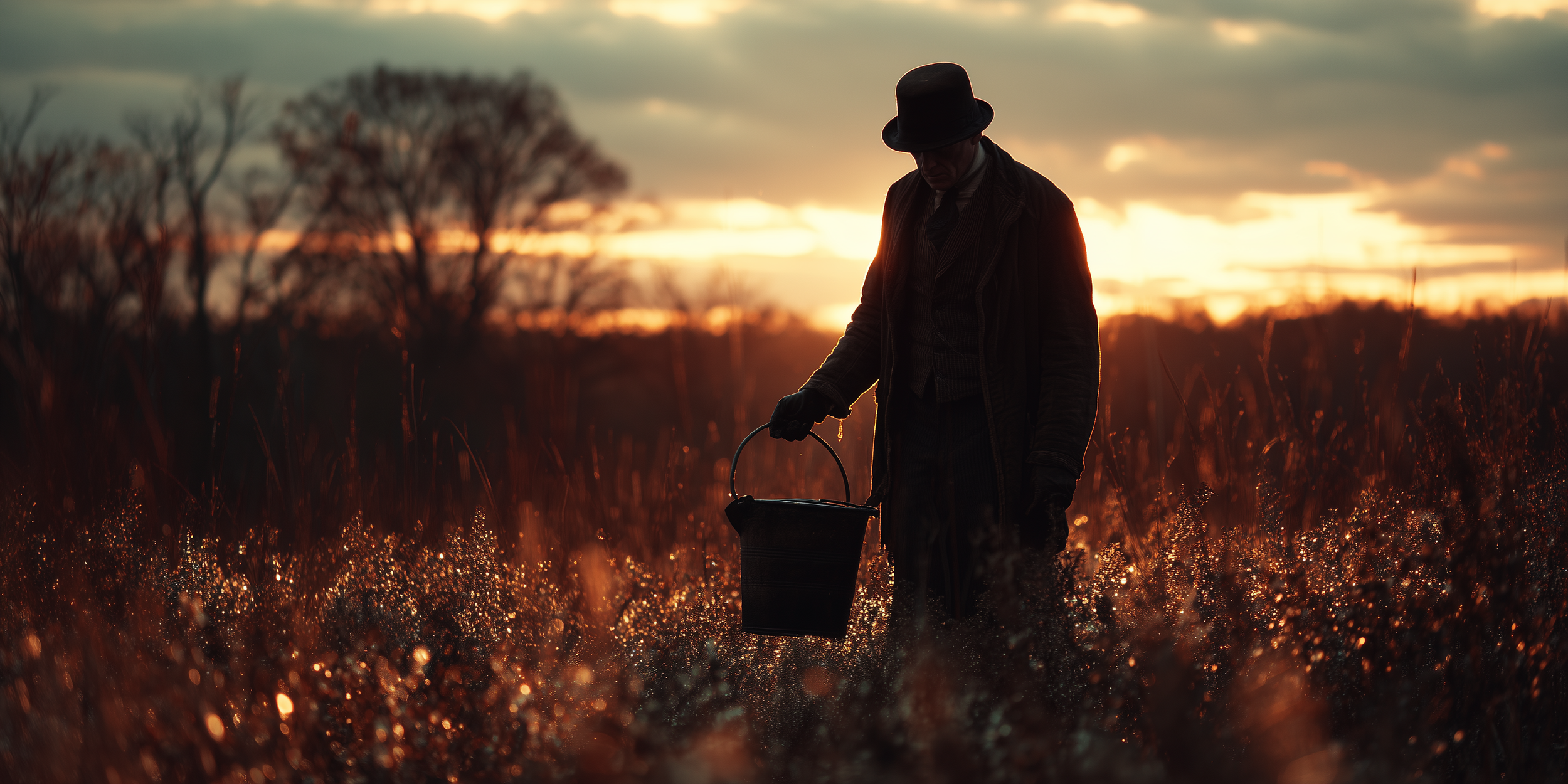
Chapter 16: Independence Day
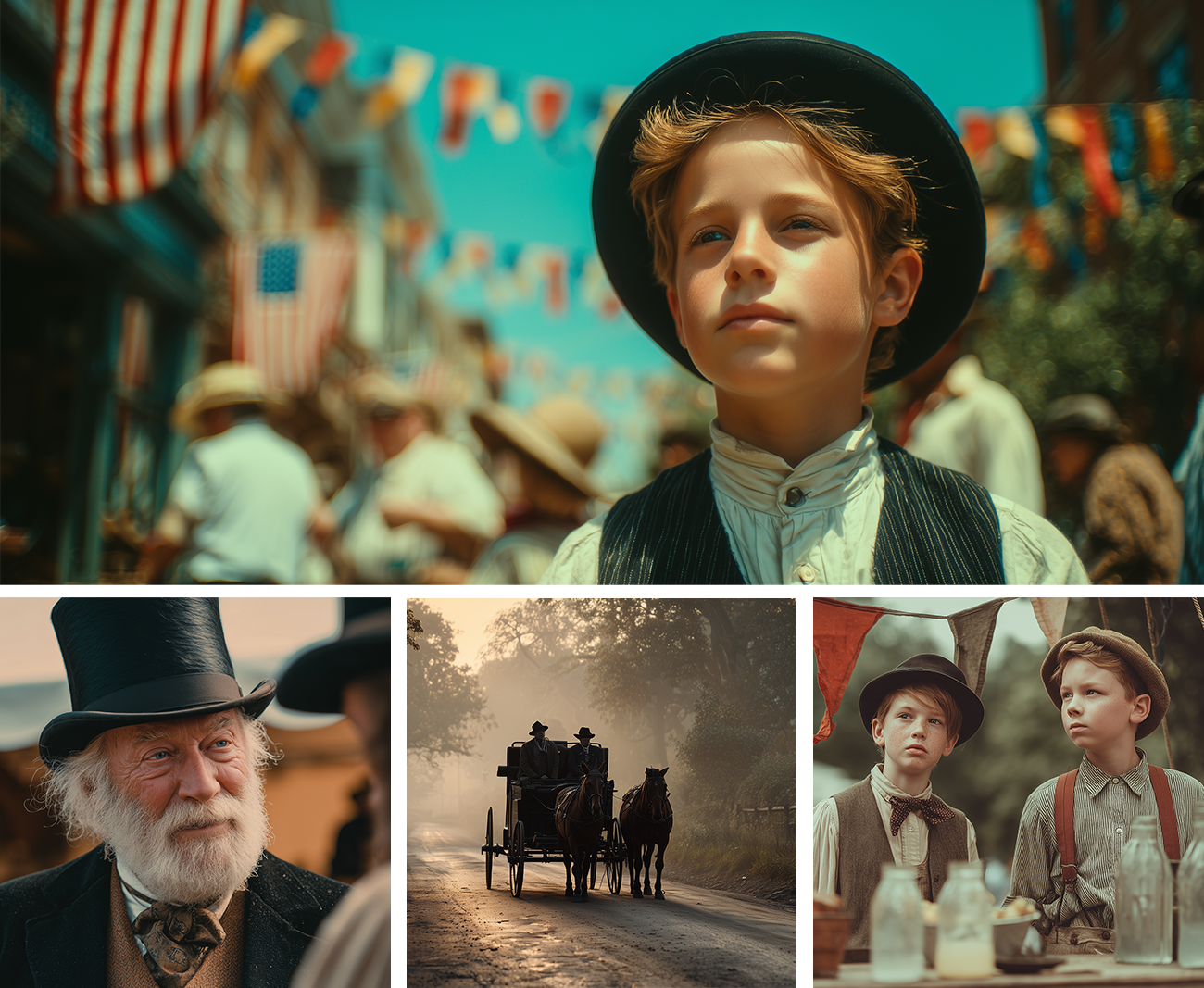
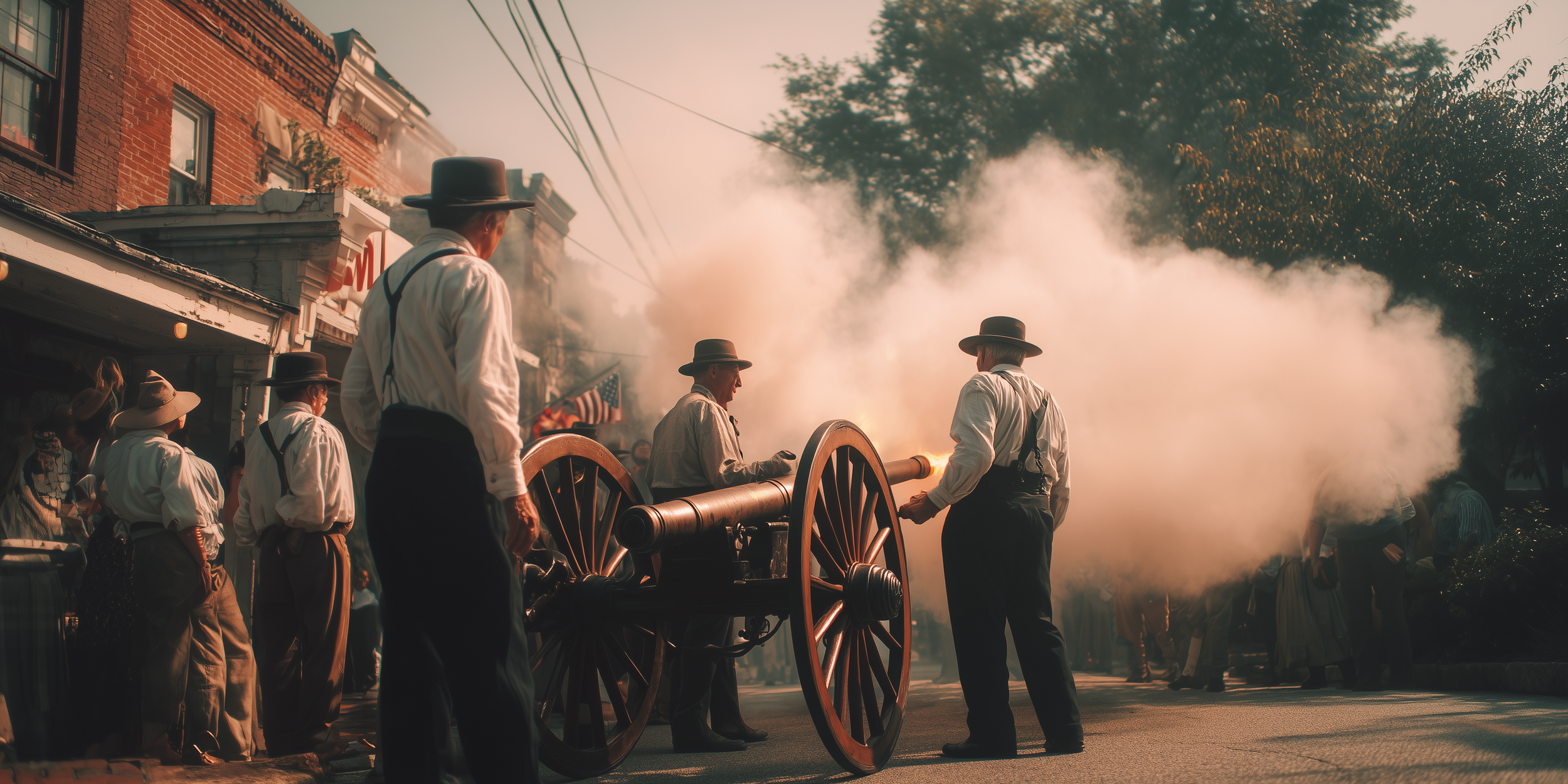
Almanzo puts on his new suit and straw hat…
… and soon the family is rolling toward town in their shining buggy, passing neighbors along the road, all headed for the Independence Day celebration. In Malone, flags flutter, drums thunder, and a brass band fills the air with music as crowds gather to honor the nation’s birth.
But amid the excitement - speeches, songs, and the boom of cannons - Almanzo finds himself facing a test. A simple glass of lemonade turns into a question of courage, pride, and the true cost of a single coin. When Father places a half-dollar in his hand, Almanzo must decide what kind of independence he really wants.
That night, as the noise of the day fades, Father shares a deeper truth about freedom - one that has nothing to do with cannons, and everything to do with the steady work that built a nation. Find out what Almanzo chooses in this chapter!
To keep up with other readers, you can join the Facebook group discussion here.
Chapter 17: Summer-Time
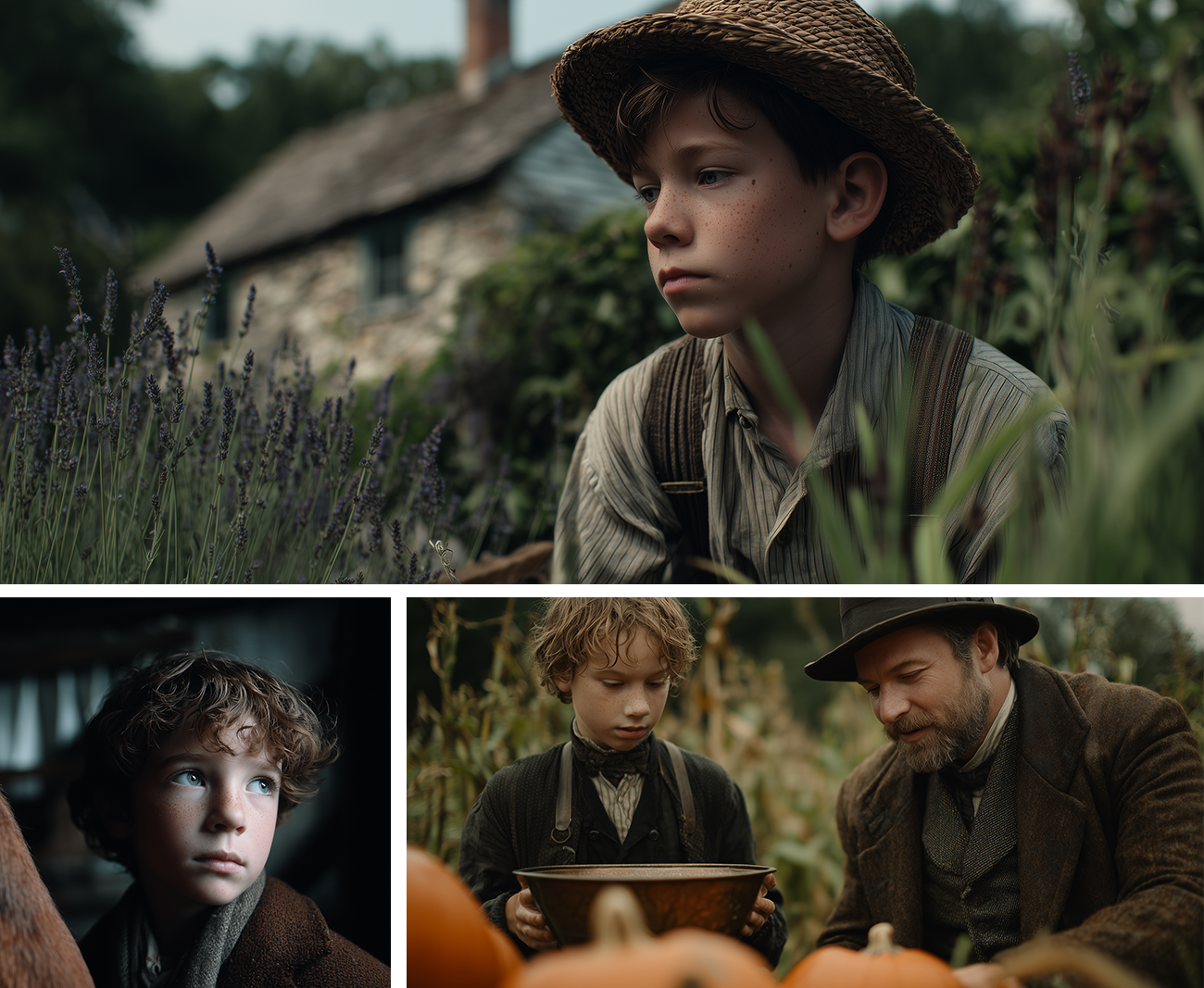
Summer comes to the Wilder farm…
… and everything seems to grow at once - the corn standing strong against the weeds, the potatoes blooming white. The hard work of planting eases, leaving Almanzo with small tasks like tending the garden, feeding his pig, and raising a prize pumpkin in hopes of winning at the fair.
By the way, there's a fascinating project we're going to diagram in this chapter: a milk-fed pumpkin! See the activity listed below.
Yet while the fields stretch taller each day, Almanzo feels left behind. He eats and works and waits, longing to grow strong enough to do a man’s work. When Father begins training the young colts, Almanzo watches from a distance, aching to prove himself.
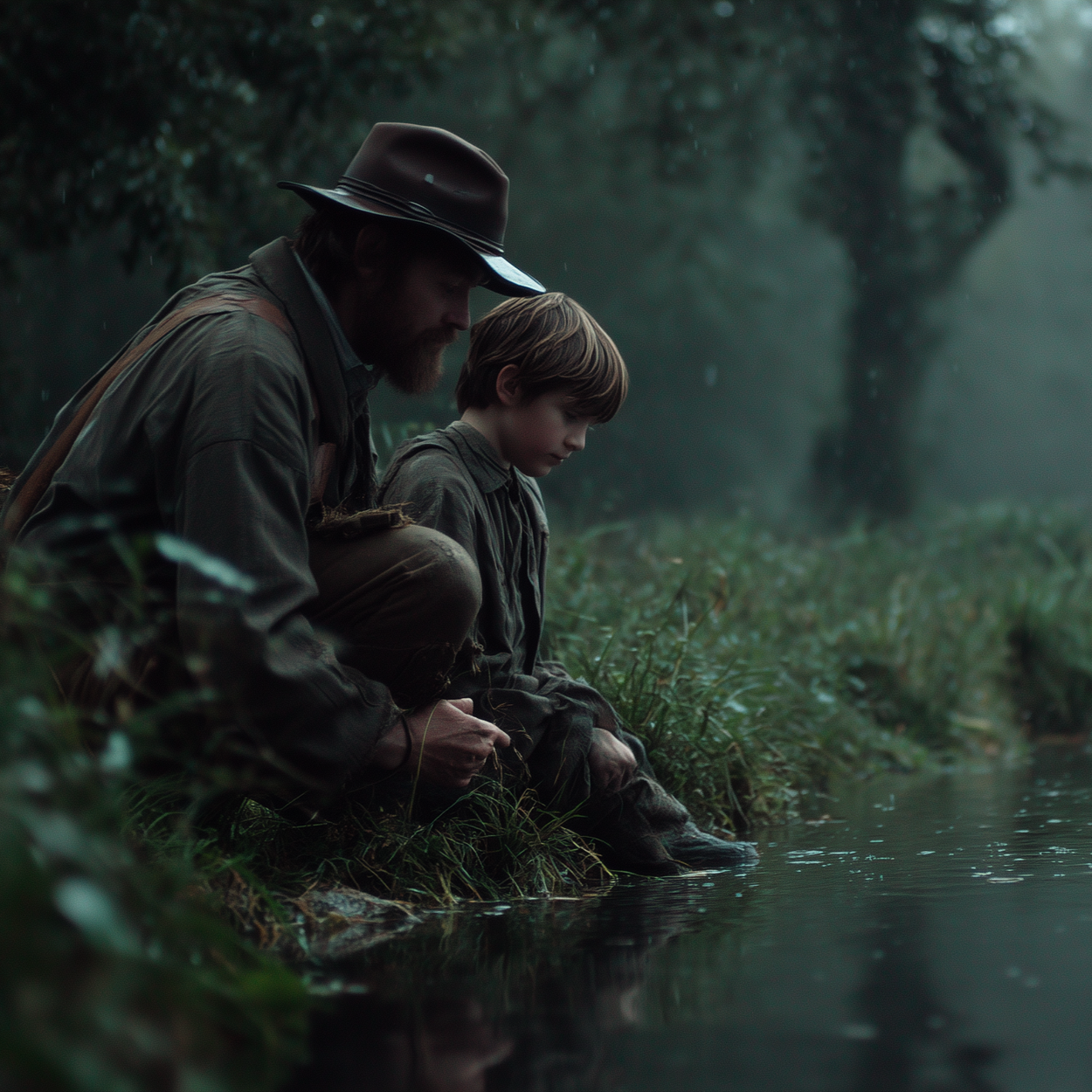
In the pleasant rhythms of summer - rain on clover, fishing along the river, berrying in the mountains - Almanzo begins to glimpse something deeper than growing tall. As the days unfold, he must learn that growing up isn’t always something you can hurry… and that some of the richest moments come when you least expect them.
To keep up with other readers, you can join the Facebook group discussion here.
Chapter 18: Keeping House
To keep up with other readers, you can join the Facebook group discussion here.
When Father and Mother leave for a week…
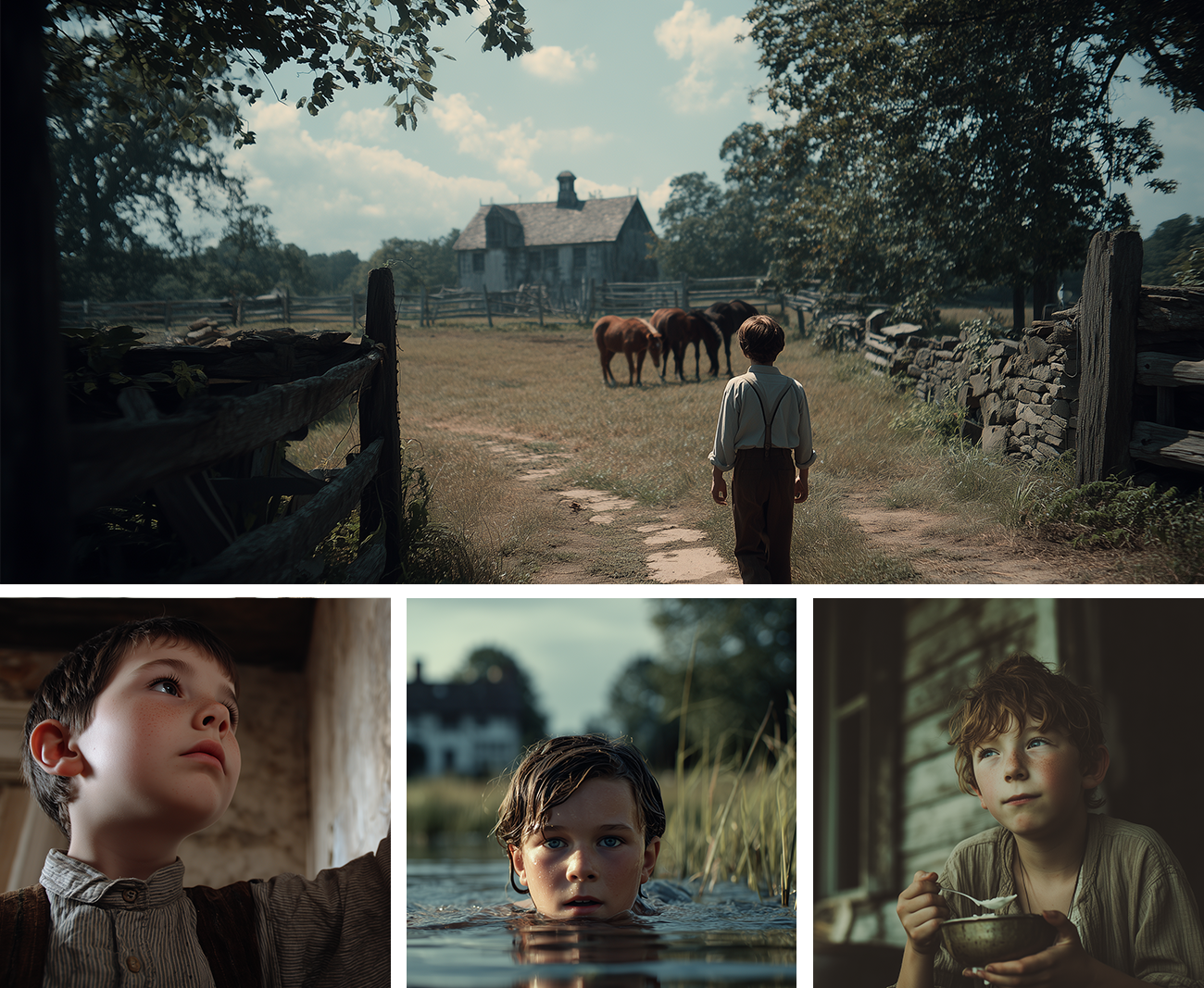
… the Wilder children are left to keep house on their own. And at first, it feels like freedom: ice cream in the middle of the day, ripe watermelons carried in armfuls, and candy pulled long past bedtime.
For a moment, it seems they can do as they please. But little by little, things begin to slip. Chores are forgotten, the sugar barrel runs low, and even the small pig finds herself in trouble after one of Almanzo’s well-meant ideas goes wrong. The house grows messier, the work piles higher, and the fun begins to spoil.
As the week draws to a close, the children scramble to set things right before Father and Mother return. Yet in the midst of mistakes and near-disasters, we see an unexpected kindness, a secret kept, and an understanding between brother and sister.
And when the house is finally still again, Almanzo discovers that growing up isn’t just about doing what you want… but learning how to care for what’s been entrusted to you.
Chapter 19: Early Harvest
When haying-time comes…
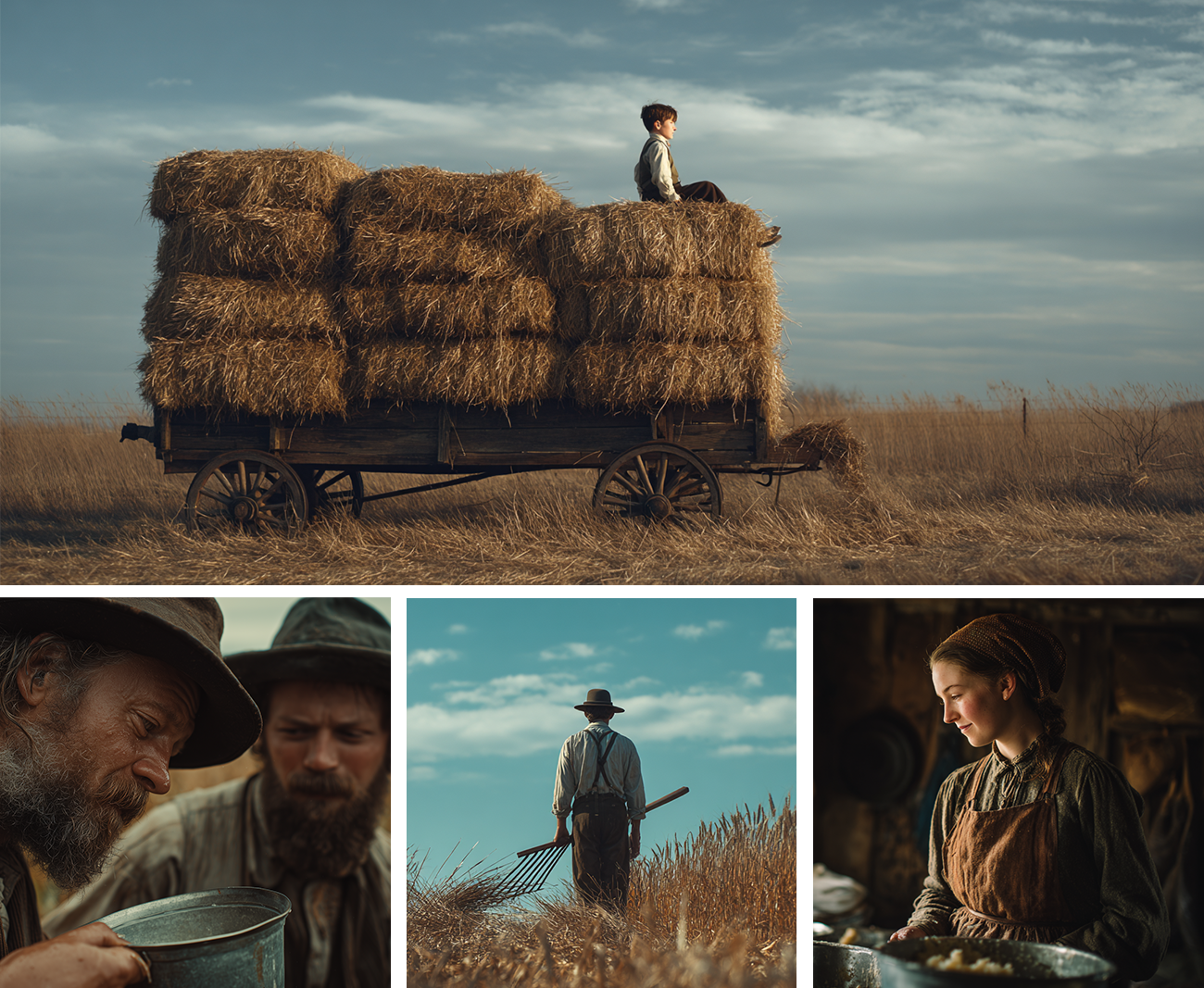
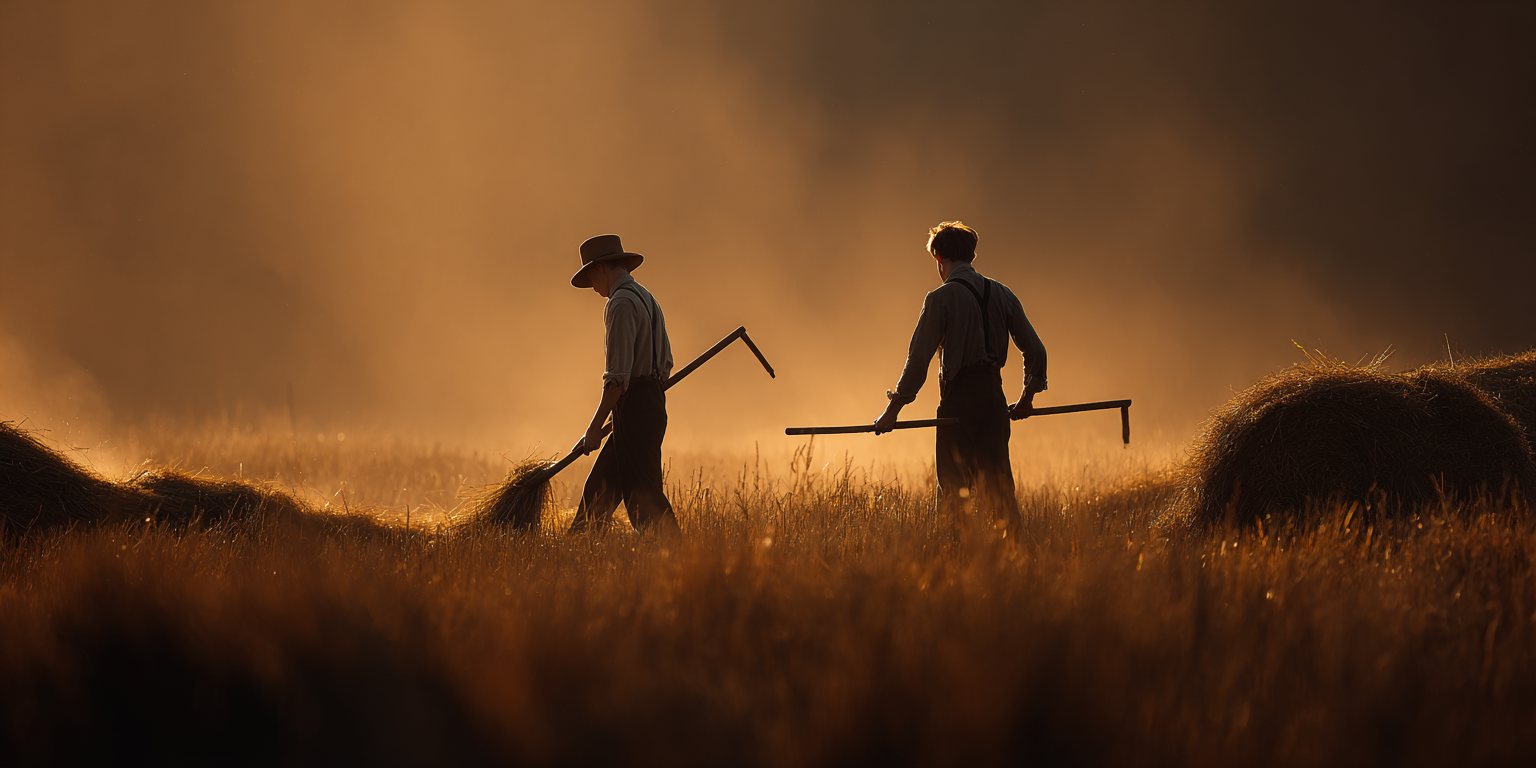
… the whole Wilder farm comes alive - scythes sweeping in long, steady arcs, and the fields slowly falling into neat rows beneath the summer sun. Almanzo works alongside the men, as the days stretch from first light to lantern glow.
There is joy in it however: green leaves tucked under hats for shade, the laughter of hired men in the fields, and Mother’s cold egg-nog carried out in a pail, sweet and foamy, shared from a single dipper. And in the midst of it all comes a buyer from the city. When he presses his steel tester deep into her butter, he finds it nearly perfect.
By the end of harvest, Almanzo sees more clearly than ever that this life is built on something stronger than effort alone. It is built on pride in one’s work, and the satisfaction of doing a thing so well it speaks for itself.
To keep up with other readers, you can join the Facebook group discussion here.
Chapter 20: Late Harvest
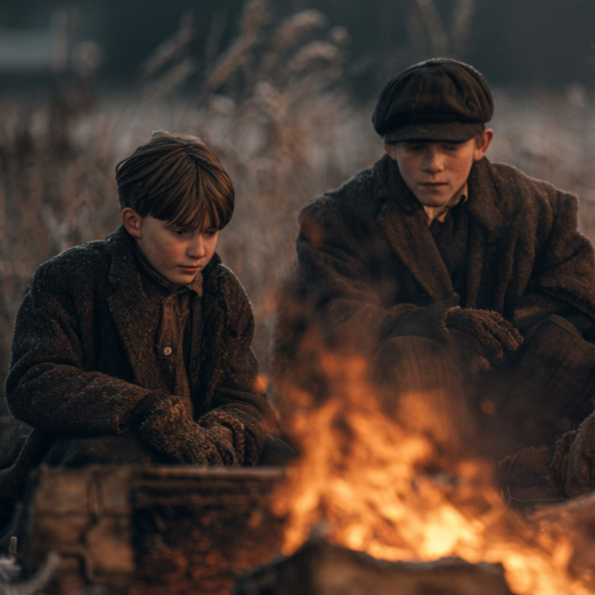
When the fields turn white with frost…
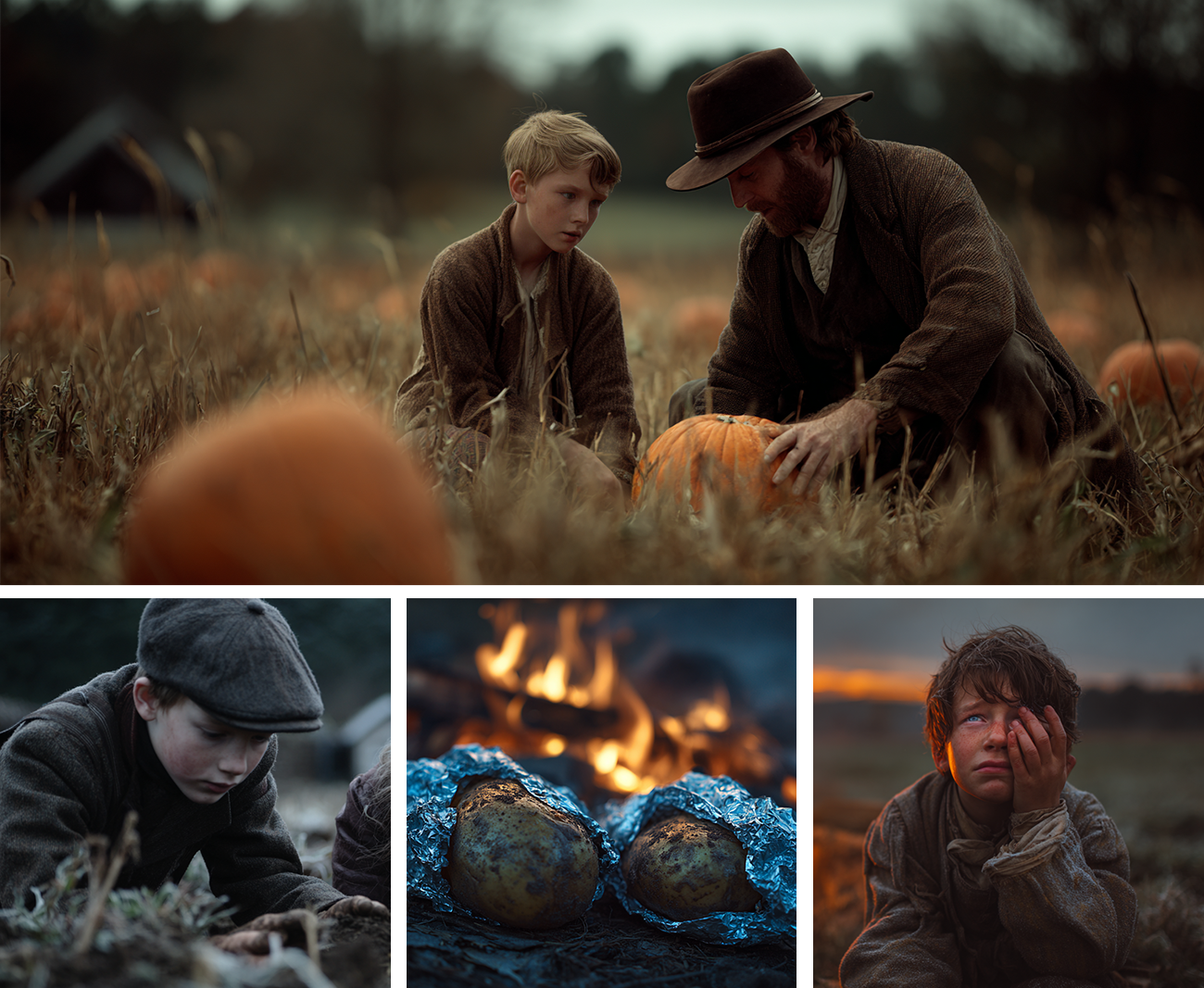
… the Wilder family enters the final, urgent days of harvest. Almanzo’s great milk-fed pumpkin swells beyond lifting and apples are gathered for cider.
But a chill presses in, and the potatoes must be dug before the ground freezes. The family labors from morning until night, hands numbing, breath rising in the cold. There is little rest - only small comforts: a fire in the field, a potato baking in the ashes.
In a moment of hunger and haste, Almanzo is struck by an accident that leaves him shaken and half-blinded. Yet even here, his family looks after him - Alice’s quiet sacrifice, Father’s steady care, Mother’s healing hands.
By the time the last crops are brought in and the earth finally freezes hard, the work is done. As the farm settles at last, Almanzo feels the deep reward of it: not just a harvest gathered, but a season endured together, with courage, grit, and love.
To keep up with other readers, you can join the Facebook group discussion here.
Chapter 21: County Fair
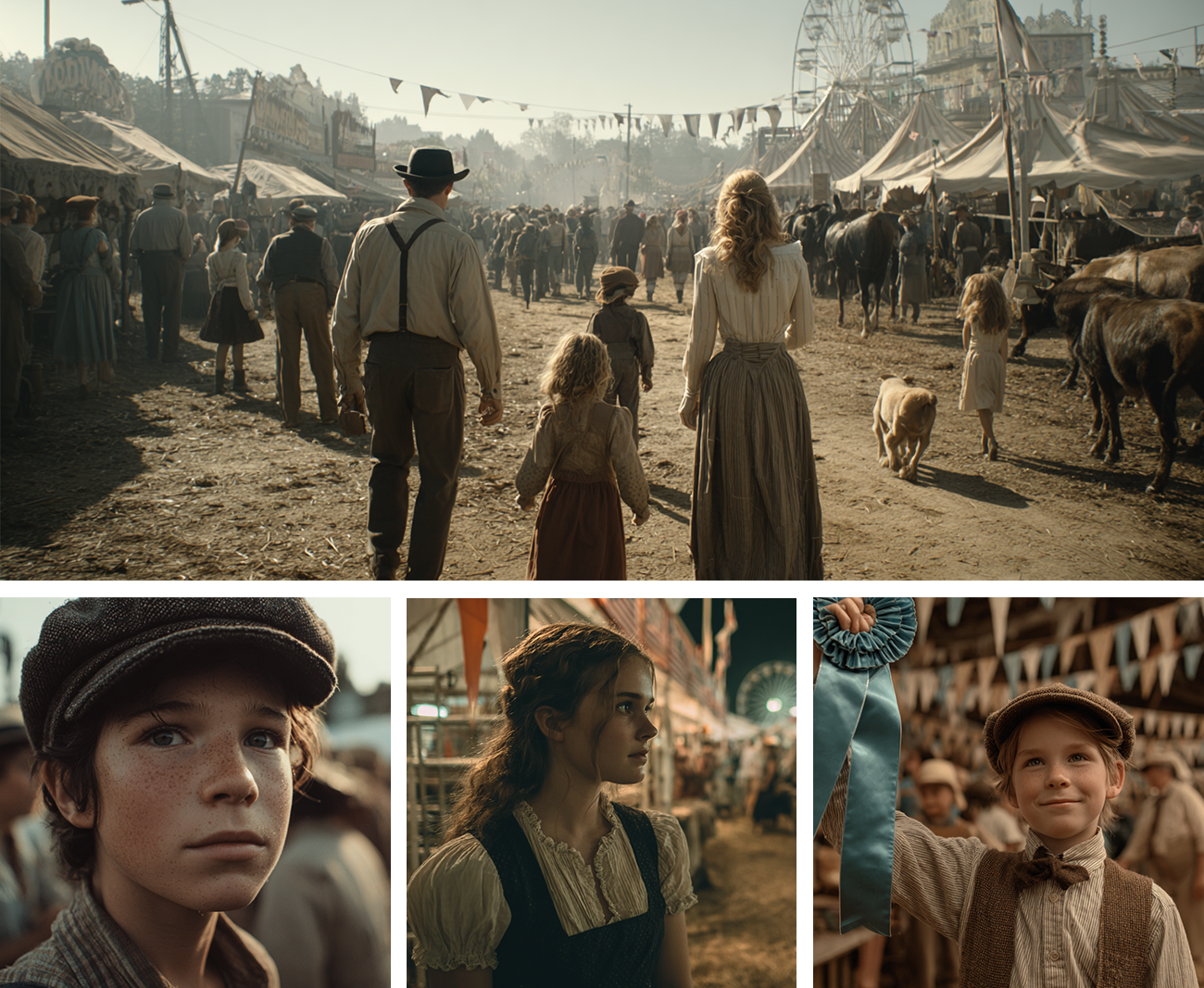
The Wilder family sets out for the county fair…
Dressed in their Sunday best, they join the lively stream of wagons and neighbors. The grounds are filled with music, animals, and shouting vendors, and Almanzo hurries from horses to cattle to games, taking it all in, while Father reminds him not to trust a gambler’s game. At the long church tables, there is more food than he’s ever seen—meats, potatoes, pies of every kind.
The next day, Almanzo finds his great pumpkin among the entries. Though Father warns that quality matters more than size, the blue ribbon is placed upon it, and Almanzo feels the reward of honest work. By the third day, the excitement has worn thin, and he is glad to turn toward home, carrying with him the memory of it all.
To keep up with other readers, you can join the Facebook group discussion here.
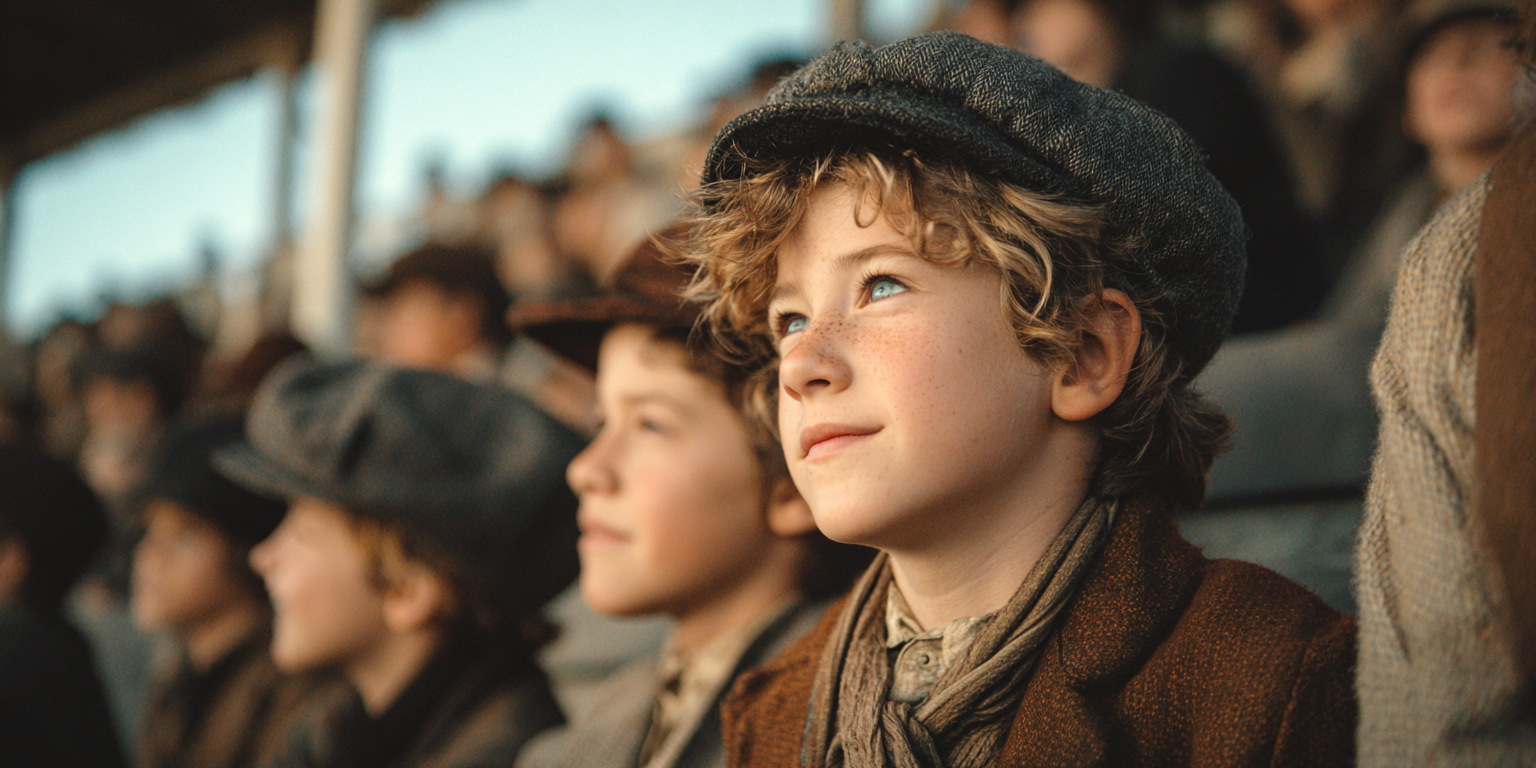
Chapter 22: Fall of the Year
To keep up with other readers, you can join the Facebook group discussion here.
With a sharp wind from the north and snow on its way…
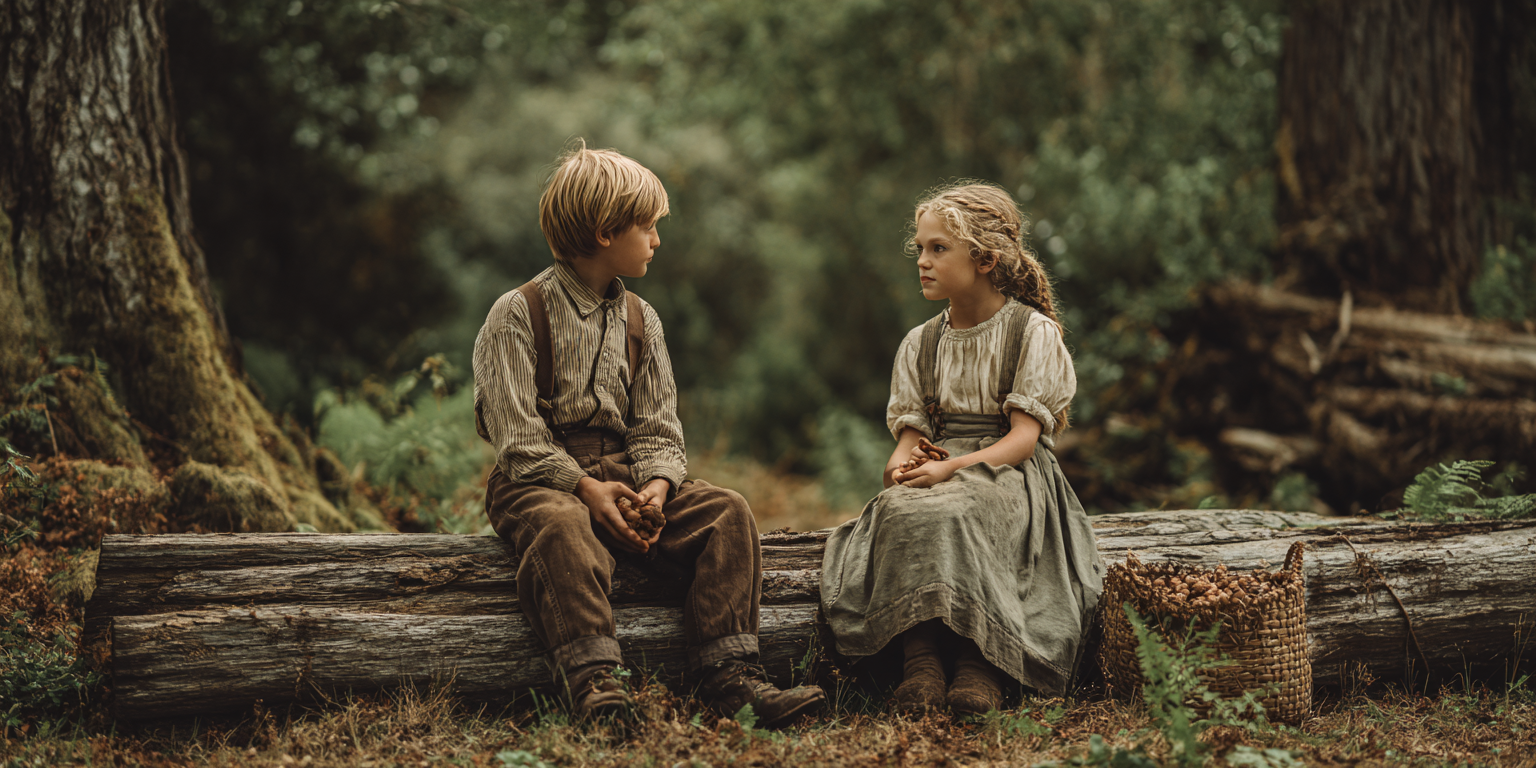
… Father leads the family to gather beechnuts from the timber lot, crossing fields with a neighbor’s kindness. Among rustling leaves, squirrels dart and wild ducks call overhead as Almanzo and Alice sit together, cracking the small, sweet nuts and tasting the last warmth of the season.
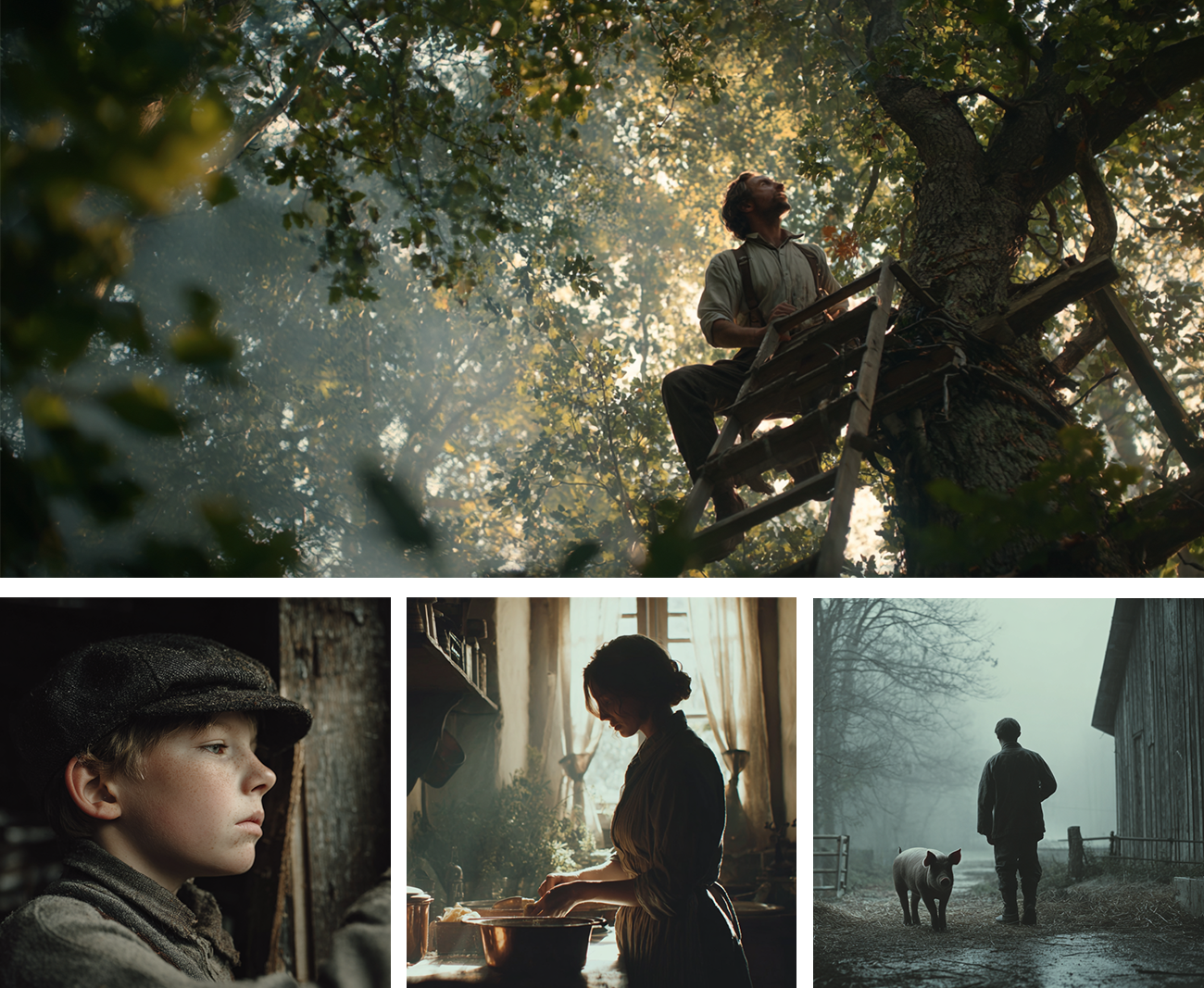
By morning, snow has fallen - “poor man’s fertilizer,” Father says - and the farm turns quickly toward winter. In the days that follow, Almanzo works beside Father, sealing the barn and house against the bitter cold, until the freeze settles deep.
Then comes butchering time, when neighbors arrive to help and the yard fills with fire, steam, and hard labor. From hogs and beef come the year’s supply - salted, stored, and carefully prepared - while Mother and the girls render lard, make sausages, and fill the kitchen with the rich smells of mincemeat and headcheese.
At last, with candles poured and cooling in their molds, the work is done, and the Wilder family stands ready for the long winter ahead.
Chapter 23: Cobbler
With the days shortening and frost settling in…
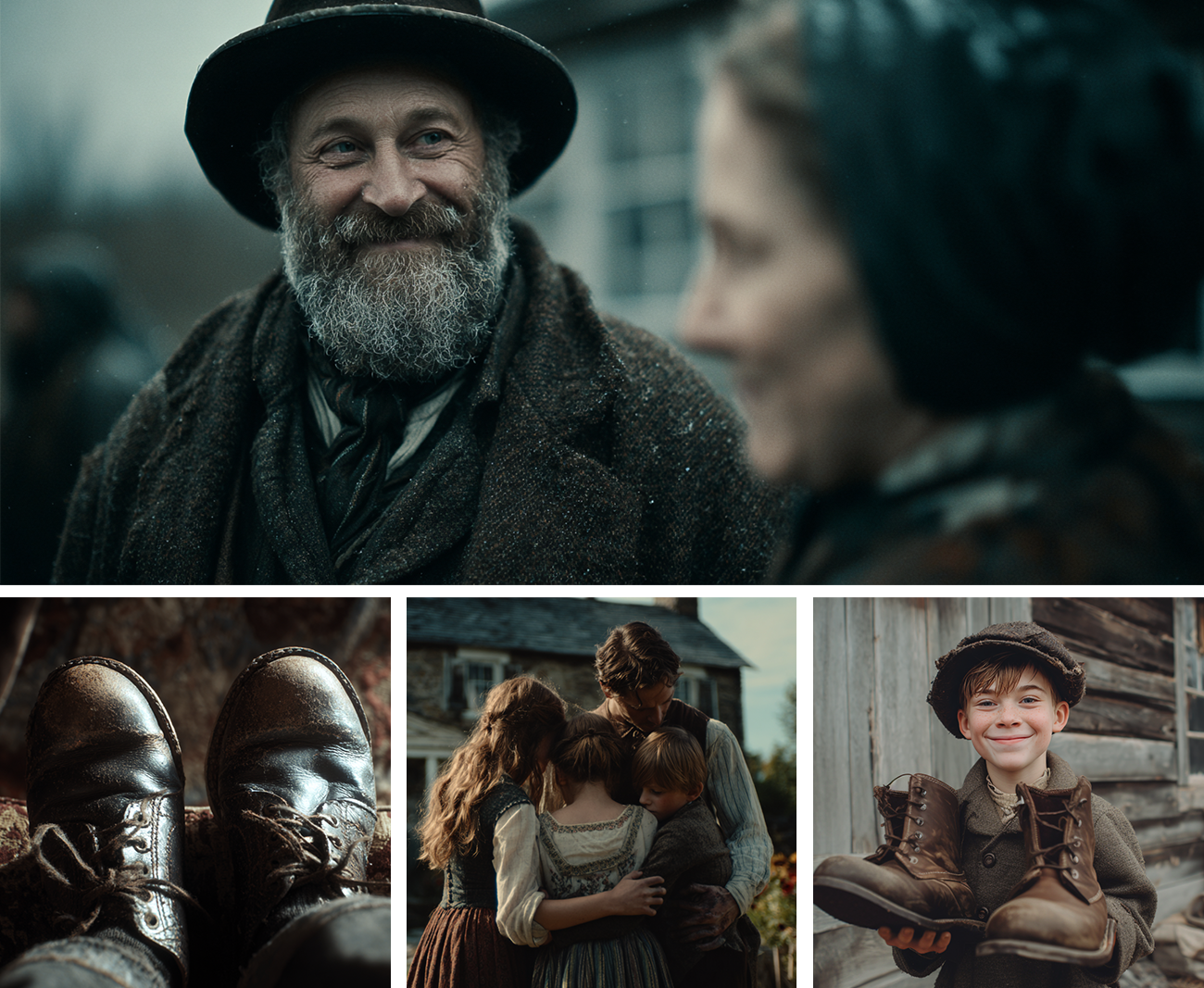
… Mother worries over the cobbler’s long delay. Boots are worn through, feet are growing, and with the Academy term approaching, there is no time left to wait. So she sets to work herself - until her children stand ready, though still without proper shoes.
On the morning they leave, the house glows with candlelight and quiet feeling. Sleigh-bells ring at the door, and though Mother smiles, her eyes are wet as Royal and the girls ride off across the snowy miles. Almanzo, left behind, feels the emptiness of the day, wondering what they are doing far away while the farm carries on without them.
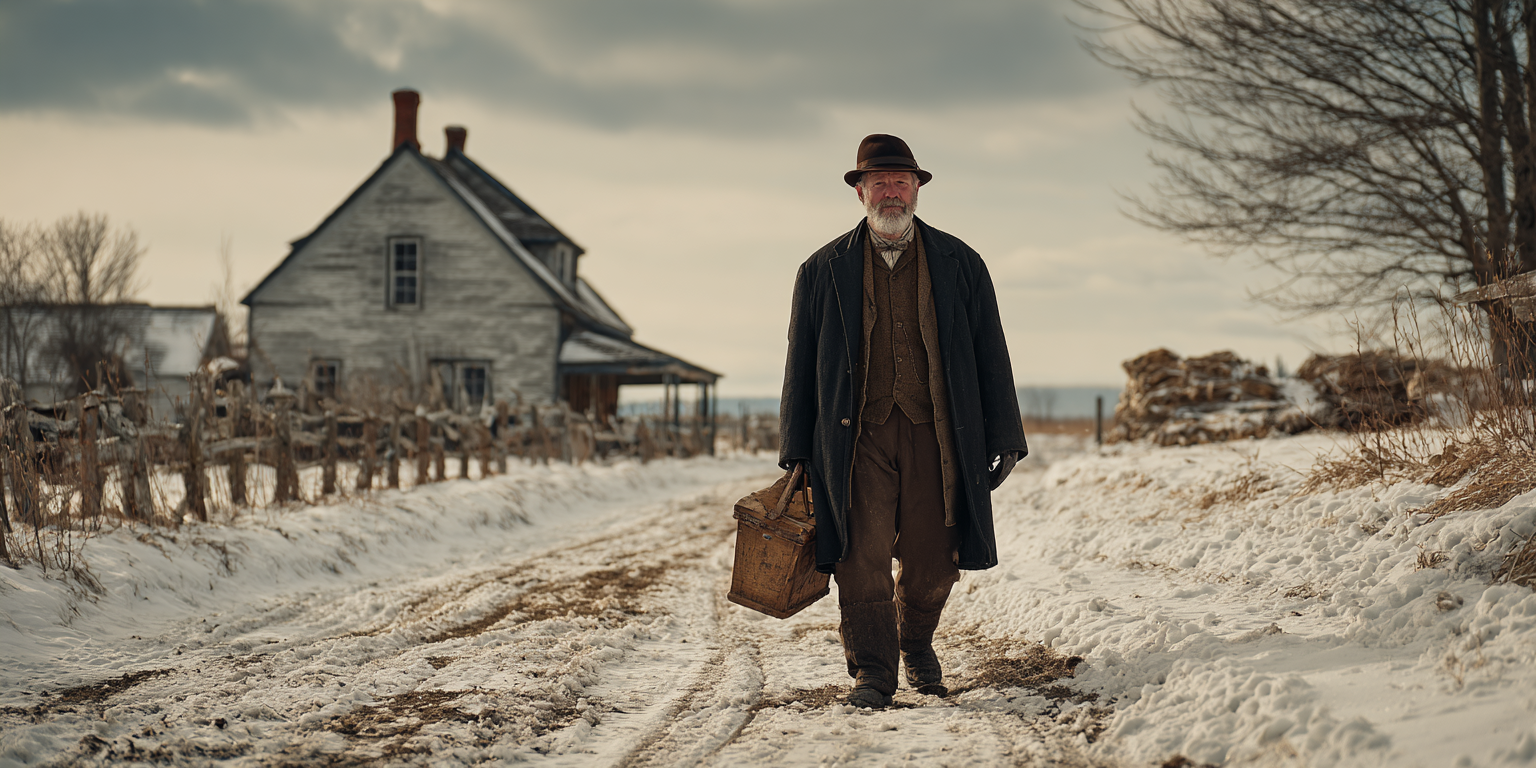
At last, too late for the journey but just in time for winter, the cobbler arrives - jolly, talkative, and full of laughter that soon fills the house. He sets up his bench in the dining room, trading stories over meals while shaping leather and driving pegs.
Day by day, under his steady hands, new boots and shoes take form. When Almanzo’s are finished, they fit as though made for him alone.
To keep up with other readers, you can join the Facebook group discussion here.
Chapter 24: The Little Bobsled
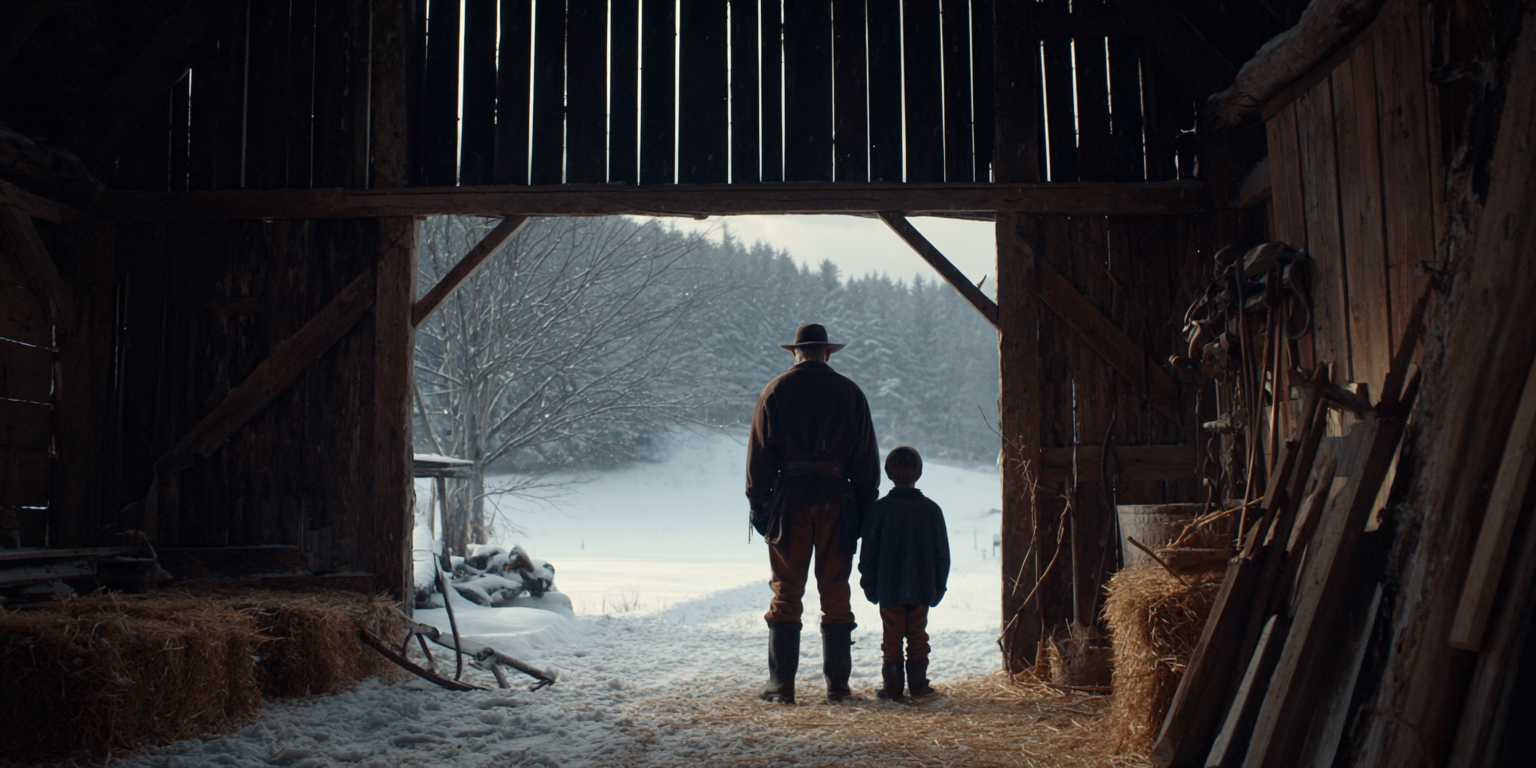
With snow falling outside…
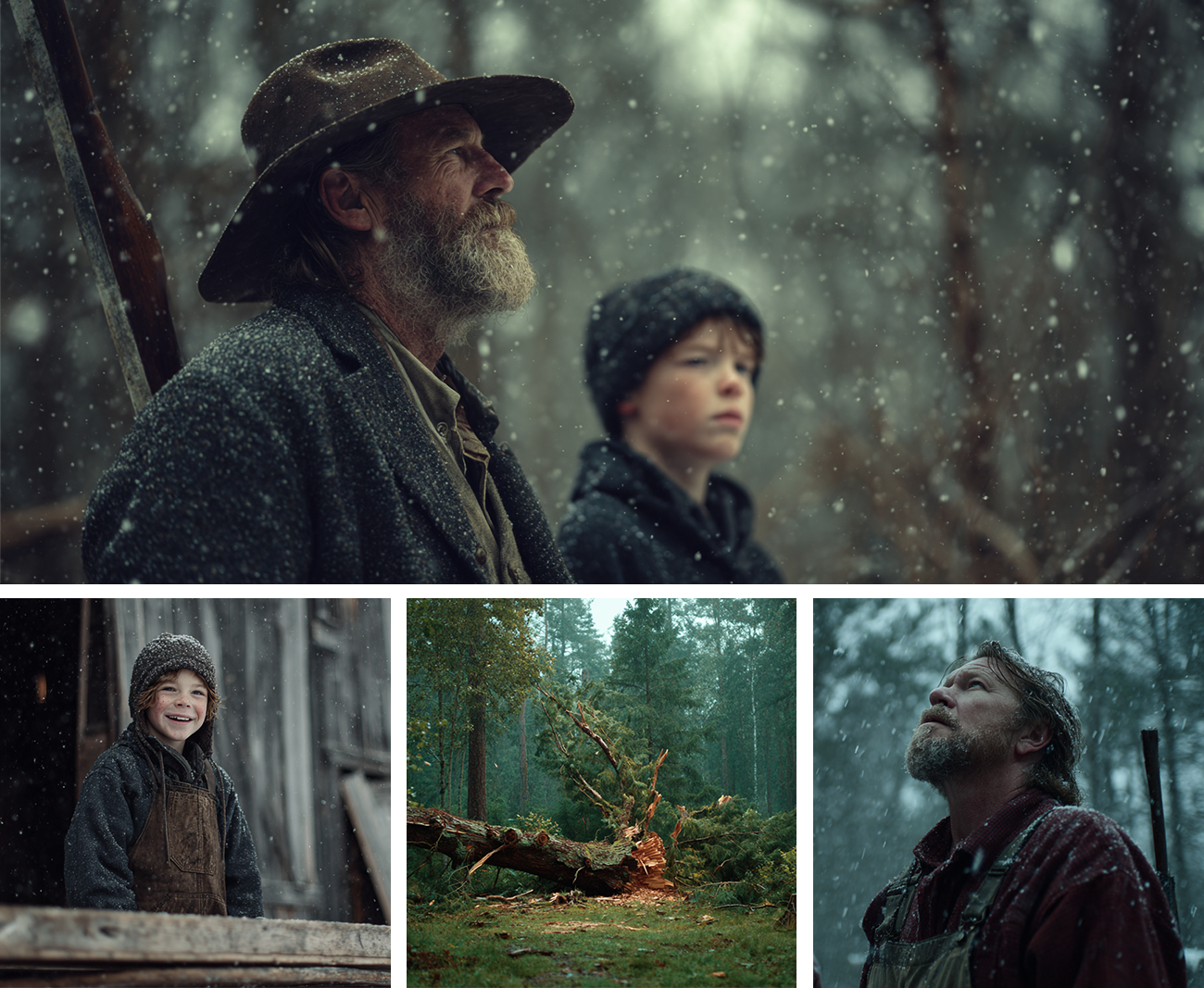
Almanzo rides with Father to the timber lot, where they search for the right wood to build a little bobsled. They cut straight young oaks for the body, but the runners prove harder. They need crooked trunks with the right natural curve. A flexible but strong elm sapling becomes the tongue.
Back in the barn, they set to work. Chips scatter across the floor as Father measures and cuts, and Almanzo follows close behind. Slowly, the little bobsled takes shape beneath their steady labor. Almanzo adds the stakes himself, driving them firm at the corners, imagining the loads it will carry and the paths it will travel across the winter fields.
Outside, the storm rises and the wind begins its lonely cry, wrapping the barn in whirling snow. Tomorrow’s work will turn indoors to threshing, but tonight, the new bobsled rests ready—built to be strong, and waiting for the deep snows to come.
To keep up with other readers, you can join the Facebook group discussion here.
Chapter 25: Threshing
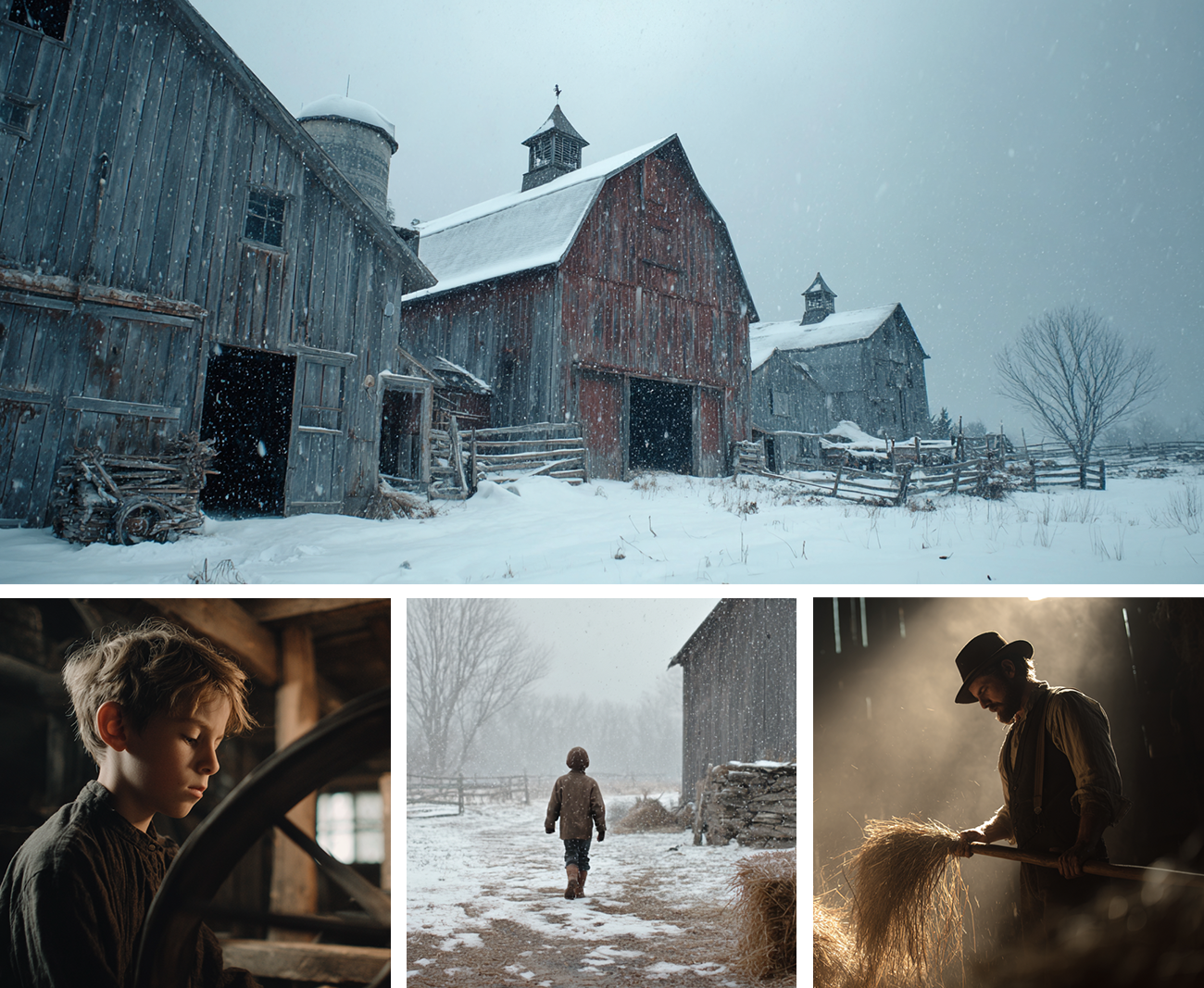
As winter settles over the farm…
… there is still work to be done, and every tool, animal, and handful of grain has its purpose.
While the wind howls through the cedars and the bare apple trees rattle like bones in the dark, the Wilder barns stand steady and warm. Inside, the animals rest , and in the tool shed, Father sets about mending a flail.
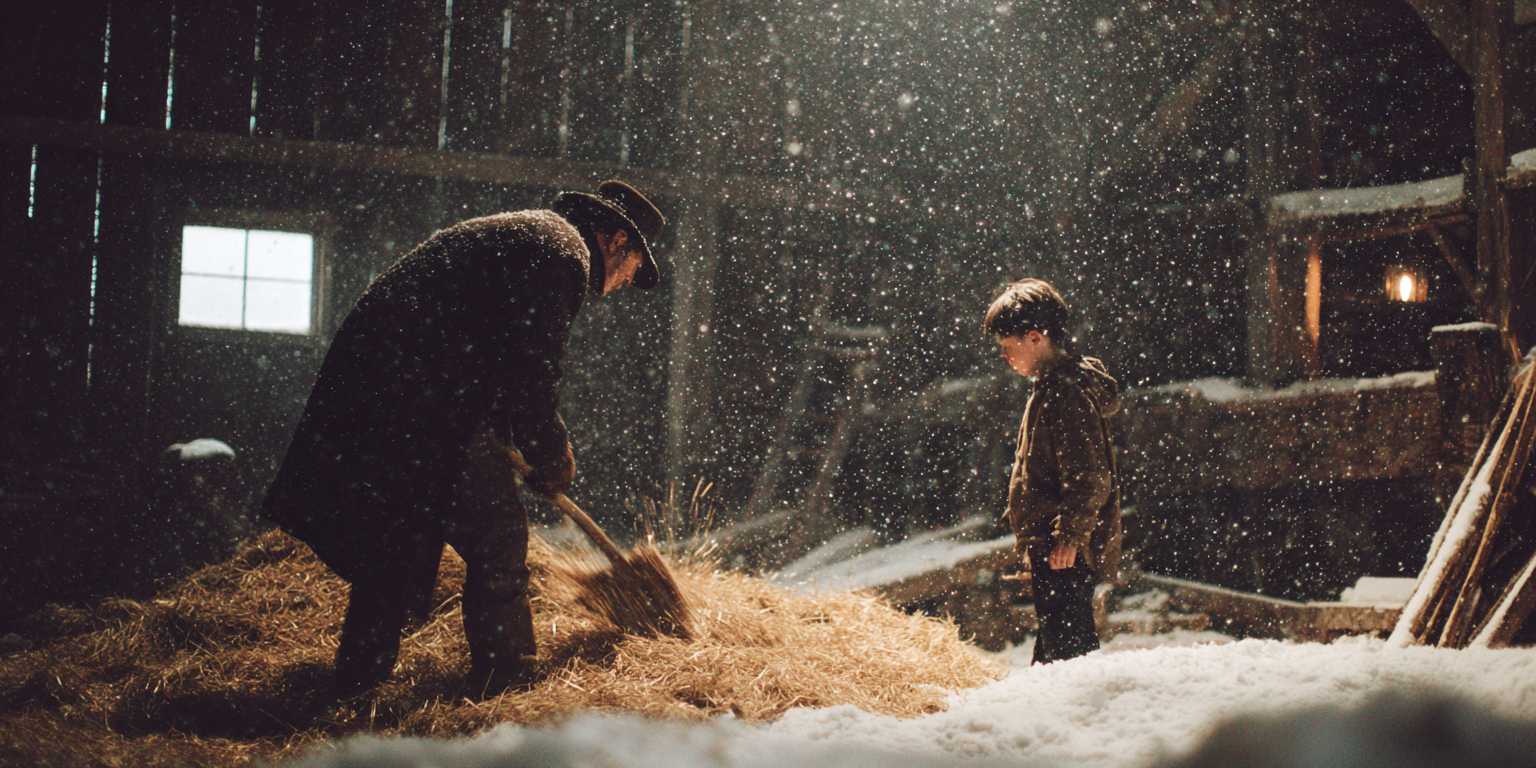
Almanzo stands beside him on the barn floor. Together, they raise their flails and bring them down in steady rhythm, again and again, until the grains loosen and fall free. Straw is lifted and shaken aside, the wheat gathered, and the fanning-mill set humming.
There is purpose in doing it by hand and in wasting nothing. As the sacks fill, Almanzo feels something rising in him—a quiet certainty that he is growing into the work.
To keep up with other readers, you can join the Facebook group discussion here.
Chapter 26: Christmas
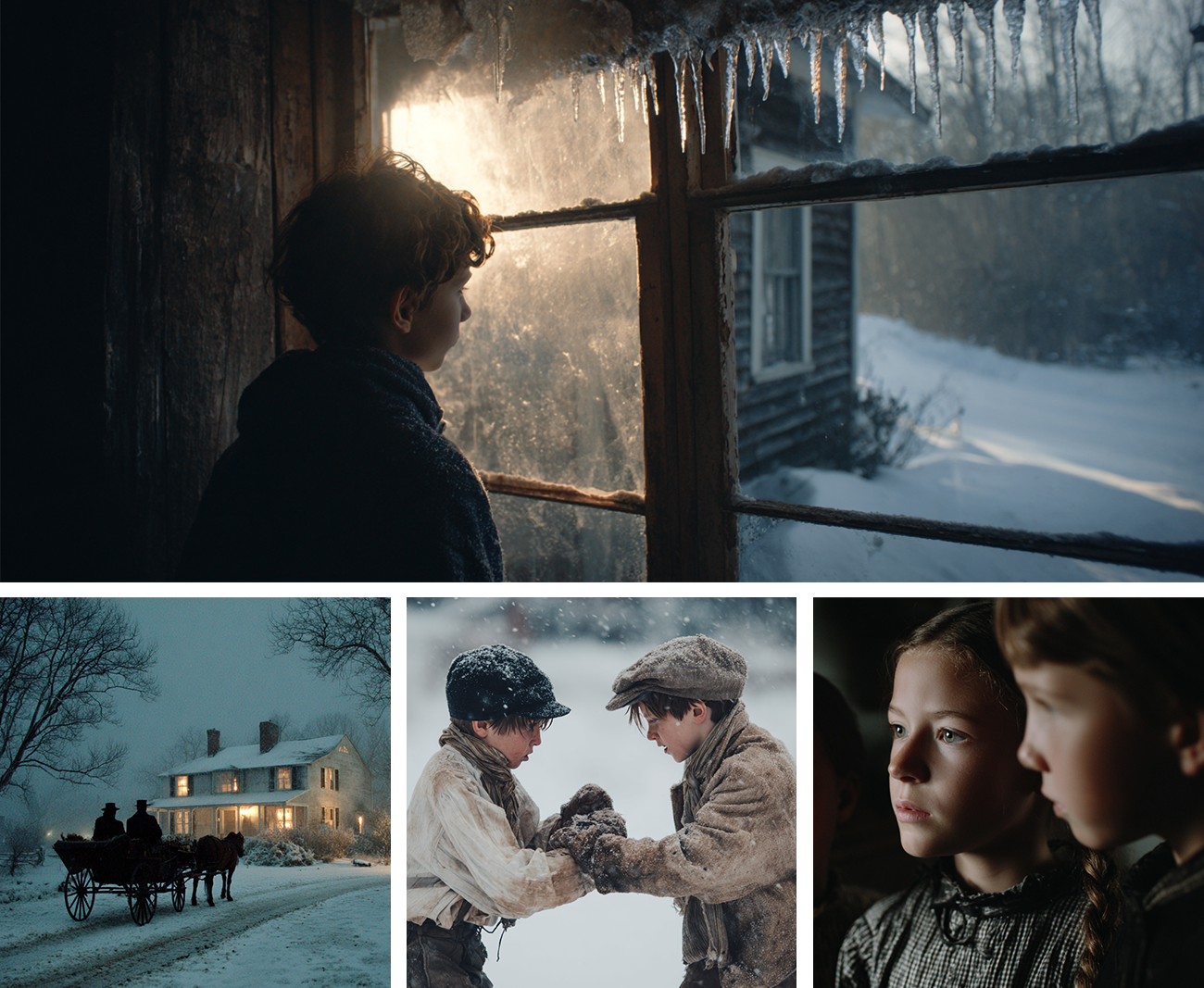
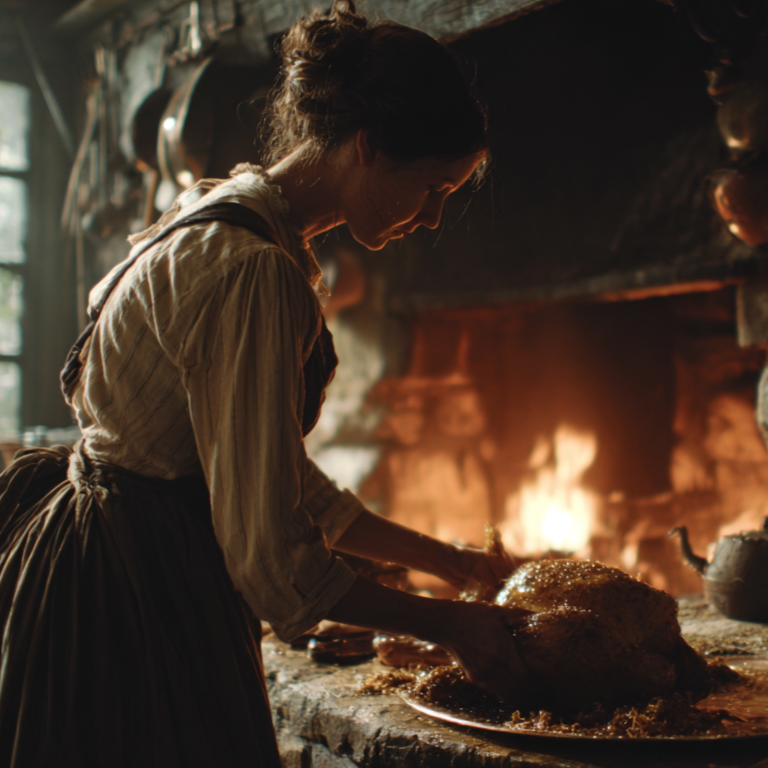
The days seem long as Almanzo waits for Christmas…
He wonders whether he has been good enough for presents. At last, the house fills with relatives. Royal and the girls return, and the kitchen hums with work. Almanzo stands at the table in his apron, scouring knives and forks until they shine, while delicious aromas arise from the stove.
Before dawn on Christmas morning, Almanzo slips downstairs in the dark. His stocking hangs heavy. One by one, he draws out its treasures—a cap, horehound candy, mittens, an orange, and a jack-knife with four bright blades.
Upstairs, the others wake the house with laughter. But the day does not slow for wonder. There are chores to do, guests to greet, and a long table to be filled with food. The house overflows with voices and warmth, and then, just as quickly, the sleigh bells ring again, and their Christmas guests disappear down the road.
Chapter 27: Wood-Hauling
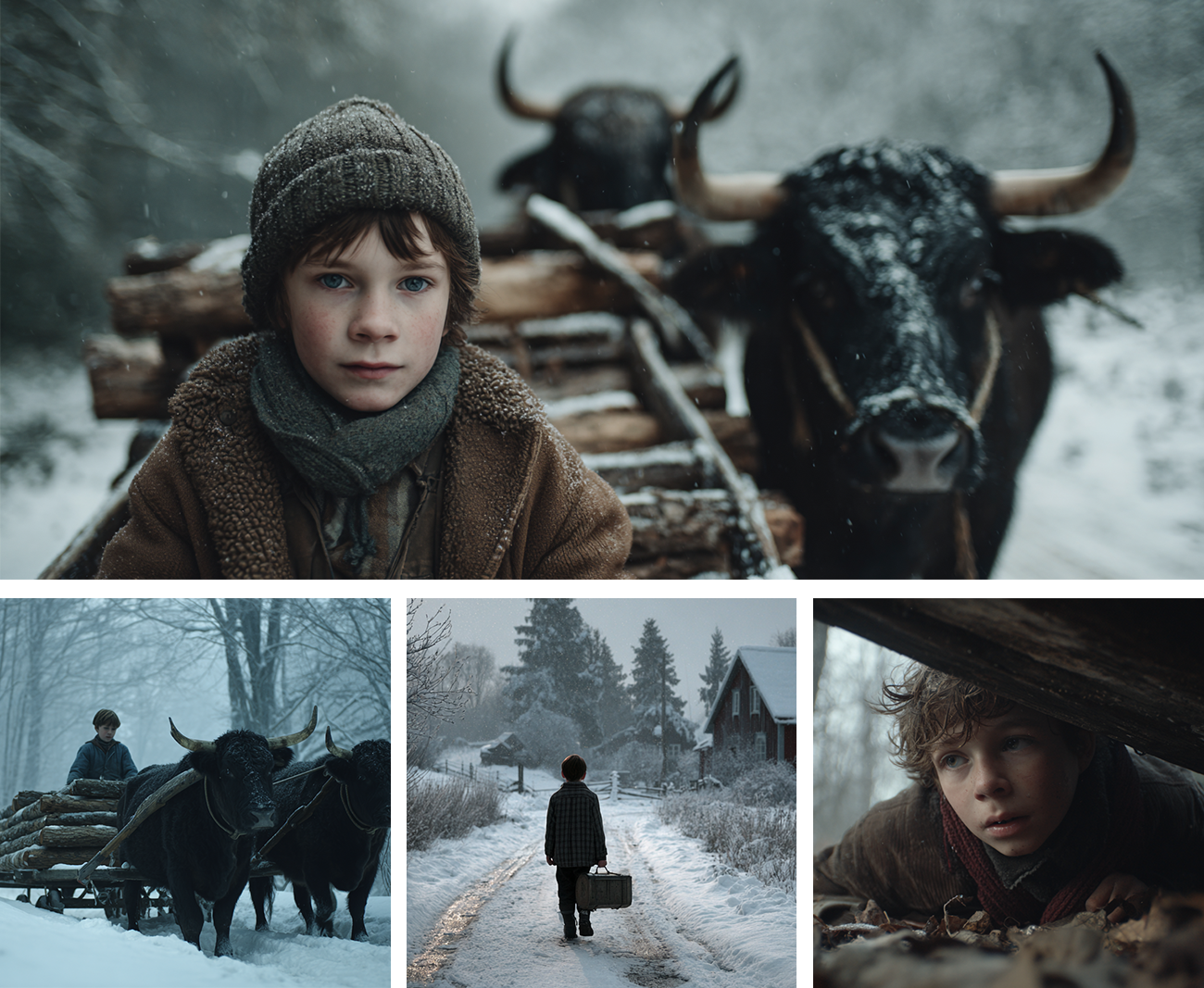
The deep cold of January settles in…
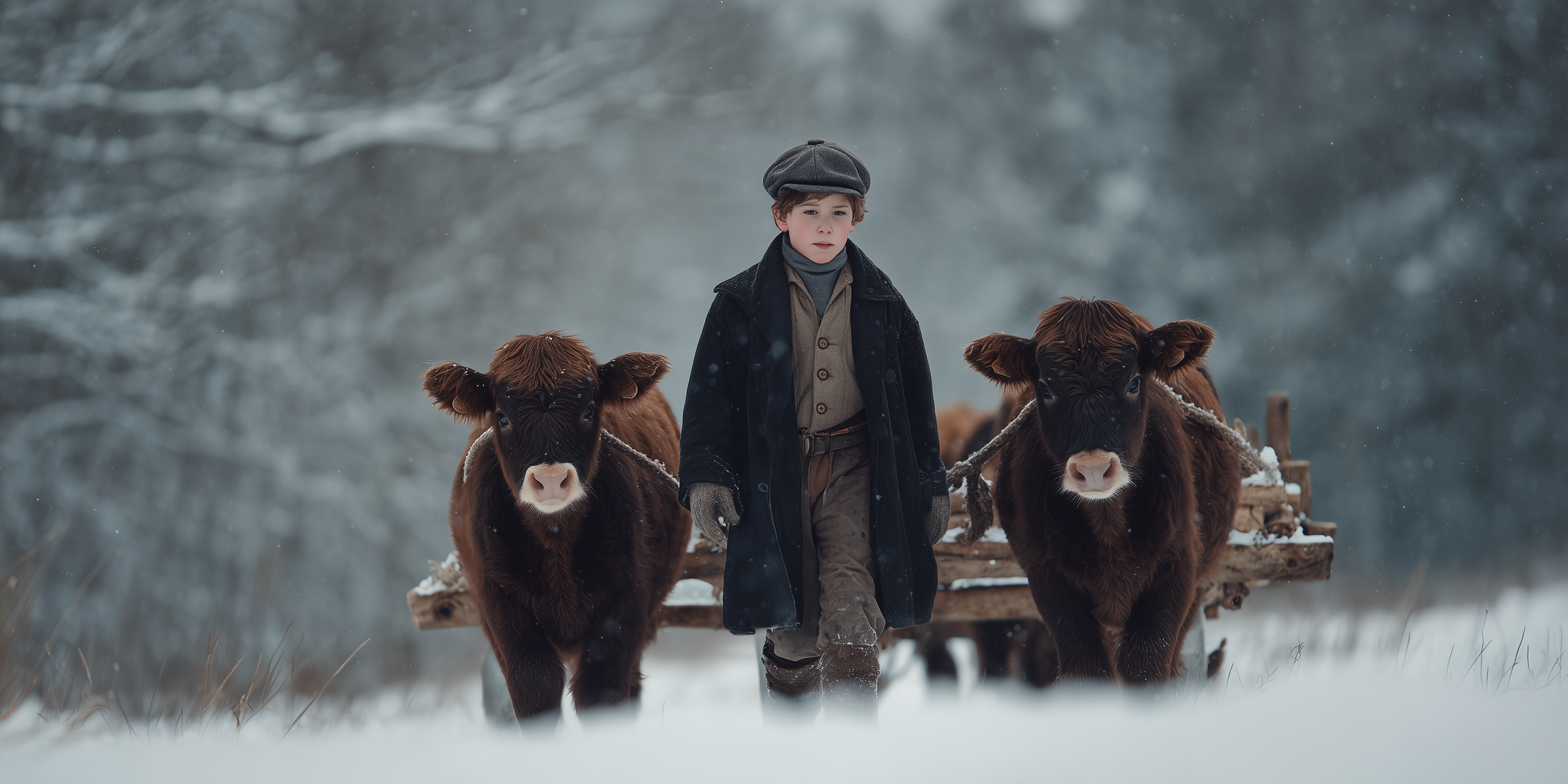
… and Almanzo stays home from school to haul wood from the timber. For the first time, he drives his own oxen. Almanzo coaxes them forward, speaking gently and feeding them carrots until they begin to trust him.
Out in the woods, men work steadily, lifting heavy logs onto sleds. Almanzo and the hired boys struggle to do the same, their poles slipping against the frozen wood. Suddenly, a log crashes down, pinning Almanzo in the snow. In the timber, a man must watch out for himself. Loads are too heavy, and the snow is deep.
Almanzo learns how to balance a sled, how to guide his team, how to recover when things go wrong. Bit by bit, he finds his footing, becoming steadier, stronger, more capable with every trip through the woods. Just as Almanzo begins to feel like a man at work, Father sends him back to school.
To keep up with other readers, you can join the Facebook group discussion here.
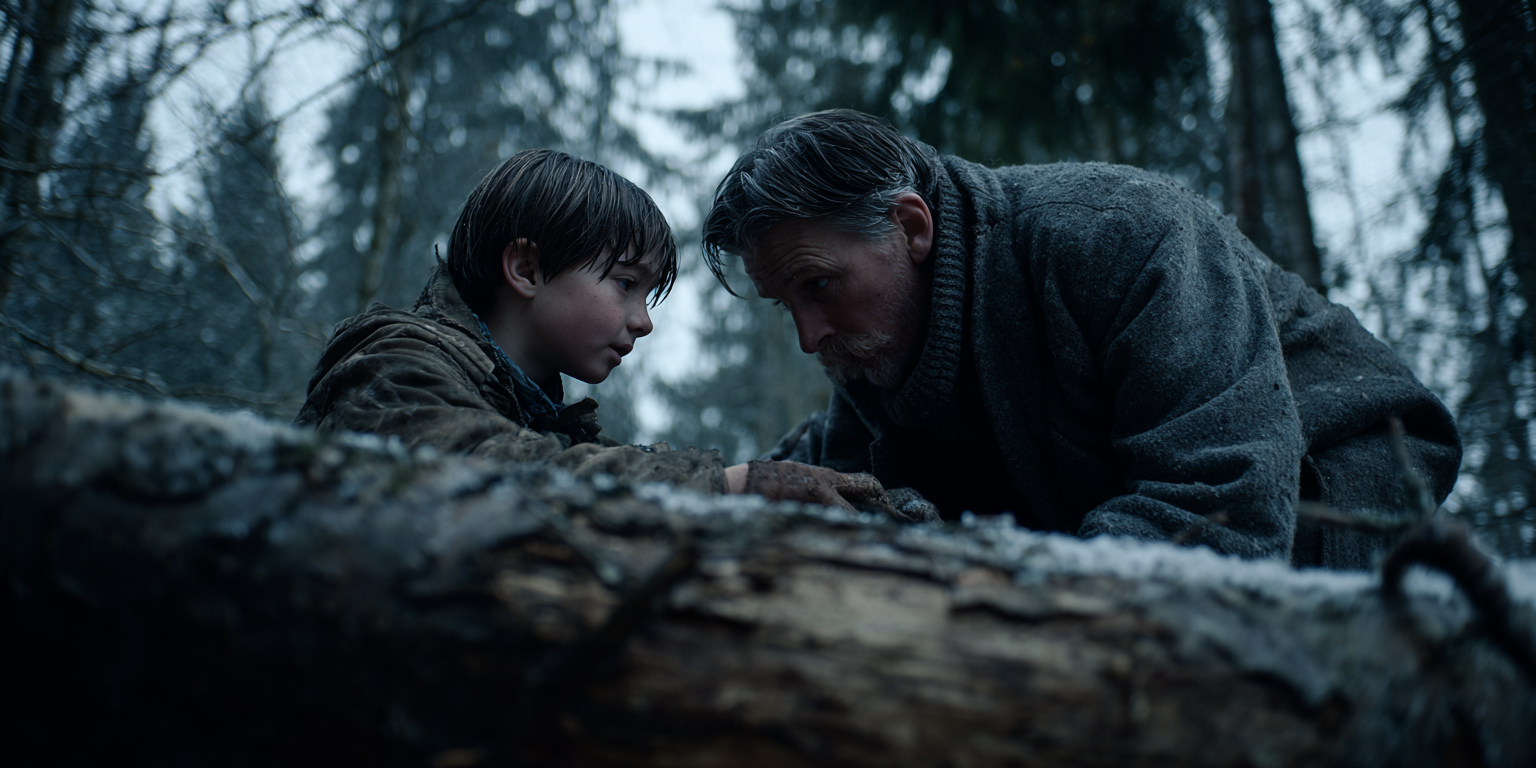
Chapter 28: Mr. Thompson's Pocketbook
To keep up with other readers, you can join the Facebook group discussion here.
The haying season gives way to winter work indoors…
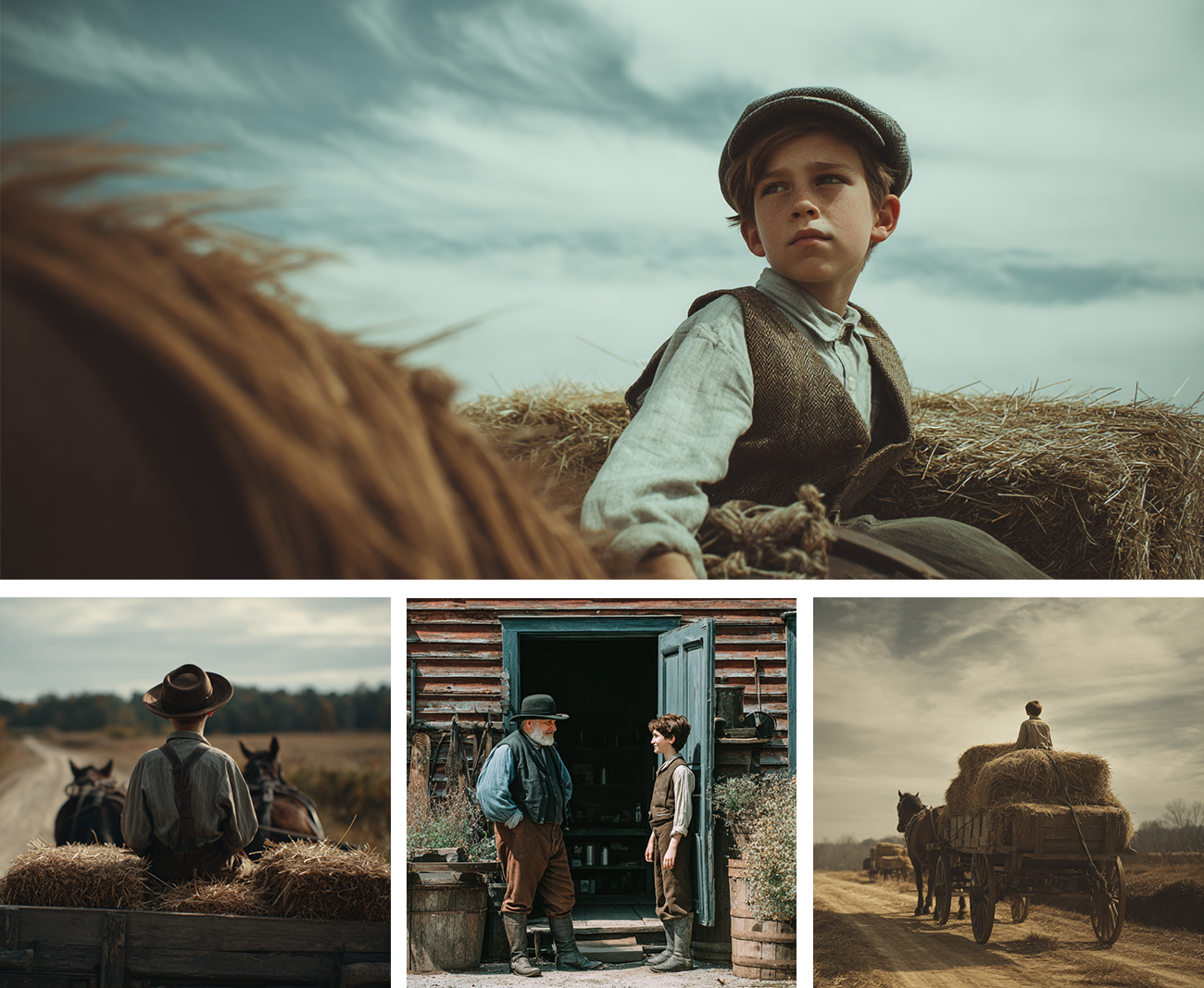
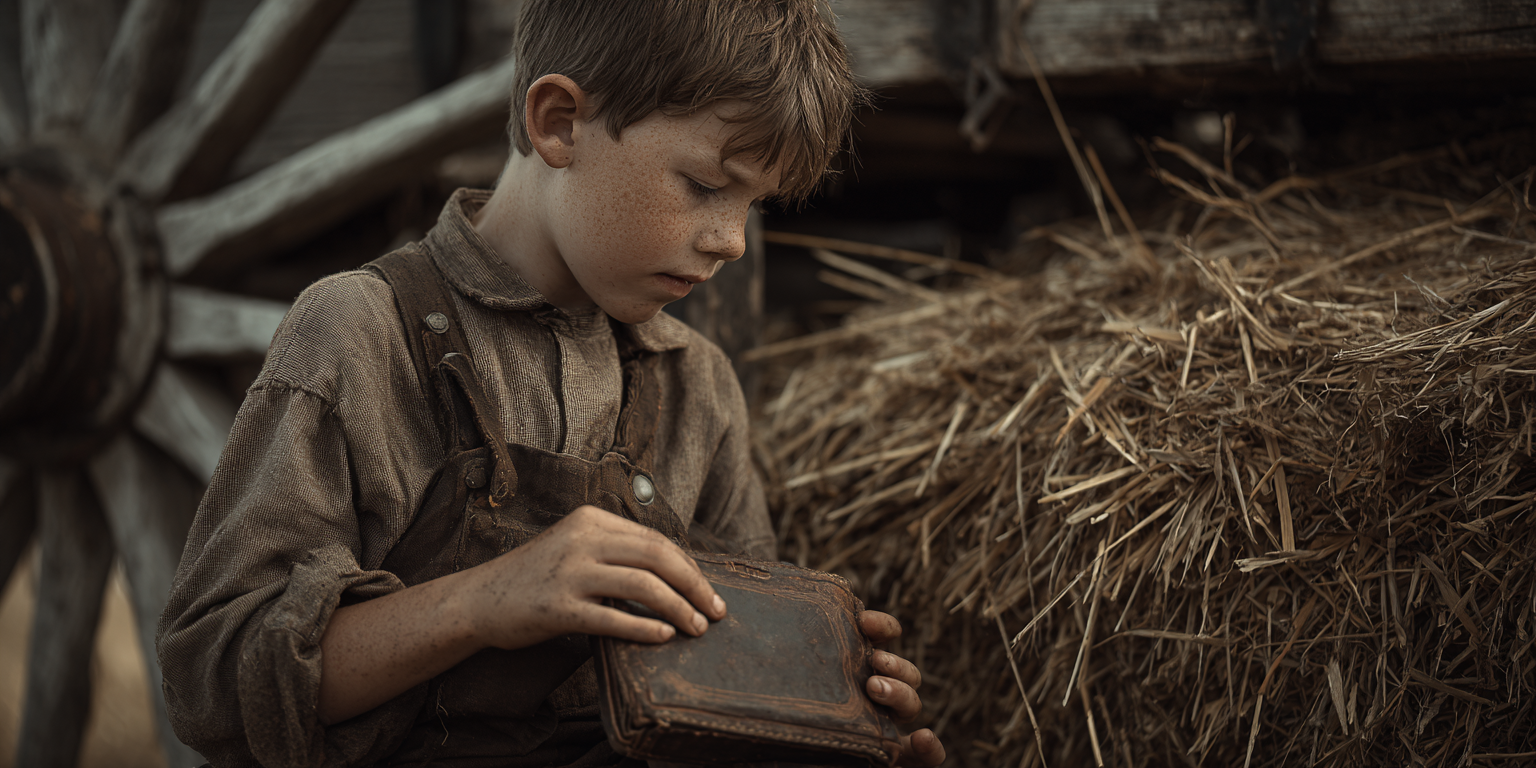
… and Father decides it is time to sell the extra hay in town. At supper, Almanzo cannot help figuring aloud what the load of hay will bring in town. Father smiles and invites him to ride along the next day to help sell it.
Almanzo climbs high atop the creaking wagon as they head toward Malone, feeling almost grown. But on the road beside Trout River, Father spots a pocketbook lying in the snow. Inside is more money than Almanzo has ever imagined - fifteen hundred dollars. Father guesses the owner at once: old Mr. Thompson, who trusts no banks and carries his fortune with him everywhere.
Almanzo finds Mr. Thompson arguing over a wagon. But when the pocketbook is returned, gratitude is nowhere to be found. Mr. Thompson counts every bill twice and tosses him only a nickel for the trouble. Almanzo burns with anger. Yet before the moment can pass, Mr. Paddock steps forward, demanding the old miser reward the boy properly.
By the end of the day, Almanzo walks into the bank with two hundred dollars of his own. As the banker opens his very first account, Almanzo’s mind races ahead to dreams of buying and training a colt all by himself.
Chapter 29: Farmer Boy
Mr. Paddock stops Father with an unexpected offer…
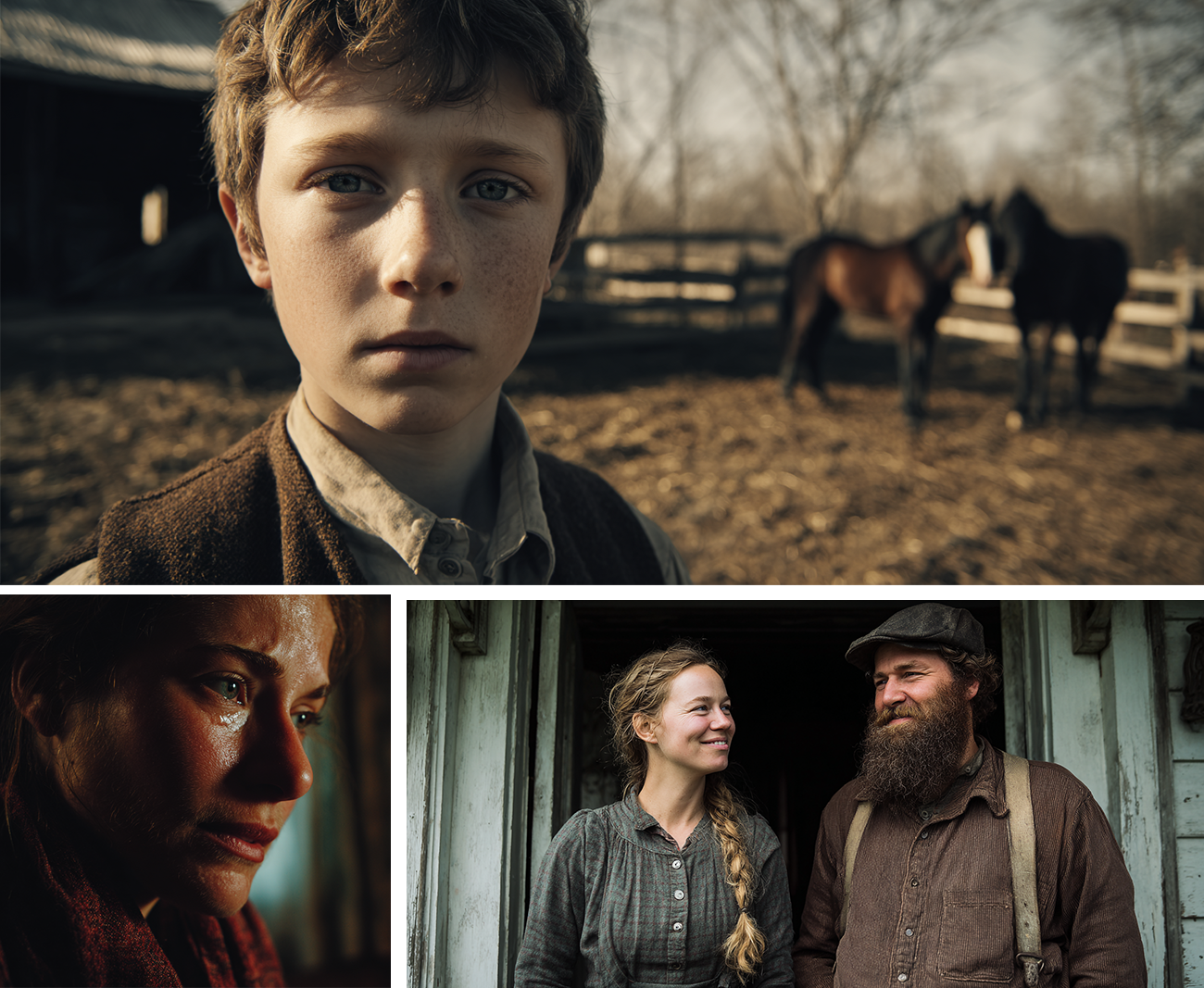
… he wants Almanzo as an apprentice in his wheelwright shop. An easier future than the endless labor of the farm. That evening, Mother fiercely defends the freedom and independence of a farmer’s life, while Father insists the choice must belong to Almanzo himself.
For the first time, Almanzo understands that growing up means deciding what kind of man he wants to become. Deep down he knows his heart belongs to the fields, the animals, and the open land. When Father finally asks what he truly wants, Almanzo blurts out the answer that has been growing in him all along: a colt of his own.
Father smiles and offers him Starlight to train and someday keep or sell as he pleases. And Almanzo realizes he is becoming... a farmer boy.
To keep up with other readers, you can join the Facebook group discussion here.